What Is Aruba Famous For?
Aruba is famous for its beaches, the Antilla shipwreck, catamaran snorkel sails, and weather outside the main hurricane belt. Here is what the island is known for and the tours that show it off.
Aruba is famous for four things above all: award-winning white sand beaches led by Eagle Beach and Palm Beach, the SS Antilla shipwreck that draws snorkel boats from Palm Beach, a catamaran sailing culture with open bars on almost every trip, and reliably dry, sunny weather that sits south of the main hurricane belt. Most of that fame concentrates on the leeward west coast, where the great majority of catamaran tours board at the Noord piers. It adds up to an island where the sea, not the land, is the main attraction. For travelers who want to escape the busiest tour routes, our guide to hidden gems on Aruba excursions points to quiet snorkel bays and south coast reefs that most boats skip.
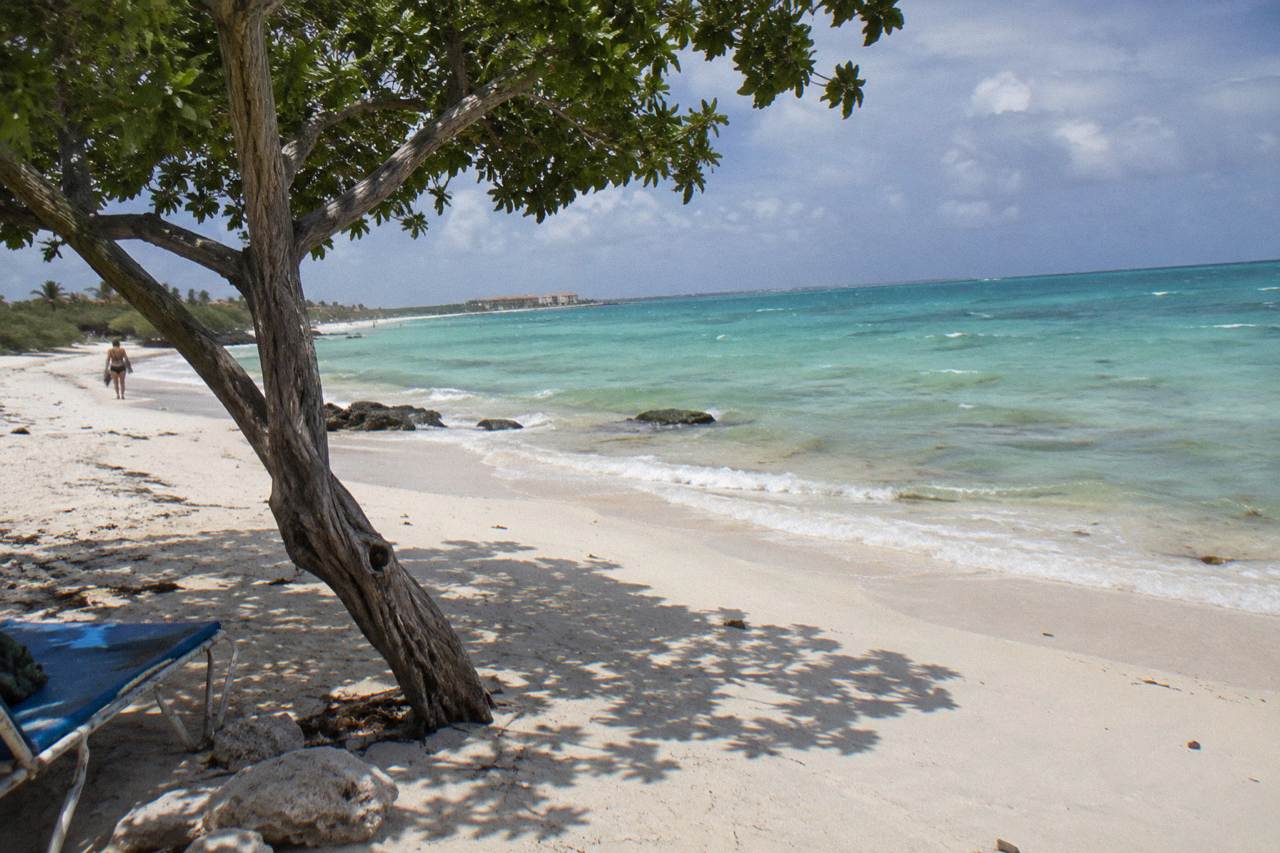
The island's own tourism authority counts more than 20 public beaches, all open to everyone with free public access, which is unusual in a Caribbean where private resort strands are common. Eagle Beach was named the number one Best of the Best Caribbean Beach and number four Best Beach in the World in the 2026 Travelers' Choice Awards, with Palm Beach at number six in the Caribbean, per the island's official award announcement. Those two stretches of sand, plus the water directly off them, are what most visitors picture when they hear the name.
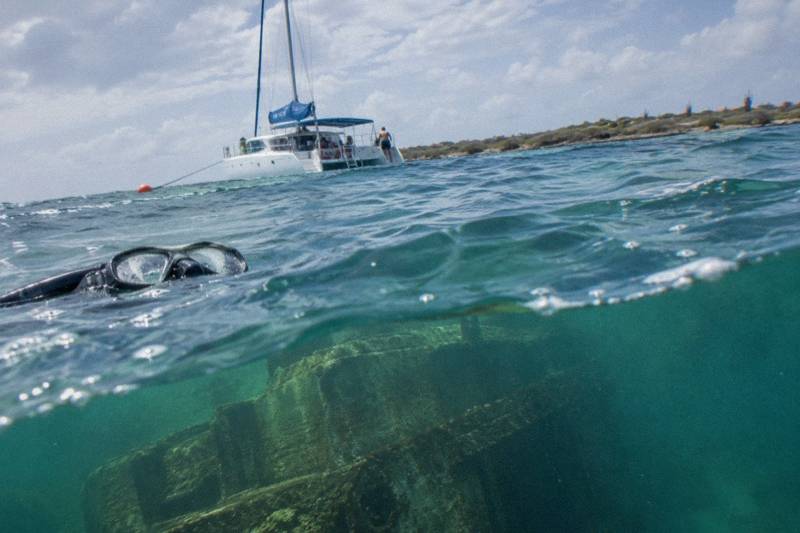
The third pillar of the island's fame is less visible from shore. Lying on her port side off Malmok is the SS Antilla, a German cargo ship scuttled by her own crew in May 1940, and at about 398 feet long one of the largest shipwrecks in the Caribbean. Her shallowest parts sit roughly 15 feet below the surface, which is why snorkel catamarans rather than dive boats claim her. Almost every shared snorkel sail on the island's northwest coast lists the Antilla and nearby Boca Catalina as its two stops.
And the fourth pillar is the reason people book boats at all: weather. Aruba's Atlantic hurricane season runs June 1 to November 30, but the island lies south of the main belt and direct impacts are rare, while the leeward west coast stays sheltered from the persistent northeasterly trade winds. If you want to see the famous side of Aruba in a single afternoon, the three trips below cover the wreck, the reefs and the sunset shoreline in one shortlist.
The most reviewed trip on the shortlist is the Dolphin Catamaran Snorkel and Sail with Open Bar from Delphi Watersports, rated 4.8 across 2,894 reviews. Its 3-hour sail costs from $69 per person and departs from the beach in front of the Hyatt Regency on Palm Beach. Its listing names the Antilla Shipwreck and Boca Catalina as stops, with drinks and snorkel gear included, which is the classic Aruba day on the water in a single booking. Check availability through the operator's live listing if you want the wreck experience in its most popular form.
The Beaches That Made The Island's Name
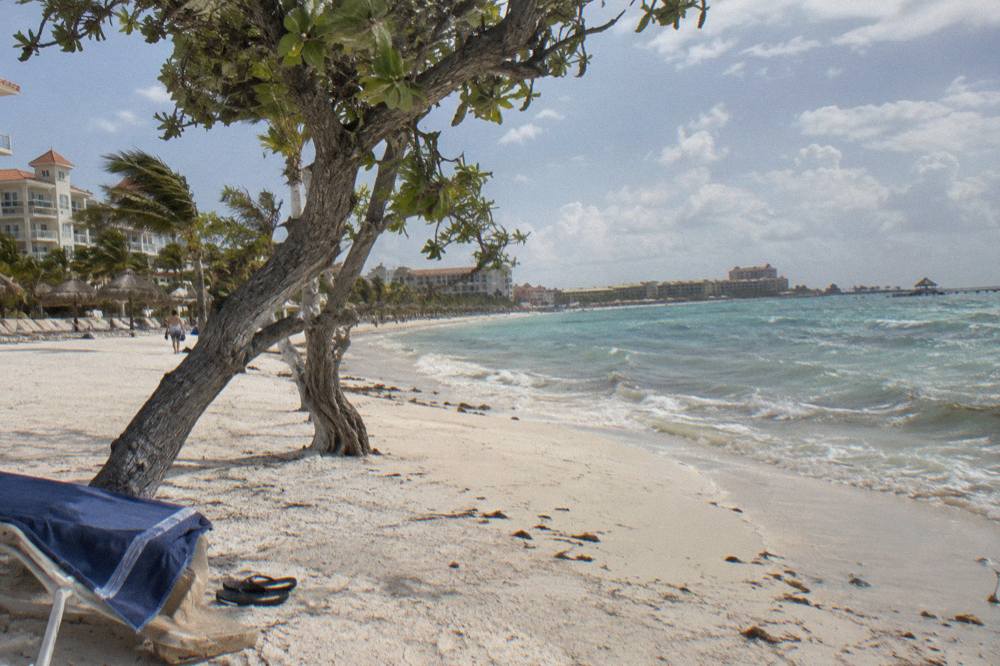
Beaches are the number one answer to the fame question: Eagle Beach and Palm Beach anchor the island's reputation, ranked number one and number six Best of the Best in the Caribbean in the 2026 Travelers' Choice Awards, and more than 20 public beaches are free and open to everyone. Eagle Beach in particular is known for its wide strip of white sand and its trademark fofoti trees leaning into the wind. Palm Beach, a few minutes north, is where the high-rise hotels line up, and it is also where most of the island's catamaran piers sit.
The practical detail worth knowing is that the famous beaches and the famous boat trips are the same geography. Pelican Pier, De Palm Pier, Piet's Pier Bar and the Delphi Watersports beach all sit on or beside the Palm Beach strip along J.E. Irausquin Boulevard in Noord, so a walk from a high-rise hotel lobby to a catamaran check-in can be a matter of minutes. Visitors arriving by cruise ship at Oranjestad generally face a taxi ride of roughly 15 to 20 minutes to reach those piers.
Away from the hotel zone the coastline changes character. The Arusun Catamaran Sail with Snorkeling lists the Palm Beach coast among its stops, while other trips head further afield: the Private Sunset Catamaran Adventure Cruise names Arashi Beach at the island's northwest tip, and the Shamwari sails out of Oranjestad to Mangel Halto on the sheltered south coast. For shore-based swimming without a boat, the island's own beach guide at aruba.com lists the public access points. Free shore snorkeling at spots like Boca Catalina and Arashi Beach is possible with your own gear, no tour required.
One planning note that surprises first-time visitors: Aruba bans the import, sale and distribution of sunscreens containing oxybenzone, a reef-protection law in force since July 2020, with fines that can reach Afl. 10,000 per violation. Mineral formulas with zinc oxide or titanium dioxide are the recommended choice, and the island's visitor code of conduct also asks visitors not to feed marine life or pick up starfish. Pack accordingly or buy mineral sunscreen on arrival.
The SS Antilla, The Caribbean's Famous Snorkel Wreck
The SS Antilla is Aruba's most famous underwater sight: a German cargo ship scuttled by her crew on May 10, 1940, about 398 feet long, lying on her port side with shallow sections around 15 feet deep and the seabed near 60 feet. Launched in 1939 for the Hamburg-America Line, she was scuttled by her own crew on May 10, 1940, the day the Netherlands entered the war, rather than be captured, and the wreck has been the island's signature snorkel stop ever since. Her details are documented on the SS Antilla history page.
What makes her unusual is accessibility. Most shipwrecks this size sit too deep for anyone without dive training, but the Antilla's shallowest parts reach up toward the surface, so a snorkeler floating above the hull sees the whole profile of the ship below. That combination of scale and shallow water is why so many shared catamaran trips list her by name. The Dolphin Catamaran Snorkel and Sail with Open Bar, the Iconic Aruba Sail and Snorkel Experience and the Morning Snorkel Sail aboard the Palm Pleasure all name the Antilla on their booking pages, alongside Boca Catalina.
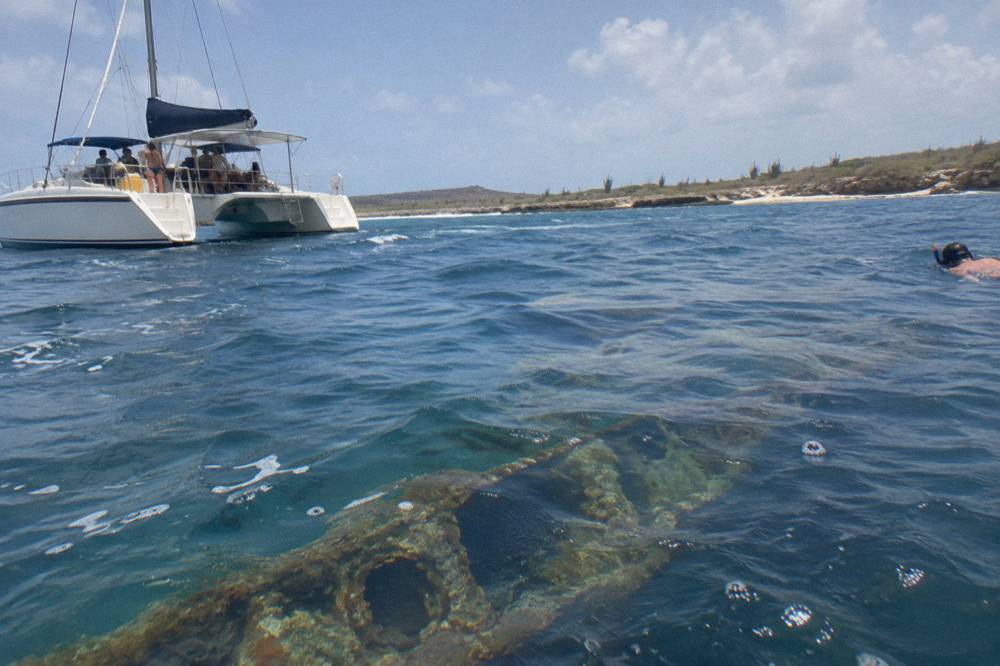
Not every trip goes there, and the distinction matters when booking. The Spronk Shamwari sails from Oranjestad list Mangel Halto and the Kappel Shipwreck as their stops, a different set of sites on the south side. Several sunset sails, including the Banana Adventure Tropical Sunset Sail and the Aruba Sunset Sail with Open Bar, list coastal cruising rather than a wreck stop, because the light is the point of those trips rather than the snorkeling. If the Antilla is what you came for, check the stops on the booking page before you choose, since each trip's named stops are specific to it.
Here is how the wreck-focused trips compare on the details that matter most:
| Tour | Duration | Price | Rating | Listed stops |
|---|---|---|---|---|
| Dolphin Catamaran Snorkel and Sail with Open Bar | ~3 hours | from $69 per person | 4.8 across 2,894 reviews | Antilla Shipwreck, Boca Catalina |
| Half-Day Snorkel Sail Tour with Caribbean Lunch | ~4 hours | from $107 per person | 4.8 across 860 reviews | Antilla Shipwreck, Boca Catalina, Naufragio Baboo Shipwreck, Malmok Reef |
| Morning Snorkel Sail aboard Palm Pleasure | ~4 hours | from $124 per person | 4.7 across 708 reviews | Antilla Shipwreck, Boca Catalina, Arashi Beach |
| Sunset Champagne and Lobster Sail on Shamwari | ~4 hours 30 minutes | from $199 per person | 5 reviews, too few for a rating | Mangel Halto, Kappel Shipwreck |
A natural pairing with the wreck is turtle snorkeling at Tres Trapi, which several longer trips combine into one day. The Banana Adventure Catamaran Shipwreck Snorkel and Turtle Swim lists Tres Trapi and is rated 5 across 231 reviews, from $65 per person for about 3 hours from Hadicurari Fishermen's Pier, with drinks, a meal and snorkel gear included. Sea life sightings always vary with conditions, so treat turtles as a strong possibility rather than a certainty, and let the crew point you to where they have been seen that week.
For travelers who want the fullest wreck-and-reef circuit, the Half-Day Snorkel Sail Tour with Caribbean Lunch stands out on paper: about 4 hours, rated 4.8 across 860 reviews, from $107 per person, and its listing names four stops, the Antilla Shipwreck, Boca Catalina, the Naufragio Baboo Shipwreck and Malmok Reef, with drinks, a Caribbean lunch and snorkel gear included. Few other trips on the island stack four named snorkel sites into a single sail, which is why it earns a place in the shortlist above.
A Catamaran Culture Built On Open Bars And Trade Winds
Aruba is famous for its catamaran excursions: nearly every shared trip on the island runs on a catamaran with drinks included, most board at the Palm Beach piers in Noord, and the format spans $50 sunset sails to $199 dinner cruises per person. The northeasterly trade winds that blow year-round are strong enough to fill sails and gentle enough, on the sheltered leeward coast, to keep the water calm, which is precisely the combination a catamaran exploits. Wide, stable and open-decked, these boats turned a boat ride into the island's signature activity.
The open bar deserves its own mention because it is close to universal here. From the $59 Aruba Sunset Sail Cruise aboard the Dolphin Catamaran to the $172 Luxury Four-Course Caribbean Dinner Cruise, the trips on this island almost all include drinks, and many add snacks or a full meal. A dry boat is the exception worth checking for. Trips without alcohol service say so on their booking pages, and the dependable approach is still to read the inclusions list for the specific date you want. Everything else covered here is indexed on Aruba Catamaran Tours.
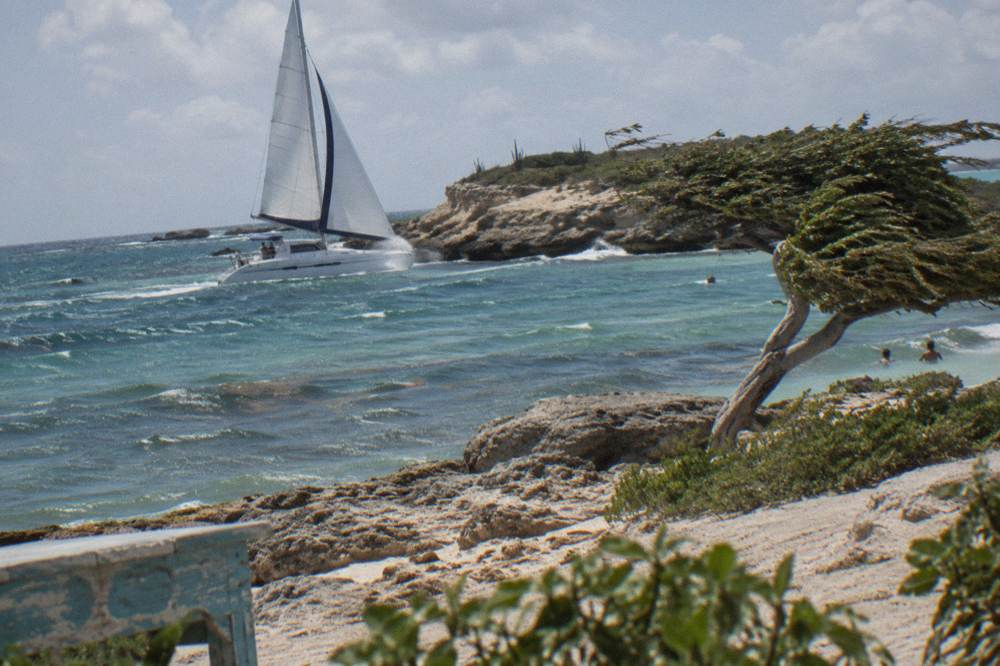
The famous on-the-water day follows a familiar arc. A morning snorkel sail heads out around 9:30, stops at the Antilla and Boca Catalina with gear included, serves lunch on the return leg, and lands you back at the pier by early afternoon. The alternative is to save the boat for the evening: a sunset sail leaves the Palm Beach piers in the late afternoon, cruises the coast past Eagle Beach with an open bar and appetizers, and returns after dark. Both versions deliver the island's two headline views, turquoise water by day and a low tropical sun over the sea by evening.
The Aruba Sunset Catamaran Sail with Appetizers and Open Bar is the volume leader in that evening format: roughly 2 hours, from $92 per person, rated 4.5 across 2,407 reviews, departing Piet's Pier Bar and cruising the Palm Beach coast with drinks included. Where the wreck tours show you what is under the water, this style of trip shows you what the island looks like from it, which is a fair summary of why the two formats together define Aruba's water culture. More on choosing between them is in the Aruba catamaran snorkel tour guide and the sunset cruise on a catamaran guide.
Weather Outside The Main Hurricane Belt
Aruba is famous for dry, sunny weather that few Caribbean islands can match: it sits south of the main Atlantic hurricane belt, direct hits are rare, the trade winds blow steadily all year, and sea temperatures hold around 79 to 83 degrees, which is why boats run here in every month of the calendar. While hurricane season formally runs June 1 to November 30, the island's position near the coast of South America spares it most of the activity that tracks further north. December to April brings dry weather with light, steady winds, while September to November is reported by tour operators to offer some of the calmest seas of the year.
The practical consequence for visitors is that there is no bad month for a boat, only different ones. Morning departures tend to find the flattest, clearest water, while afternoon slots can carry more chop as the trade winds build through the day. Wind is strongest roughly February to July, which matters more to snorkelers eyeing the surface of the water than to anyone holding a drink on a sunset deck. If calm-water snorkeling is your priority, book the earliest slot on offer.
Beyond wind and sea, the marine park framework quietly shapes the trips. Parke Marino Aruba, created by national decree in 2018 and managed since 2019, covers four protected areas totaling about 60 square kilometers, and its management plan imposes a no-anchor rule on coral and seagrass, with mooring buoys where provided, plus a strict no-touch policy for corals and marine life. Any added fees for a boat tour appear on the listing before you book, and the behavior rules are just as real, with crews enforcing them at the snorkel stops. It is one reason the reefs at Boca Catalina still have anything to show.
One Happy Island: Identity, Food And The Famous Sunset
Beyond beaches and boats, Aruba is famous for its "One Happy Island" identity, a multicultural Dutch Caribbean food scene that blends Dutch, Latin American and Caribbean kitchens, and reliably spectacular sunsets over the Caribbean Sea, which the sunset cruise industry has built itself around. The island's position on the southern edge of the Caribbean means the sun sets over open water on the west coast, giving the Palm Beach piers a front-row view that few islands can match from their hotel strips. That single geographic accident explains why the sunset sail is as much an institution here as the beach itself.
The dining side of the fame shows up on the water too. Dinner catamaran cruises range from the Aruba Sunset Sail Dinner Cruise with Open Bar, rated 4.8 across 456 reviews from $137 per person, to the Luxury Four-Course Caribbean Dinner Cruise Experience from $172 per person, and the themed Salsa, Sunsets and Mojitos at Sea trip from $75, rated 4.9 across 48 reviews. On land, the same fusion of Dutch, Caribbean and Latin American kitchens runs through the restaurant strips near the piers, which is why so many boat trips depart beside well-known beach bars such as Piet's Pier Bar and MooMba Beach. The details of the evening format are covered in the Aruba dinner cruise guide.
For groups and families, the fame question also has a private answer. Chartering a whole catamaran starts on this island's lineup at from $1,399 per group for up to 8 guests on a sunset cruise, rising to from $2,500 per group for up to 15 guests on a private adventure cruise with a rope swing and water slide, meals and snorkel gear included. Split across a full boat of relatives or friends, the per-person math on those group rates lands above most shared trips, so a charter here reads as a splurge rather than a per-head bargain. The private charter guide breaks down the comparison.
Whatever form the day takes, the through-line of Aruba's fame is simple: a sheltered coast, a shallow wreck, steady wind, dependable sunshine, and an industry of catamarans that turns all four into an afternoon. Few Caribbean islands concentrate so much of what they are known for onto one narrow strip of leeward water between Eagle Beach and the Antilla.
Common Questions About Aruba
What Is Aruba Famous For?
Aruba is famous for its white sand beaches, led by Eagle Beach and Palm Beach, the snorkelable SS Antilla shipwreck, a catamaran excursion culture with open bars on nearly every trip, and dry sunny weather south of the main hurricane belt. Its "One Happy Island" identity and west-coast sunsets round out the reputation.
Which Beach Is Aruba Most Famous For?
Eagle Beach, named the number one Best of the Best Caribbean Beach and number four Best Beach in the World in the 2026 Travelers' Choice Awards, with Palm Beach ranked number six in the Caribbean. Palm Beach is also where most catamaran tours board, at the piers along J.E. Irausquin Boulevard in Noord.
Can You Snorkel The Antilla Shipwreck From A Catamaran Tour?
Yes. Many shared catamaran trips list the Antilla Shipwreck and Boca Catalina as their two stops, including the Dolphin Catamaran Snorkel and Sail with Open Bar, from $69 per person. The wreck's shallowest parts sit about 15 feet down, so surface snorkeling shows the full hull profile.
How Much Do Aruba Catamaran Tours Cost?
Shared trips run from $50 per person for a 2-hour sunset sail to $199 per person for a champagne and lobster sail, with most snorkel catamarans between $63 and $124 per person including drinks, gear and often lunch. Private charters are priced per group, from $1,399 for up to 8 guests.
Is Aruba Outside The Hurricane Belt?
Mostly, yes. Hurricane season runs June 1 to November 30, but Aruba lies south of the main belt and direct impacts are rare. December to April is the driest, most reliable stretch, while September to November is reported by operators to bring some of the calmest seas of the year.
Do You Need Special Sunscreen In Aruba?
Yes. Aruba law has prohibited the import, sale and distribution of sunscreens containing oxybenzone since July 2020, with fines up to Afl. 10,000 per violation. Bring or buy a mineral formula with zinc oxide or titanium dioxide, which is what crews on snorkel trips expect visitors to use.