Which Is Nicer, Eagle Beach Or Palm Beach, Aruba?
A practical comparison of Eagle Beach and Palm Beach in Aruba: sand, crowds, hotels, access to catamaran departure piers, and which beach suits your trip.
Aruba's west coast holds two beaches that dominate every shortlist: Eagle Beach, wide and calm and famously photogenic, and Palm Beach, narrower, busier and lined with the high-rise resorts that give the strip its name. Visitors keep asking the same question because the two are so close together, on the same sheltered leeward shore, yet they feel like different islands. One gives you space to breathe. The other gives you the piers.
Eagle Beach is nicer for wide sand, fewer crowds, low-rise resorts and a quieter pace, and it took the top spot as Best of the Best Caribbean Beach in the 2026 Travellers' Choice Awards. Palm Beach is nicer for walkable restaurants, water sports, nightlife and the departure piers where most of the island's catamaran sails board. Neither is the wrong answer, and both are free and public, like all of Aruba's more than twenty beaches.
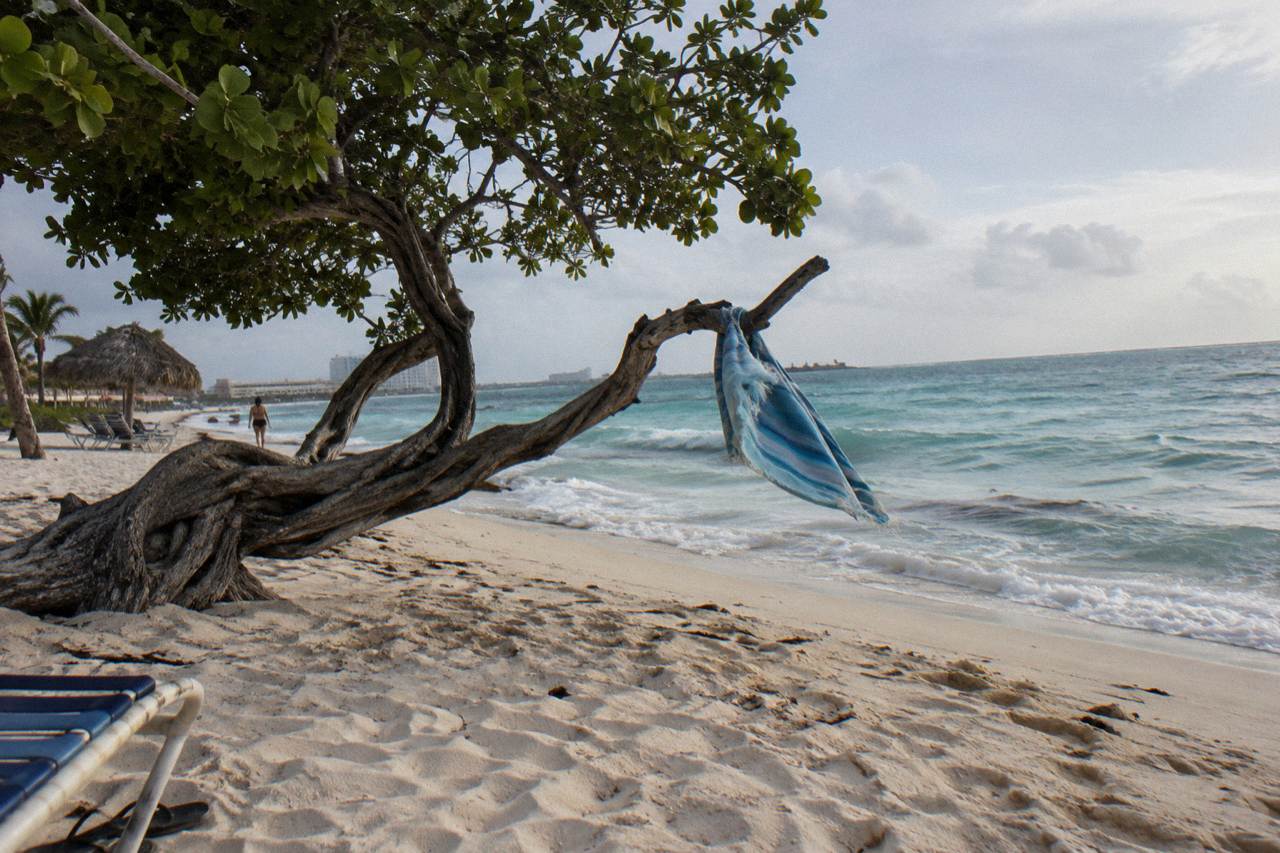
That award gap is real but narrow. Eagle Beach was named the number one Best of the Best Caribbean Beach and number four Best Beach in the World in the 2026 awards, while Palm Beach came in at number six in the Caribbean, per the island's official tourism announcement. A reader who took those two rankings as gospel would expect a dramatic difference on the ground. In person, the contrast is subtler: Eagle Beach is wider, with more open sand between towels, and its iconic divi trees, bent by the trade winds, are a signature photo stop. Palm Beach trades some of that space for convenience, and convenience, on a sailing holiday, is worth money.
The practical split matters most for anyone planning to sail. Almost every catamaran on this island boards from the Palm Beach piers in Noord, a short walk from the high-rise hotels, per current Aruba catamaran departure guidance. If your day revolves around a sunset sail or a snorkel trip, staying near Palm Beach removes the taxi leg each way. Guests at Eagle Beach can still reach every departure point with a short taxi ride, so the difference is comfort rather than possibility.
Here is how the two beaches compare on the things that actually shape a trip:
| Eagle Beach | Palm Beach | |
|---|---|---|
| Sand and width | Wider beach, more open space per visitor | Narrower strip, denser with loungers |
| 2026 Travellers' Choice standing | No. 1 Best of the Best Caribbean Beach, No. 4 worldwide | No. 6 Best of the Best Caribbean Beach |
| Hotels | Low-rise resorts set back across a coastal road | High-rise towers directly on the sand |
| Dining and nightlife | A handful of quiet restaurants and beach bars | Dense walkable strip of restaurants, bars and casinos |
| Water sports and piers | Limited, no major catamaran pier | Most catamaran departure piers on the island |
| Best for | Space, quiet, couples, sunrise photos | Sail departures, families wanting activities, evenings out |
If a sunset sail is already on your list, this trio covers the three ways most people get on the water here, and all of them board from the Palm Beach side:
What Makes Eagle Beach Different From Palm Beach?
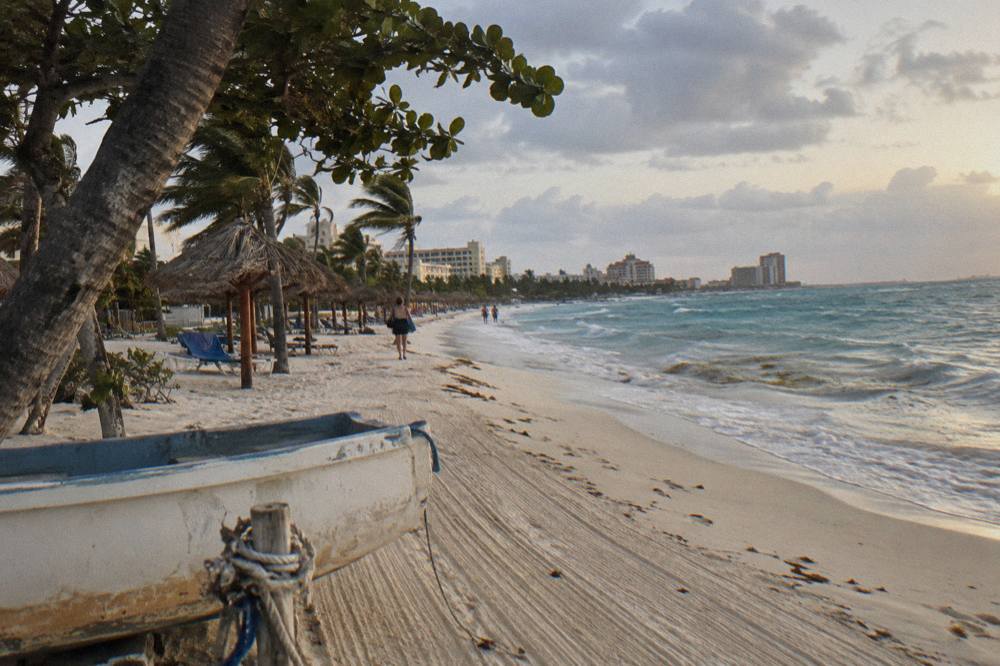
Eagle Beach is the wider, quieter of the two, backed by low-rise resorts rather than towers, with the island's famous divi trees scattered across the sand and a reputation built on space rather than activity. It won Best of the Best Caribbean Beach in 2026, and its visitors come for sunbathing, long walks and photography, not for a strip of bars. The trade-off is simple: fewer restaurants within walking distance and no major catamaran pier of its own.
The defining feature of Eagle Beach is scale. The sand runs wide and deep, so even on busy days the crowd thins a few rows back from the waterline. The divi trees, bent landward by decades of trade winds, appear on more Aruba postcards than any building, and photographers line them up at sunrise when the light is soft. The resorts behind the beach are intentionally modest in height, which keeps the horizon open and the whole stretch feeling residential and calm. Guests who pick Eagle Beach tend to be couples and repeat visitors who have already done the water-sports circuit and now want quiet.
What Eagle Beach does not have is the pier infrastructure. The catamaran industry clusters on Palm Beach for a reason: piers mean boarding without wading, and the high-rise zone supplies a ready crowd of guests within a short walk. Eagle Beach travellers reach those same boats by taxi, which is cheap and quick on an island this size, but it is a daily consideration if you have booked a morning snorkel sail and a sunset sail on consecutive days. Ask the operator or check the booking page for the exact meeting point, because departure piers differ tour by tour even within Palm Beach.
The practical profile of each beach, side by side:
| Factor | Eagle Beach | Palm Beach |
|---|---|---|
| Crowd density | Lower, spread across wide sand | Higher, concentrated on a narrower strip |
| Shade | Divi trees, natural and scattered | Palapas, resort and public |
| Evening scene | Quiet, a short taxi from dining | Bars, restaurants and casinos on foot |
| Swimming | Calm, sheltered leeward water | Calm, sheltered leeward water |
| Access to catamaran piers | Short taxi ride | Walking distance from most high-rises |
One point both beaches share: the water. Both sit on Aruba's sheltered leeward coast, where sea temperatures run about 79 to 83 F and the northeasterly trade winds blow steadily, and Aruba's leeward west coast stays sheltered. Neither beach is "better" for swimming in any meaningful way; both are calm by Caribbean standards. The choice is made on land, not in the water.
A note on shade and midday sun, since it colors the daily experience of each beach more than most first-time visitors expect. Eagle Beach's divi trees give dappled, unpredictable shade that shifts with the hour, and on a bright afternoon good spots under them go early. Palm Beach, by contrast, is organized shade: thatched palapas in rows, some managed by resorts for guests, others open to the public, so a family arriving at noon generally finds a shaded spot without strategy. Visitors who burn easily, or who are traveling with small children who nap on a towel, consistently report that the palapa rows matter more in practice than any award ranking. It is a small thing that adds up over a week.
Why Do Most Catamaran Tours Leave From Palm Beach?
Most catamaran tours leave from Palm Beach because its pier cluster sits directly in front of the high-rise hotels, giving operators walk-up guests, easy boarding structures and the shortest transfer for cruise passengers arriving from Oranjestad, roughly a fifteen to twenty minute taxi ride away. The major departure points are Pelican Pier, De Palm Pier, Piet's Pier Bar and the Delphi Watersports beach in front of the Hyatt Regency.
That concentration is the single biggest logistical fact about sailing in Aruba. The tour options on this site alone board from a handful of named points: the Aruba Sunset Catamaran Sail with Appetizers and Open Bar, about 2 hours from $92 per person, rated 4.5 across 2,407 reviews, departs Piet's Pier Bar on Palm Beach. The Dolphin Catamaran Snorkel and Sail with Open Bar, about 3 hours from $69 per person, rated 4.8 across 2,894 reviews, leaves from the Delphi Watersports beach in front of the Hyatt Regency. The Half-Day Snorkel Sail Tour with Caribbean Lunch, about 4 hours from $107 per person, rated 4.8 across 860 reviews, also boards at Piet's Pier Bar. All three are within the Palm Beach and Noord strip.
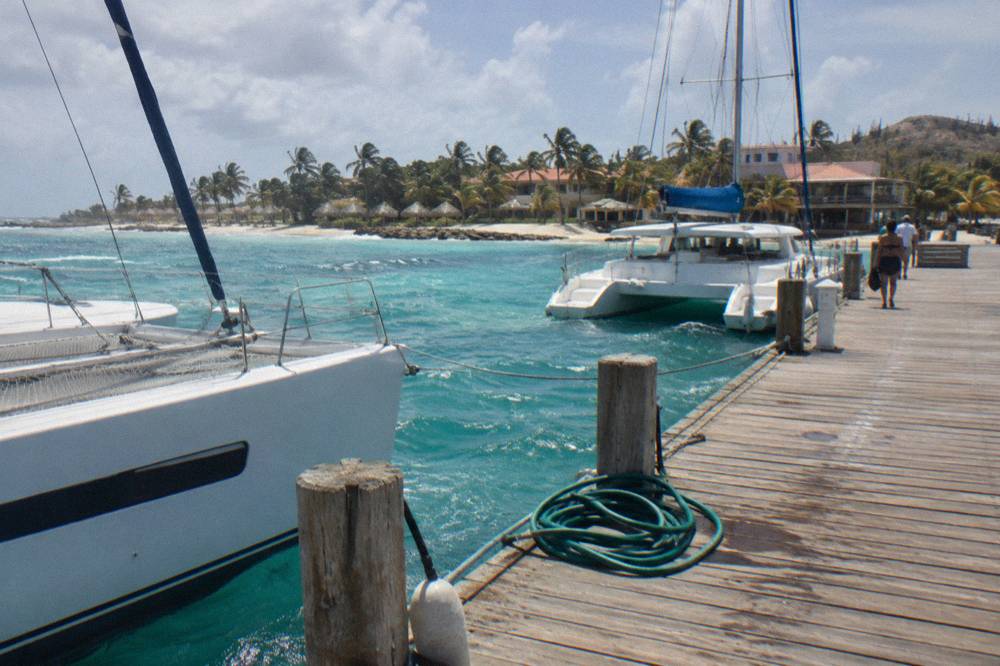
Not everything departs from Palm Beach, and the exceptions matter if you are staying in Oranjestad or traveling on a cruise. The Spronk turtle-and-BBQ snorkel sails board from the dock behind Lucy's Retired Surfers Bar in the Renaissance Marina area of Oranjestad, and the private sunset charters often leave from Varadero Aruba Marina and Boatyard on Bucutiweg. Cruise passengers with a tight port day sometimes prefer those Oranjestad departures precisely because they skip the taxi to Noord, which current Aruba cruise guidance puts at roughly fifteen to twenty minutes each way. For everyone else, Palm Beach's cluster is the default, and it is why so many sailors book a hotel on that strip.
The Dolphin Catamaran snorkel option deserves a special mention for Eagle Beach visitors: at about 3 hours and from $69 per person, with an open bar and snorkel gear included and stops the listing names as the Antilla shipwreck and Boca Catalina, it is a low-commitment way to get on the water without reorganizing your whole day.
Here is the departure map in table form, so the geography is easy to hold in your head while choosing a hotel:
| Departure point | Area | Beach it sits on or near |
|---|---|---|
| Pelican Pier | Noord, J.E. Irausquin Blvd 230 | Palm Beach |
| De Palm Pier | Noord, J.E. Irausquin Blvd 1 | Palm Beach |
| Piet's Pier Bar | Noord, J.E. Irausquin Blvd 85 | Palm Beach, between Barcelo and Hyatt |
| Delphi Watersports beach | In front of the Hyatt Regency | Palm Beach |
| Lucy's Retired Surfers dock | Renaissance Marina area | Oranjestad |
| Varadero Aruba Marina | Bucutiweg 34 | Oranjestad |
The pattern is unmistakable: if you draw a box around the Palm Beach high-rise strip, nearly every shared catamaran departure on the island falls inside it. Eagle Beach sits just south of that box, close enough that a taxi covers the distance in minutes, far enough that no one walks it in sailing gear carrying a towel and a dry bag. That single geographic fact explains most of the practical advice in this article.
Which Beach Should You Stay On For A Sunset Sail?
Stay on Palm Beach if a sunset sail is the centerpiece, because every major sunset departure pier is within a short walk of the high-rise strip and you will not fight traffic to make a 5 PM check-in. Stay on Eagle Beach if you value quiet sand more than pier proximity and accept a short taxi on sailing days. Both put you on the same sheltered water.
Timing is the hidden factor. Sunset sails in Aruba leave in the late afternoon, and one major Palm Beach operator runs seasonal departures at 4:30 PM from October to mid-January and 5:00 PM from mid-January through September, with check-in half an hour before departure. Those check-in windows land squarely in evening traffic on the coastal road, when tour buses and dinner traffic build. A guest staying a hundred meters from the pier strolls down at leisure. A guest coming from Eagle Beach, or from Oranjestad, needs to build in a buffer, and on a holiday week that buffer should be generous.
The arithmetic changes with the number of sails you book. One sunset cruise means one taxi ride, and Eagle Beach's quiet is worth it. A week with a morning snorkel sail, an afternoon turtle trip and a farewell sunset cruise means three pier round-trips, at which point a Palm Beach or Noord base quietly pays for itself in convenience. This is exactly the decision Aruba Catamaran Tours exists to help with: matching where you sleep to where you sail.
For a fuller treatment of the timing question, see the site's guide to sunset times by month in Aruba, and for the wider logistics picture, the guide to Palm Beach marinas and departure piers.
There is also a packing consideration that follows from the pier geography. Sailing days from an Eagle Beach base mean you leave your room earlier and carry more, since you will not pop back to the hotel between the beach and the boat. A dry bag, reef-safe sunscreen and a towel you are willing to leave on deck all travel better from a room five minutes from the pier, where a quick drop and pickup is possible. It sounds trivial until the third boat of the week. Anyone planning two or more sails might book Eagle Beach for the photographs and end up wishing, just occasionally, for a room above the pier at Palm Beach, where several catamaran trips depart.
Does Eagle Beach Ever Beat Palm Beach For Sailing Access?
Eagle Beach itself has no major catamaran pier, but its position between Palm Beach and the southern departure points makes it a workable base for both. Several listed tours cruise right past the Eagle Beach coastline on their routes, so guests staying there watch the sunset sails from shore before their own trip, and a short taxi reaches every Palm Beach pier. Access is a minor cost of staying there, not a barrier.
Two of the sunset options on this site list their route as the Palm Beach to Eagle Beach coast: the Banana Adventure Catamaran Tropical Sunset Sail, about 2 hours from $50 per person, rated 5.0 across 141 reviews, and the Private Sunset Catamaran Adventure Cruise with Open Bar, from $1,800 per group for up to 15 guests. The shared option is the cheapest full sunset sail on the island's menu, and it boards at MooMba Beach Bar and Restaurant on the Palm Beach end of the strip. Eagle Beach guests, in other words, routinely stand on their own sand and watch these boats pass; the next day they take a short taxi and are on board.
The Half-Day Snorkel Sail Tour with Caribbean Lunch is the other natural pairing for an Eagle Beach stay. It runs about 4 hours from $107 per person, rated 4.8 across 860 reviews, and the listing names four stops: the Antilla shipwreck, Boca Catalina, the Naufragio Baboo shipwreck and Malmok Reef, with an open bar, lunch and snorkel gear included. Booking one big morning on the water, then returning to Eagle Beach's quiet sand for the afternoon, is a pattern that suits that beach's rhythm better than a piecemeal schedule of short trips.
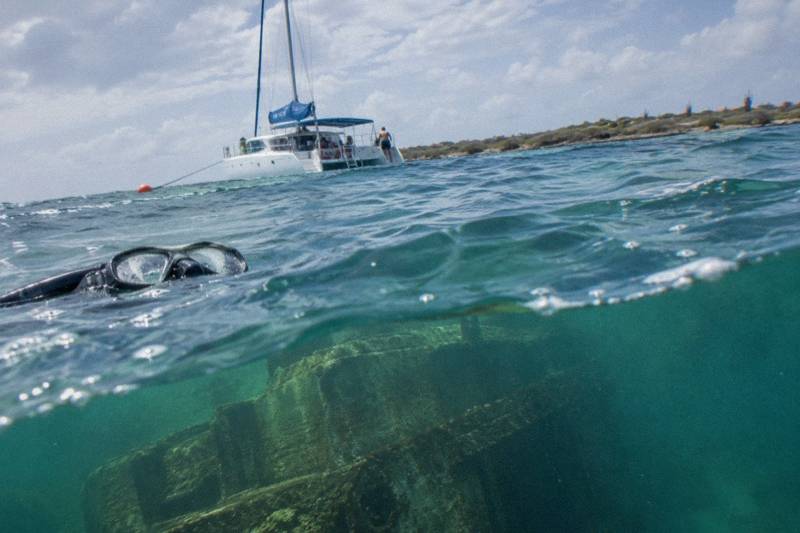
A note on what you will see in the water: turtle sightings at stops like Boca Catalina and Tres Trapi are common and operators report them often, but no honest operator guarantees wildlife. The sites themselves, including the Antilla, a 398.3-foot German cargo ship scuttled in 1940, are fixed features, and the wreck's shallowest sections sit about 15 feet down, within easy snorkeling range.
Which Beach Wins For Families, Couples And Quiet Seekers?
Families with children usually prefer Palm Beach for its walkable dining, palapa shade and short stroll to departure piers, while couples and quiet seekers lean Eagle Beach for the wide sand, low-rise feel and slower evenings. Active travelers who want jet skiing, parasailing and a nightlife strip should stay on Palm Beach. Travelers whose perfect day is an empty towel line and a book should take Eagle Beach and accept a taxi on sailing days.
Families also weigh a factor that rarely appears in comparisons: the walk from room to water. On Palm Beach, the high-rise towers sit directly on the sand, so a forgotten hat, a sunscreen reapplication or a toddler meltdown means a two-minute trip upstairs. On Eagle Beach, the low-rise resorts sit across a coastal road from the beach, which preserves the open horizon but turns every forgotten item into a real excursion across warm pavement with a child in tow. Parents report both arrangements working well; what differs is how many things end up carried in the beach bag each morning, and how forgiving the setup is when something is left behind.
Couples and quiet seekers get something at Eagle Beach that Palm Beach structurally cannot offer: distance from the entertainment district. The strip's bars and music run late, and sound carries along the sand, so light sleepers on Palm Beach often choose rooms facing inland or away from the nightlife cluster. Eagle Beach evenings are genuinely quiet, with the loudest regular sound being wind in the divi trees. For travelers whose holiday goal is rest rather than activity, that difference alone decides the question, and no ranking or award needs to enter into it.
There is also a middle path that surprises people: stay on Eagle Beach and eat on Palm Beach. The strip between the two is short, taxis are plentiful at both Eagle Beach and Palm Beach, and the best of both beaches is then on the table. Morning coffee on a wide quiet beach, an afternoon snorkel sail from a Palm Beach pier, dinner back on the strip and a taxi home to silence. Guests who do this once tend to repeat it, and it dissolves most of the either-or framing in the original question.
If you are leaning toward the water side of the decision, the site's guide to sunset cruises on a catamaran walks through the evening options in detail. Whichever sand you choose, the boats, the water and the leeward calm are the same, and that is the part visitors remember longest.
Common Questions About Eagle Beach Or Palm Beach
Which Is Nicer, Eagle Beach Or Palm Beach, Aruba?
Eagle Beach is nicer for space, quiet and wide photogenic sand, and it ranked No. 1 Best of the Best Caribbean Beach in 2026. Palm Beach is nicer for convenience, with the high-rise hotels, restaurants and the departure piers where most catamaran tours board. Pick Eagle Beach to relax and Palm Beach if sailing and nightlife anchor your trip.
Can You Walk From Eagle Beach To Palm Beach?
Yes, the two beaches sit close together on the same leeward coast, and the stretch between them is walkable along the sand and coastal path, though the midday heat makes shoes and water a good idea. Many visitors walk it one way and taxi back. Exact walking time varies with your starting hotel, so ask at the front desk.
Do Catamaran Tours Ever Depart From Eagle Beach?
No listed catamaran tour on this island boards from Eagle Beach itself. The major departure piers cluster on Palm Beach and in Noord, with additional sailings from the Renaissance Marina area in Oranjestad and Varadero Aruba Marina for private charters. Several sunset sails cruise past the Eagle Beach coastline on their route.
Which Beach Is Better For Swimming?
Both beaches sit on Aruba's sheltered leeward coast with calm water and sea temperatures of about 79 to 83 F, so neither has a meaningful swimming advantage. Trade winds blow more consistently offshore of the strip than into it. Conditions vary day to day, so check with your operator before you sail.
Is Eagle Beach Or Palm Beach Better For Cruise Passengers?
For a port day built around a catamaran, Palm Beach departures are roughly a fifteen to twenty minute taxi from the Oranjestad cruise terminal, while some Oranjestad-based snorkel sails skip that transfer entirely. Check the meeting point on the booking page for your specific tour before deciding, since piers differ tour by tour.
Are Both Beaches Free To Visit?
Yes. Aruba has more than twenty public beaches and all are free and open to everyone, per the island's official tourism site. Loungers and palapas operated by resorts or vendors may carry a rental fee, but the sand and water themselves are public.