Do US Citizens Clear Customs In Aruba?
US citizens clear Aruba immigration and customs on arrival with a passport and a completed ED Card. Here is exactly what the process involves and how it shapes your first day on the water.
Yes, US citizens clear Aruba's immigration and customs on arrival just like every other international visitor, because Aruba is not part of the United States and runs its own border process, so there is no US-style domestic arrival. Before you fly, you will need a passport valid for your whole stay, a return or onward ticket, and a completed online ED Card, through which most US travelers aged 8 and up pay a $20 sustainability fee.
The question comes up more often than you might expect, and usually for one of two reasons. Some travelers assume a US passport means skipping border formalities in the Caribbean, the way a domestic flight skips them at home. Others have heard about Aruba's entry system changing since 2020 and want to know what actually happens at the counter now. The short version is that the process is straightforward, digital-first, and in most cases handled before you reach your departure gate.
The ED Card is the part worth understanding before you fly. Every air traveler, US citizens included, completes an individual online ED Card at the official portal, edcardaruba.aw, within seven days before arrival. The form itself is free. Travelers aged 8 and older pay a $20 sustainability fee during the process, which funds island infrastructure and environmental projects. Children under 8, Aruba residents, and repeat visitors who paid within the prior calendar year are exempt. Third-party services that charge extra to file it for you are neither required nor official.
None of this changes what your vacation looks like. The border formalities are a thin layer on top of an ordinary arrival, and most visitors are on the beach or on a boat within hours of landing.
What Is The ED Card And When Do You Complete It?
The ED Card is Aruba's online entry form, completed individually by every air traveler at the official portal edcardaruba.aw within seven days before arrival. It is free to file. Travelers aged 8 and up pay a $20 sustainability fee during the process, with exemptions for children under 8, residents, and repeat visitors who paid within the prior calendar year. Airlines accept the digital QR code at check-in, so printing is only a backup.
Timing matters more than difficulty here. Submit the form within 7 days before arrival, so it is not something to knock out a month in advance and forget. Each traveler completes their own card, including children and infants, so a family of four files four forms. The digital confirmation, a QR code, is officially accepted at airline check-in and at Aruba immigration. Printing it is recommended only as a backup in case your phone is dead at the counter.
The fee mechanics are simple and worth knowing before someone tries to sell you a filing service. The $20 sustainability fee is collected once per calendar year for qualifying repeat air arrivals, so a second trip inside the same year does not trigger a second charge. The card itself never costs anything on the official site. If a third-party page is quoting you a filing fee, you are on the wrong page.
Here is the summary in table form, using only what the entry sources state plainly.
| Requirement | Who it applies to | What to do |
|---|---|---|
| ED Card form | Every air traveler, including children and infants | Complete individually at edcardaruba.aw within 7 days before arrival |
| $20 sustainability fee | Air travelers aged 8 and older | Paid during the ED Card process; exempt: under 8s, residents, repeat payers within the calendar year |
| Digital confirmation | All travelers | QR code accepted at check-in and immigration; print only as backup |
| Third-party filing services | Nobody | Not required and not official |
One open question: the ED Card has no documented tie to boat tours, marinas, or specific excursion operators, so if a tour page claims it handles any of this for you, treat that as marketing and confirm on the operator's booking page. The ED Card is between you and the border, not you and the boat.
What Actually Happens When You Land In Oranjestad?
On arrival, US citizens present a passport valid for the entire stay, a return or onward ticket, and the approved ED Card confirmation at Aruba immigration, then collect bags and clear customs like any international arrival. US citizens do not need a visa for tourist stays up to 90 days. Immigration officers make the final entry decision, and proof of accommodation or sufficient funds can be requested.
In practice the hall moves quickly by big-airport standards. Aruba's airport, Queen Beatrix International in Oranjestad, handles a steady stream of US flights, and the immigration officers are used to American passports, hotel confirmations, and the occasional question about a return ticket. Have your onward ticket and where you are staying available on your phone; officers may ask, and having it ready ends the conversation in seconds. The final call always rests with the officer at the desk, which is standard everywhere, not an Aruba-specific hurdle.
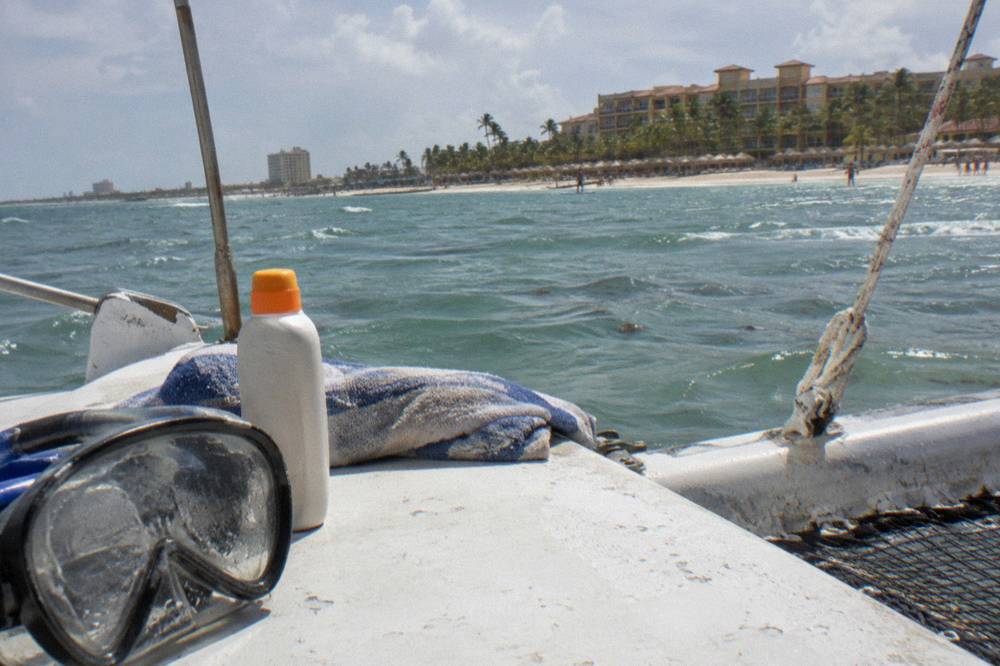
Customs after baggage claim follows the familiar declare-or-walk-through pattern, with one Aruba-specific rule worth knowing before you pack. Aruba prohibits the import, sale, and distribution of sunscreens containing oxybenzone, in force since July 1, 2020, and the ban covers occasional private imports, including online orders brought in by travelers. Mineral formulas with zinc oxide or titanium dioxide are the recommended choice, and since nearly every catamaran snorkel tour on this island stops at reefs, packing the right sunscreen is not a technicality. Our companion piece on what to bring on a catamaran covers the rest of the kit.
Will the airport eat your first day? Usually not. With the ED Card already filed, the arrival process is a routine step, and the drive from the airport to the Palm Beach hotel zone is short. That is why an evening sunset sail is a realistic first-night activity, and why the question of customs is really a question about how much of day one you get to keep.
Do Cruise Passengers Clear Customs In Aruba?
Most cruise passengers do not complete an ED Card, because the requirement generally applies only to vessels that must clear Aruba immigration, and standard cruise itineraries do not. Passengers disembark with their ship's clearance and walk into Oranjestad or head to tour meeting points. Air arrivals and cruise arrivals are two different processes, and the cruise one is lighter.
This distinction matters a lot for anyone planning a catamaran day around a port call. The standard cruise passenger arrives, walks off the ship, and is already in Aruba legally, with no form to file and no fee to pay. That leaves the whole port window for the water. The trade-off is time: you need a tour that fits your ship's hours and departs somewhere reachable from the cruise terminal.
The logistics favor you here. Most catamaran tours board at the Palm Beach piers in Noord, roughly a 15 to 20 minute taxi ride from the Oranjestad cruise terminal, and several operators work with cruise schedules routinely. A handful of options depart from the Oranjestad marina area itself, which removes the taxi leg entirely. For the full picture on matching a boat to a port window, including which piers sit closest to the terminal, see our guide to catamaran tours for cruise passengers.
The honest caveat on timing: departure times, taxi queues, and ship schedules vary, and no source here guarantees a fixed transfer time for any specific pier. Ask the operator directly when booking, or check the booking page for the meeting point and recommended arrival buffer. The tour crews answer this question all day and will tell you plainly whether your port window works.
What Do US Citizens Need Beyond The ED Card?
US citizens need a passport valid for the entire stay, a return or onward ticket, and no visa for tourist visits up to 90 days. The approved ED Card with its QR code travels with you digitally. Immigration retains final authority at entry, and may request proof of sufficient funds or accommodation, so keep those confirmations handy on your phone.
Notice what is absent from that list: no visa application, no special US citizen form, no health documentation appears in the current entry requirements. A US passport is a strong travel document in Aruba, and the relationship between the two places is uncomplicated. The passport validity rule is the one people trip over. Aruba requires validity for the whole stay, not the six-month buffer some destinations demand, but a passport expiring two weeks after your return flight is still cutting it closer than any traveler should.
The final-decision point deserves a plain sentence rather than a buried one. A completed ED Card and a valid passport get you to the counter; they do not guarantee entry by themselves. Officers can ask for accommodation proof or evidence of funds, which for most travelers means a hotel booking and a credit card. This is the same discretionary authority every border in the world exercises, and in practice US visitors pass through without drama.
Beyond the border, the island asks very little of you before you are on a boat. Reef-safe sunscreen, covered above, is the one rule with real teeth, since violations of the oxybenzone ban can carry a fine. For everything else, towels, motion-sickness timing, what to wear, the planning happens on your side of the border and is covered in our broader best time to visit Aruba guide.
Can You Book A Catamaran Tour Before You Have Cleared Customs?
Yes. Nothing in Aruba's entry process touches tour bookings, and you can reserve a catamaran sail before you fly, while the ED Card is being filed, or from the airport taxi. Most tours on this island carry free cancellation, and the booking pages state the cutoff window for each trip. The border and the boat are entirely separate systems.
This is worth saying plainly because travelers sometimes assume a tour booking is somehow contingent on arrival formalities. It is not. The operator does not see your ED Card, does not check your immigration status, and cares only that you show up at the right pier on time. The realistic risk is not customs, it is your own arrival day compressing: a delayed flight, a long baggage wait, and a 3 PM check-in at a dock 20 minutes away do not mix.
The safer play for arrival day is an evening departure or a next-morning sail. The Dolphin Catamaran Snorkel and Sail with Open Bar, our related pick for this article, runs about 3 hours from the Delphi Watersports beach in front of the Hyatt Regency on Palm Beach, is rated 4.8 across 2,894 reviews, and starts from $69 per person. The listing names the Antilla shipwreck and Boca Catalina as its two snorkel stops, with drinks and snorkel gear included. You can check the Dolphin Catamaran snorkel sail on its tour page, and the operator's live listing shows current times.
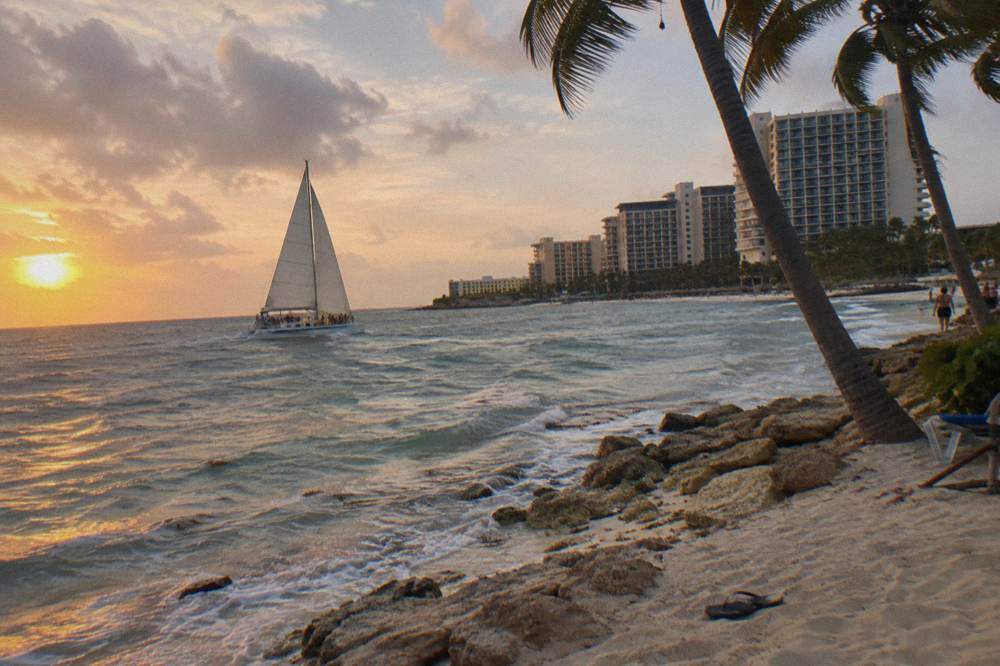
If evening is more your speed after a travel day, the sunset side of the lineup is deep. The Aruba Sunset Catamaran Sail with Appetizers and Open Bar departs Piet's Pier Bar, runs about 2 hours along the Palm Beach coast, is rated 4.5 across 2,407 reviews, and starts from $92 per person with drinks and appetizers included. It is a low-effort first night: no swimwear logistics, no gear, just a seat on the netting and a drink.
The morning-after option is arguably the best value on the island for a first full day. The Half-Day Snorkel Sail Tour with Caribbean Lunch, departing Piet's Pier Bar, runs about 4 hours, is rated 4.8 across 860 reviews, and starts from $107 per person. The listing names four stops: the Antilla shipwreck, Boca Catalina, the Naufragio Baboo shipwreck, and Malmok Reef, with drinks, lunch, and snorkel gear all included.
Does The Time Of Year Change Any Of This?
No. The ED Card, the $20 fee, the passport rule, and the customs process are identical year-round, and Aruba lies south of the main hurricane belt, so the formalities never shift with the season. What does change is sea state: the leeward west coast stays sheltered, September to November tends to bring the calmest seas, and trade winds run strongest roughly February to July.
The shoulder weeks between hurricane season and high season are an interesting window. The Atlantic hurricane season runs June 1 to November 30, but direct impacts on Aruba are rare because the island sits south of the main storm belt. Entry-wise, nothing about the season touches your paperwork. The only seasonal detail worth filing away is that conditions, wind, and swell affect individual sailings, and operators make the call on any given day. No crew guarantees a sunset or a turtle sighting; the listing describes what a trip typically includes, and the sea decides the rest.
Morning departures are the steadier bet for snorkeling at any time of year, since the flattest, clearest water tends to come before the afternoon trade winds build. That aligns neatly with an arrival-day plan: land, clear the border, sleep, and take a morning snorkel sail on day two when the water is at its best.
What About Returning To The United States?
The process on the way home is separate from Aruba's entry formalities and is run by US authorities rather than Aruba, so its details are not part of Aruba's entry rules and are not stated in the sources used here. Check with your airline for the current return-side procedure and how early to arrive at Queen Beatrix International for your flight.
This is the half of the question where honest restraint beats confident invention. Travelers sometimes conflate Aruba's arrival process with the US-side return process, and the two involve different agencies, different lines, and different timing. Because the entry sources used for this article cover only the Aruba side, the reliable advice is procedural: confirm with your airline, allow the check-in window they recommend, and do not build a tight tour schedule around your departure hours on the last day.
A pattern that works well regardless: make your last full day the boat day, not your departure day. A morning snorkel sail the day before you fly leaves buffer for packing, and an evening sunset cruise as the final act needs no buffer at all. Sailings on this island run daily, so the calendar bends to you.
Planning Your First Day: Border To Boat
Formalities at the border are usually quick, so keep arrival day for an evening sunset sail and save the snorkel trip for day two with tickets and documents in hand; building in buffer time for queues, transport delays, and finding the departure point means you board the boat calm instead of rushed.
The pairing that fits this question best is a two-boat arrival pattern. Land, clear immigration, and spend the first evening on a sunset sail that asks nothing of you, then take a morning snorkel sail on day two when the water is calmest.
If your trip is a cruise call rather than a flight arrival, the same boats still work, with the caveat that the Palm Beach piers are a taxi ride from the terminal and you should confirm the timing with the operator. Whatever your arrival looks like, Aruba Catamaran Tours keeps the full comparison of piers, prices, and stops in one place.
Common Questions About US Citizens Clearing Customs In Aruba
Do US Citizens Clear Customs In Aruba?
Yes. US citizens clear Aruba's own immigration and customs on arrival with a passport valid for the entire stay, a return or onward ticket, and a completed ED Card filed online before the flight. No visa is needed for tourist stays up to 90 days.
Do US Citizens Need A Visa For Aruba?
No. US citizens may visit Aruba as tourists for up to 90 days without a visa, presenting a passport valid for the whole stay, a return or onward ticket, and the approved ED Card confirmation.
How Much Is The Aruba ED Card Fee For Americans?
The form itself is free on the official portal. Air travelers aged 8 and older pay a $20 sustainability fee during the process, with exemptions for children under 8, Aruba residents, and repeat visitors who paid within the prior calendar year.
Do Cruise Passengers Need The Aruba ED Card?
Most do not. The ED Card requirement generally applies only to vessels that must clear Aruba immigration, and standard cruise itineraries are exempt, so passengers walk off the ship without filing anything.
When Should I Complete The ED Card Before Flying To Aruba?
Within the final seven days before arrival, individually for every traveler including children and infants. The digital QR code is accepted at airline check-in and immigration, with printing recommended only as a backup.
Can I Bring My Regular Sunscreen To Aruba?
Not if it contains oxybenzone. Aruba prohibits its import, sale, and distribution, including occasional private imports by travelers, in force since July 1, 2020. Use a mineral sunscreen with zinc oxide or titanium dioxide instead.