Aruba ED Card And Entry Requirements
The ED Card is Aruba's online entry form, and almost every air visitor needs one before boarding. Here is exactly who fills it in, what it costs, and how it fits around the day you plan to spend on the water.
Short answer
Every air traveler to Aruba completes a free online ED Card at the official portal within 7 days before arrival, including a $20 sustainability fee for travelers aged 8 and older. US citizens need no visa for stays up to 90 days, just a passport valid for the whole stay and a return ticket. Most cruise passengers are exempt.
Aruba's entry process runs through a single online form called the ED Card, and it is the one piece of admin that can stop a trip before it starts: airlines check it at check-in. Skip it and you can be denied boarding, no matter how good your passport is. The form itself is free, takes only minutes, and folds in a $20 sustainability fee that most travelers pay as part of the same submission. Cruise passengers usually skip the whole thing.
This guide walks through the ED Card question by question, covers the document rules for US, UK and Canadian visitors, explains what happens at customs and immigration in Oranjestad, and connects the paperwork to the part of the trip people actually look forward to: the catamaran sail. Every entry rule here comes from official Aruba sources and current government guidance; tour details come from each operator's own booking page. Where a detail is genuinely individual, the honest answer is to check the booking page or the official portal directly.
What Is The Aruba ED Card And Who Needs It?
The ED Card is Aruba's mandatory online embarkation and disembarkation form, completed on the official government portal at edcardaruba.aw, and every air traveler must submit one before flying, including infants, children and US citizens. The form itself is free to file. Third-party sites that charge extra to submit it are not official and not required, so there is no reason to pay anyone to do it for you.
Each traveler completes an individual form; each traveller must complete an individual online ED Card. That surprises parents of young children especially, since even a baby in arms needs their own entry record. The form collects passport details, flight information, accommodation details for your stay, and health-related questions. The official portal is the only place to file, and Aruba's tourism authority confirms the process is free at the source, with paid third-party services entirely optional and unofficial.
The reason airlines take it seriously is mechanical: the ED Card produces a digital qualifier, a QR code or confirmation, that check-in staff are authorized to accept in place of paper. Aruba immigration accepts that same digital record on arrival. Printing a copy is recommended only as a backup in case your phone dies mid-journey, not because paper is required.
Immigration officers retain final say at the border even with a completed ED Card in hand. Officers can request proof of sufficient funds or confirmation of where you are staying, so having a hotel booking or address handy in your email is a sensible habit. The ED Card is the entry ticket; the officer at the desk is the referee.
For travelers planning water days around arrival, the timing matters less than you might think. A sunset sail on your first evening is realistic: the Aruba Catamaran Tours planning pages assume most visitors clear the airport, reach Palm Beach or Eagle Beach hotels, and still make a late-afternoon departure. If you want to understand the departure points first, the Palm Beach marinas and departures guide maps every pier the catamaran operators use.
When Should You Complete The Aruba ED Card?
Submit the ED Card within the final 7 days before your flight, because the system is built around your arrival window and flight data, and air travelers file at the official portal edcardaruba.aw. Filing too early is the classic mistake: the form asks for details tied to your imminent arrival, and the official guidance points travelers to the last week before departure as the correct window.
The practical rhythm that works for most people: book flights and hotels first, book the catamaran sail second, then file the ED Card in the week before departure when all the trip details are settled. The form asks where you are staying, and a half-finished itinerary makes the submission harder than it needs to be. Travelers who book tours with free cancellation have extra flexibility here, since a plan can shift after filing without invalidating the entry record.
| Step | When To Do It | What You Need |
|---|---|---|
| Book flights and hotel | Months ahead | Passport details for accuracy |
| Book catamaran sail | Once dates are firm | Nothing but a payment method |
| File the ED Card | Within 7 days of arrival | Passport, flight number, accommodation address |
| Pay the $20 sustainability fee | During ED Card submission | Card payment, travelers aged 8 and over |
| Save the QR confirmation | Immediately after filing | Phone or printed backup |
The sustainability fee is collected once during the ED Card process, not separately at the airport. Travelers aged 8 and older pay it; children under 8, Aruba residents, and repeat visitors who paid within the prior calendar year are exempt under the standard rules. There is no separate desk, no queue, nothing to do on arrival about the fee itself. It is done before you fly or it does not get done.
One frequent question is whether the fee applies per person or per booking: it is per person, and the exemption for repeat visitors covers those who paid within the prior calendar year. The fee supports island infrastructure and environmental projects, which on Aruba supports island infrastructure and environmental projects.
Since you are organizing the trip anyway, this is a natural moment to line up the boat. Three shared catamaran options cover the main styles of day out:
Booking before departure means one less errand in the resort lobby, and every tour above includes free cancellation, which keeps the ED Card window flexible.
What Documents Do US, UK And Canadian Visitors Need?
US citizens need a passport valid for the entire stay, a return or onward ticket, and the approved ED Card qualifier; no visa is required for tourist stays up to 90 days. UK and Canadian citizens follow the same passport-and-return-ticket pattern for tourism. The digital ED Card QR code is officially accepted at airline check-in and immigration, so paper copies are backup only.
The passport validity rule for US citizens is worth underlining because it differs from the popular six-months-valid rule of other destinations: Aruba requires the passport to be valid for the duration of the stay, not for six months beyond it. That said, a passport close to expiry invites questions, and renewing before a trip is always cheaper than rebooking one. UK and Canadian visitors should confirm current stay lengths on the official requirements page, since those are set by Aruba's immigration authorities and can change independently of US rules.
| Traveler | Passport | Visa For Tourism | Return Ticket | ED Card |
|---|---|---|---|---|
| US citizen | Valid for entire stay | Not needed up to 90 days | Required | Required |
| UK citizen | Valid for entire stay | Not needed for tourism | Required | Required |
| Canadian citizen | Valid for entire stay | Not needed for tourism | Required | Required |
| Child under 8 | Own passport | Not needed | Required | Required, fee exempt |
| Cruise passenger | Passport per cruise line rules | Covered by cruise status | Covered by cruise | Usually exempt |
Aruba's tourism authority maintains the current traveler requirements on its official before-you-travel page, which is the right place to verify anything that changes between booking and departure. The ED Card portal itself answers process questions in detail, and the official ED Card process explanation covers exemptions and edge cases. Both are primary sources; anything contradictory you read on a forum loses.
For the arrival-day plan, the document side is now settled and the fun side can be locked in. The question that decides the day: an afternoon on the water or a sunset with a drink in hand?
The linked tour, the Dolphin Catamaran Snorkel and Sail with Open Bar, is a 3-hour shared sail from the Delphi Watersports beach in front of the Hyatt Regency on Palm Beach, from $69 per person, rated 4.8 across 2,894 reviews, with stops at the Antilla shipwreck and Boca Catalina. It fits neatly into a first or second day once entry formalities are behind you.
Do Cruise Passengers Need An Aruba ED Card?
Most cruise passengers do not need an ED Card, because the requirement generally applies only to vessels that clear Aruba immigration, and standard cruise itineraries handle entry through the ship. Cruise visitors can walk off in Oranjestad and straight onto a tour. Tour operators describe cruise passengers joining Oranjestad and Palm Beach departures, so a port day can still include a catamaran sail, some a short walk or quick taxi ride from the cruise dock.
The word "generally" is doing honest work there. The exemption follows the ship's status, not the passenger's nationality, and a handful of unusual itineraries can change the answer. Anyone on a repositioning cruise, a private vessel, or an unusual routing should ask the cruise line directly before the sailing rather than assume.
For everyone else, cruise day in Aruba is pure tour planning. The island's west coast is compact, and catamaran operators time departures around ship schedules. The catamaran tours for cruise passengers guide breaks down which piers sit closest to the port and which tours match short port windows. Oranjestad itself deserves a look even without a tour; the Oranjestad cruise port things to do guide covers the walkable options around the terminal.
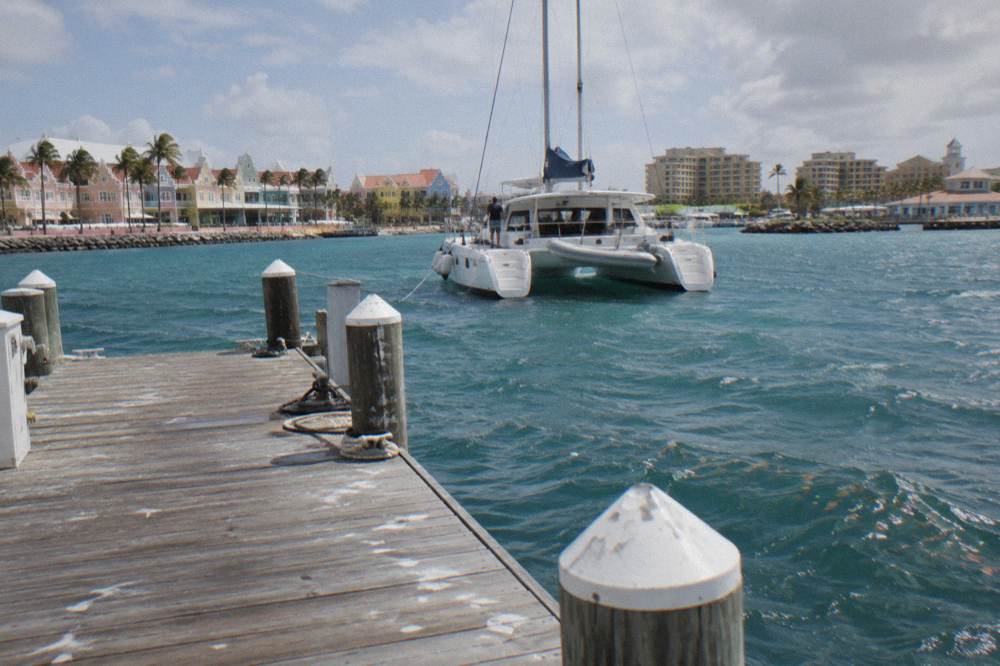
One practical note for cruise passengers who want a specific tour: shared catamaran sails sell out around popular port days faster than hotel guests expect, because a cruise ship in port can add a surge of visitors to one morning. Booking ahead with free cancellation is the low-risk move; you keep the flexibility and the spot.
What Can You Expect At Aruba Customs And Immigration?
Expect a standard immigration desk at Queen Beatrix International Airport where the officer makes the final entry decision, with your passport and digital ED Card qualifier checked together; immigration may ask about accommodation or proof of funds. Customs follows with the usual baggage declaration, and Aruba's reef-protection rules matter here more than at most destinations: sunscreens containing oxybenzone are prohibited from import, sale and distribution under Aruba law. If you're arriving on a US passport, our guide to immigration and customs for American visitors walks through the full arrival process step by step.
The oxybenzone rule still catches travelers by surprise. Aruba prohibits importing, manufacturing, selling or distributing topical sunscreens containing oxybenzone, in force since 1 July 2020, and the ban covers occasional private imports too, including online orders delivered to the island. The law names oxybenzone specifically; it does not ban octinoxate, so a label reading "no octinoxate" alone tells you nothing useful. Mineral formulas with zinc oxide or titanium dioxide are the recommended choice, which matters doubly if you are headed to a snorkel sail over living reef. The fine can run up to 10,000 Aruban florin per violation under secondary reporting of the law.
Packing the wrong sunscreen is the single most avoidable customs headache for a beach vacation. For the full kit beyond the bottle, the what to bring on an Aruba catamaran guide lists what operators actually expect you to carry and what the boats provide.
Arrival-day logistics at the airport are otherwise routine: immigration lines, baggage claim, customs, then transport. Most catamaran tours board at the Palm Beach piers in Noord, roughly 15 to 20 minutes by taxi from the Oranjestad cruise terminal, directly in front of the high-rise hotels. If a sunset sail is on the first-evening wish list, the sunset cruise on a catamaran guide explains how departure times track the season.
What Does The Sustainability Fee Pay For?
The $20 sustainability fee, paid once during the ED Card process by air travelers aged 8 and older, supports island infrastructure and environmental projects in Aruba, and qualifying repeat air arrivals pay it only once per calendar year. Children under 8, Aruba residents and repeat visitors within the prior rolling year are exempt. The fee is collected only through the official ED Card submission, never in cash at the airport.
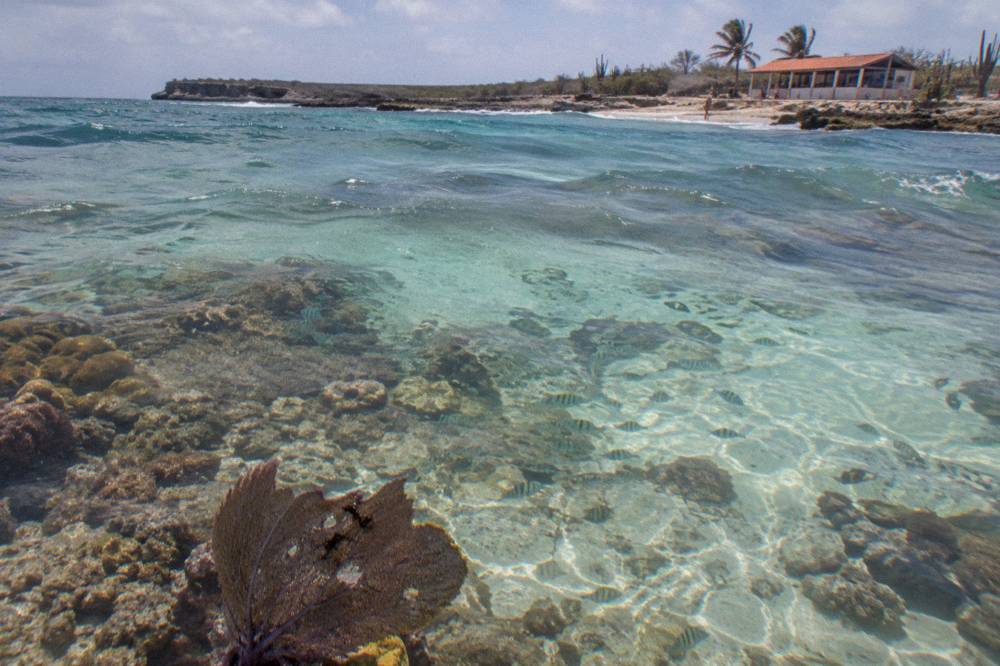
The environmental side of that spending connects directly to the waters the catamarans sail. Parke Marino Aruba, created by national decree in 2018 and managed since 2019 by the Fundacion Parke Nacional Aruba, protects four marine areas covering 60.2 square kilometers: Arikok, Seroe Colorado, Mangel Halto, and the Oranjestad reef islands. The park's rules for the 2025 to 2029 management period include a no-touch policy for corals and marine life and a requirement to use mooring buoys rather than anchor on seagrass or coral. No visitor fee for the marine park is confirmed, so do not budget for one; operators handle their own compliance.
Mangel Halto, one of the four protected areas, appears by name on three sails: the sunset and morning Champagne and Lobster sails on the Shamwari, each from $199 per person and about 4 hours 30 minutes long, both listing Mangel Halto and the Kappel shipwreck as their stops. Both have review pools too small for a rating claim, which is itself honest information: these are niche, quieter departures from the dock behind Lucy's Retired Surfer Bar in Oranjestad.

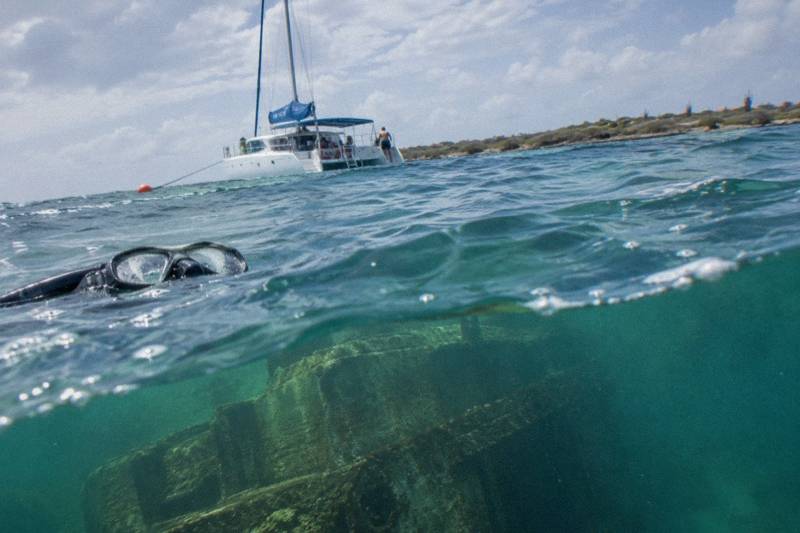
Behavior on the water matters as much as the fee paid at the keyboard. Aruba's visitor code of conduct asks people not to feed marine life, including fish and turtles, and not to pick up starfish; the tour crews will repeat this at the snorkel stops. For where those stops are and what lives there, the Aruba snorkeling tours guide covers the main sites, and the dedicated Antilla shipwreck snorkeling page tells the story of the 398-foot German cargo ship scuttled off Malmok in 1940, now one of the largest wrecks a snorkeler can see in the Caribbean.
Which Catamaran Tours Fit Around Your Arrival Day?
The tours that fit an arrival day are the short shared sails from the Palm Beach piers: the 2-hour sunset options from $50 to $92 per person, and the 3-hour Dolphin Catamaran snorkel sail from $69 per person rated 4.8 across 2,894 reviews. For a second or third day, the half-day and 4-hour snorkel sails with lunch, from $85 to $124 per person, pair two or more stops with a meal on board.
The logic is simple: entry formalities end by early afternoon for most flights, Palm Beach is a short taxi ride from the airport, and a sunset departure needs no energy beyond standing at a rail with a drink. Save the longer snorkel sails for a day with no travel fatigue.
| Tour | Duration | Price Basis | Rating | Pier |
|---|---|---|---|---|
| Dolphin Catamaran Snorkel and Sail with Open Bar | ~3 hours | From $69 per person | 4.8 across 2,894 reviews | Delphi Watersports beach, Hyatt Regency |
| Aruba Sunset Catamaran Sail with Appetizers and Open Bar | ~2 hours | From $92 per person | 4.5 across 2,407 reviews | Piet's Pier Bar |
| Half-Day Snorkel Sail Tour with Caribbean Lunch | ~4 hours | From $107 per person | 4.8 across 860 reviews | Piet's Pier Bar |
| Morning Snorkel Sail with Premium Champagne Brunch | ~4 hours | From $85 per person | 4.7 across 2,238 reviews | Pelican Pier |
The sunset sail with appetizers is the classic first-evening choice: about 2 hours along the Palm Beach coast, open bar and appetizers included, from $92 per person, rated 4.5 across 2,407 reviews. It boards at Piet's Pier Bar between the Barcelo and the Hyatt, which puts it within a short walk of most high-rise hotels.
For day two, the half-day snorkel sail with Caribbean lunch is the fuller water day. It runs about 4 hours from Piet's Pier Bar, from $107 per person, rated 4.8 across 860 reviews, and the listing names four stops: the Antilla shipwreck, Boca Catalina, the Naufragio Baboo shipwreck and Malmok Reef. Drinks, lunch and snorkel gear are all included, and free cancellation applies.
If your body clock resists an early start after a flight, the morning champagne brunch sail is the gentlest full-day option: about 4 hours from Pelican Pier, from $85 per person, rated 4.7 across 2,238 reviews, visiting the Antilla shipwreck, Boca Catalina and Malmok, with brunch, drinks and gear included.
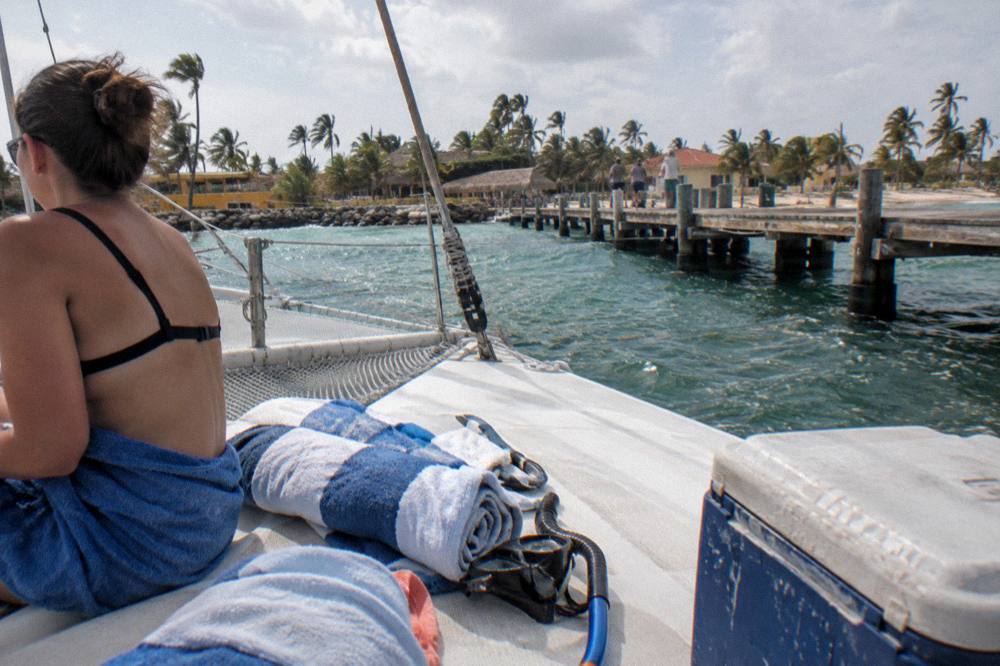
Whatever the arrival schedule looks like, the paperwork sequence stays constant: passport checked, ED Card filed in the final week, fee paid during submission, QR code saved. The boat is the reward at the end of a very short admin queue.
Common Questions About The Aruba ED Card
What Is The Aruba ED Card?
It is Aruba's mandatory online entry form, filed for free at the official portal edcardaruba.aw by every air traveler, including children and US citizens, within 7 days before arrival. It generates a digital qualifier accepted at airline check-in and immigration.
Do US Citizens Need A Visa For Aruba?
No. US citizens do not need a visa for tourist stays up to 90 days. They need a passport valid for the entire stay, a return or onward ticket, and the approved ED Card qualifier.
How Much Is The Aruba Sustainability Fee?
The fee is $20, paid during the ED Card submission by air travelers aged 8 and older. Children under 8, Aruba residents and repeat visitors who paid within the prior calendar year are exempt. It is never collected in cash at the airport.
Do Cruise Passengers Need An Aruba ED Card?
Usually not. The requirement generally applies only to vessels that must clear Aruba immigration, and standard cruise itineraries do not. Passengers on unusual routings should confirm with their cruise line.
Can I Show The ED Card On My Phone?
Yes. The digital QR code or confirmation is officially accepted at airline check-in and Aruba immigration. Printing a copy is recommended only as a backup, not required.
Is Reef-Safe Sunscreen Required In Aruba?
Aruba law prohibits importing, selling or distributing sunscreens containing oxybenzone, so bring a mineral formula with zinc oxide or titanium dioxide. The law names oxybenzone only; it does not ban octinoxate.