Can Catamarans Handle Rough Seas?
A plain answer to whether catamarans handle rough seas, with Aruba-specific sea conditions, stability facts, operator weather calls, and tours that suit nervous first-time sailors.
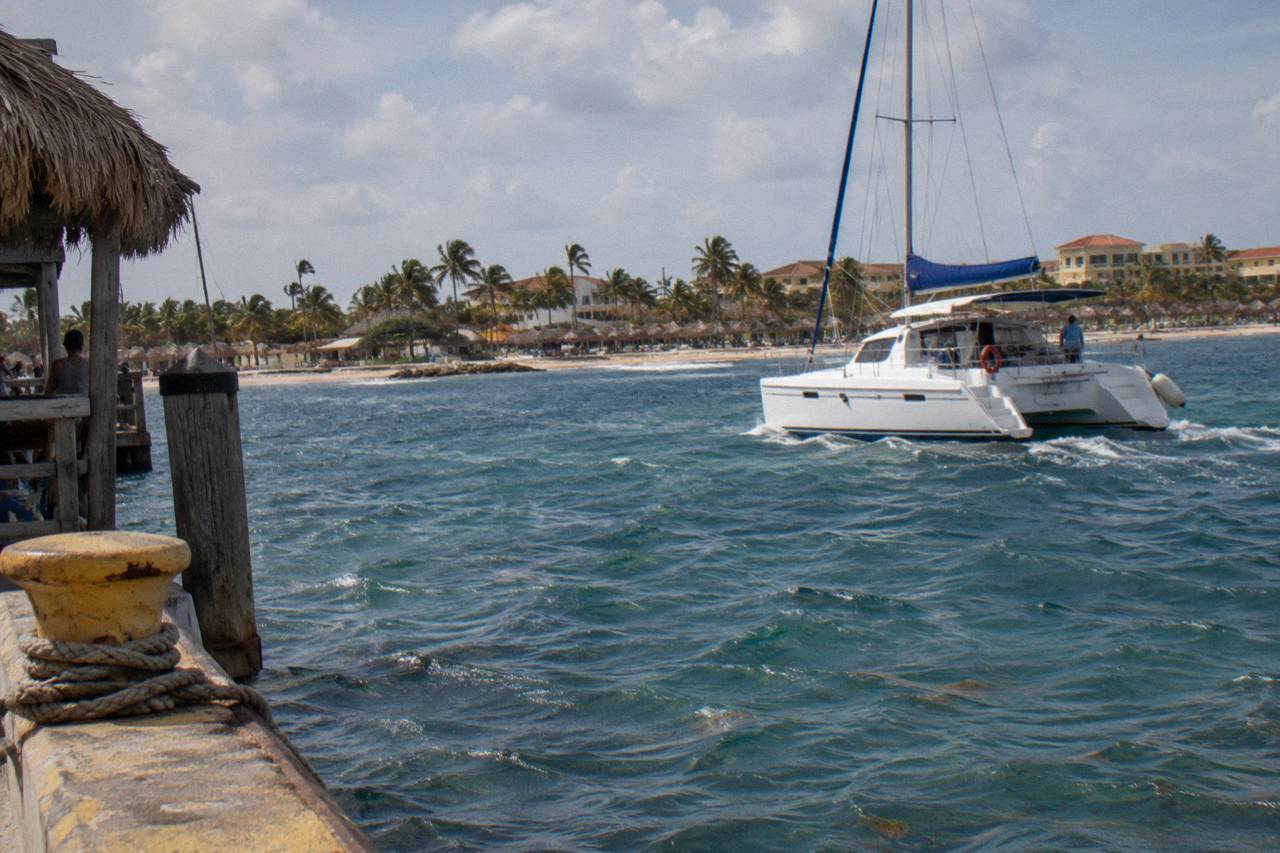
Aruba sits outside the main hurricane belt, its west coast sits in the lee of steady northeasterly trade winds, and almost every catamaran trip here departs from that sheltered side of the island. That combination answers most of the question before stability even enters the picture. Still, the wind does freshen for part of the year, the afternoon chop does build, and anyone who gets seasick easily deserves a straight explanation rather than a shrug.
Yes, catamarans handle rough seas competently, and their design makes them one of the steadier platforms you can book. Two hulls separated by a wide deck resist rolling, so the side-to-side motion that upsets nervous passengers on single-hull boats is greatly reduced. In Aruba the point is mostly theoretical anyway, because the leeward west coast stays sheltered and operators cancel or reroute when conditions warrant. The honest version of the answer has three parts: the boat, the sea, and the crew. The boat is genuinely stable by design. The sea around Aruba's west coast is unusually kind for most of the year, and sea temperature sits around 79 to 83 degrees F, so any spray over the bow comes down warm rather than cold. The crew, finally, makes the final call on every departure, and they make it conservatively because a boat full of queasy guests is bad for everyone, them included.
Consider what a catamaran is. Two slender hulls carry a broad platform between them, and that width is the whole trick. Where a single-hull sailboat heels and rolls, a catamaran stays close to level and turns the same wave into a gentler, slower motion. That is why catamarans dominate the day-sail trade in coastal resorts worldwide, and why every boat in the tours listed here, from the Dolphin Catamaran to the Spronk boats, is a catamaran rather than something narrower. For a first-time sailor, the difference is not subtle.
There is also a track record behind the design. Catamarans carry passengers across open ocean passages, ferry routes and full-day coastal excursions in far more exposed water than anything an Aruba itinerary touches. The boat you board here is a working example of a hull form that has been tested for decades in conditions far rougher than a lee coast in the trade-wind belt. Design alone never makes a trip safe; design plus a sheltered route plus a professional crew does, and Aruba supplies all three on a normal day.
The rest of this article walks through why the sea here behaves the way it does, what stability actually means on a catamaran, and how to pick a departure that suits your stomach.
Why Aruba's West Coast Stays So Calm
Aruba's trade winds blow mainly from the northeast, and the island itself blocks them from the west coast where nearly all catamaran tours sail. That leaves Palm Beach, Eagle Beach and the snorkel sites in sheltered, lee-side water for most of the year. Operators report the flattest, clearest conditions on morning departures, while afternoon slots carry more chop as the wind builds through the day. This geography is the single biggest reason catamaran sailing in Aruba feels gentler than the same trip on a windward coast elsewhere. The windward, Atlantic side of the island takes the full force and is where you find the rougher water, but no tour route goes there. Everything on a standard itinerary, from the Antilla shipwreck up at Malmok to Boca Catalina and the Palm Beach shoreline, sits on the protected side.
The seasonal pattern matters too. Local guides note that September through November offers the calmest seas of the year, which surprises visitors who assume those months must be risky because hurricane season runs from 1 June to 30 November. Aruba lies south of the main belt, direct impacts are rare, and the late-autumn months are precisely when the wind eases. December through April brings the peak visitor season with dry weather and light, steady trade winds, a reliable and comfortable window. February into roughly July is when the trades blow hardest, and that is the stretch where an afternoon sail can feel noticeably livelier.
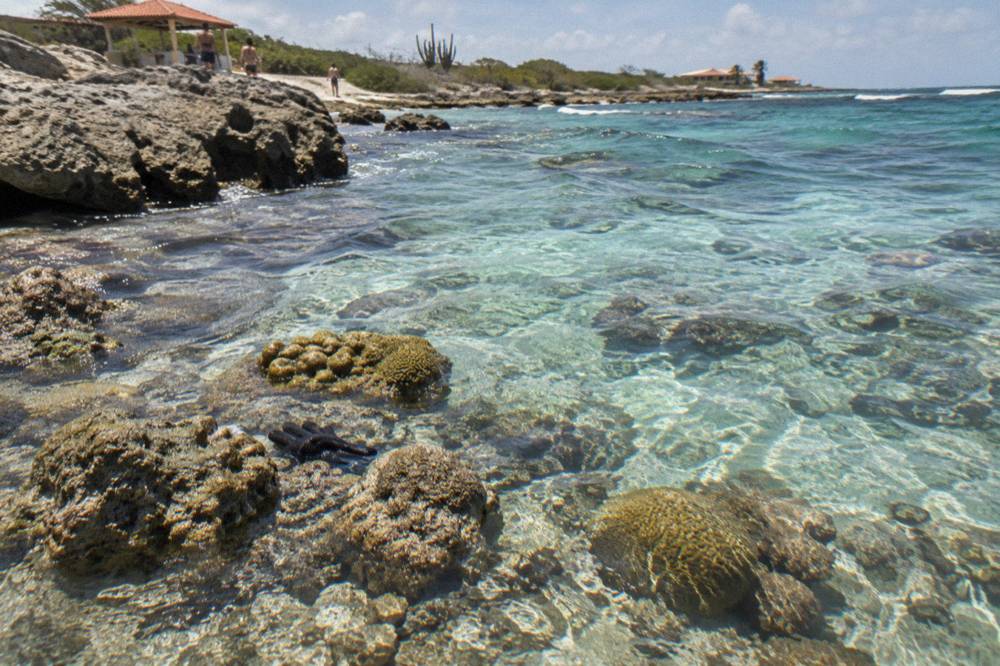
One more layer of protection is the reef and headland structure along the northwest coast. The snorkel sites cluster in shallow bays and pockets where swell from further out has already broken and dissipated before reaching the boat. That is why an operator can anchor at Boca Catalina while the water beyond the point shows whitecaps, and it is why the same sites work for beginner snorkelers week after week. The geography is doing quiet work on your behalf the whole trip.
| Period | Typical Conditions On The West Coast | What It Means For A Catamaran Trip |
|---|---|---|
| December to April | Dry, light and steady trade winds, dependable sea conditions | The classic comfortable window; book any departure time |
| February to July | Stronger northeasterly trades, windier afternoons | Fine in the morning; expect more spray and chop after lunch |
| June to August | Trade winds persist, afternoon chop builds | Morning snorkel trips are the steadier choice |
| September to November | The calmest seas of the year, lighter winds | Excellent for nervous sailors, despite hurricane-season dates |
For a fuller breakdown of the weather year, including how hurricane season actually plays out here, see the guide to Aruba sea conditions and hurricane season.
Does that calm coast mean you can skip thinking about motion entirely? Not quite, and that is the fair question a nervous sailor asks next.
What Actually Makes A Catamaran Stable
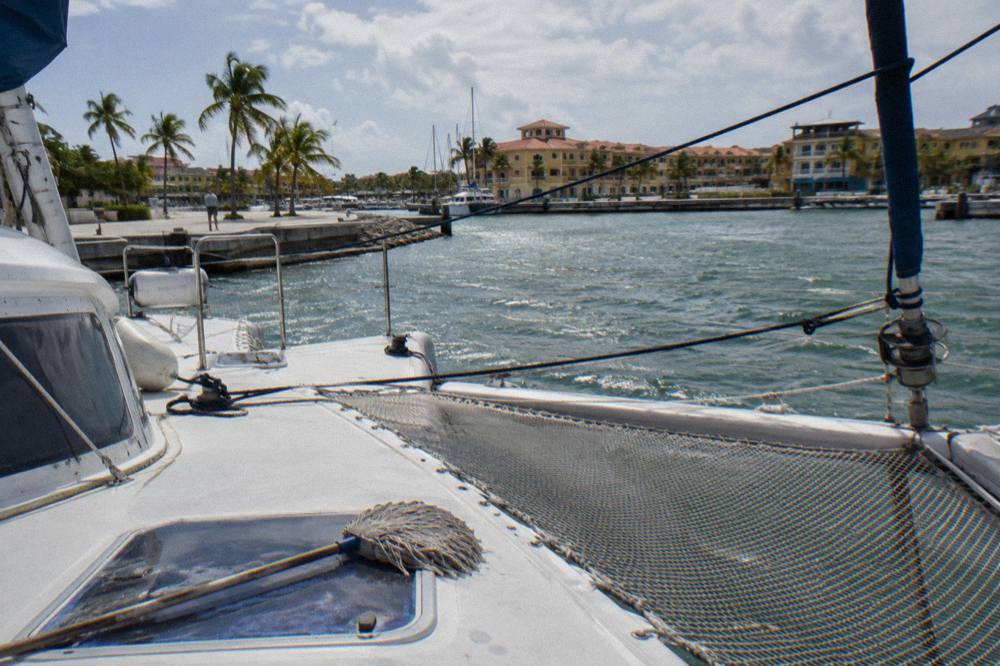
A catamaran's stability comes from width, not weight. Two hulls spaced far apart give the boat a wide stance, so it resists rolling and stays nearly level under sail where a single-hull boat would tilt. The broad deck also means more space away from the centerline, and motion over waves is slower and gentler than on a narrow vessel of similar length. Think of it like standing on a bus. Near the middle, over the wheels, you feel the road softly. At the very back, every bump is exaggerated. A catamaran puts more of its deck close to the calm middle of the boat's motion, and the trampoline nets at the bow, which look like the most exposed spot, sit forward of the worst movement for most conditions. Guests who worry about stability usually find the reality underwhelming in the best way: the boat moves, but it moves slowly and mostly upright.
There are limits, and pretending otherwise would not help you. A catamaran does not slice through a wave like a deep-keeled single hull; it rides over it, which can produce a quicker pitch motion in genuinely choppy water, and in strong wind a sailing catamaran prefers to ease sails rather than fight. None of that describes a normal Aruba day sail. The trips sold here run 2 to 4.5 hours along a sheltered coast, in waters selected precisely because they behave. The trade-off that matters for you is simpler: less rolling, more overall steadiness, and a deck wide enough to walk around without bracing against anything.
The design also changes what the crew can do with the space. A wide, level platform means shaded seating, a bar counter, room to stow gear, and on some boats a slide or a rope swing, which only makes sense on a vessel stable enough to host them. The Private Catamaran Adventure Cruise with Rope Swing and Water Slide, rated 4.9 across 41 reviews from $2,500 per group for up to 15 guests, is built entirely around that kind of platform, and that is a private charter priced per group, not per person.
It helps to know what the motion vocabulary means, because the words get used loosely. Rolling is side-to-side lean, the motion catamarans suppress best. Pitching is the bow rising and dipping over waves, which catamarans feel a little more quickly but in a shorter, softer arc on protected water. Heaving is the whole boat lifting and settling, common in ground swell and rare inside the bays these tours use. When you read a review mentioning a "bumpy" trip, it almost always means brief afternoon wind chop, not sustained rough sea. Knowing which motion bothers you lets you pick the trip and time slot that avoids it.
Stability explains the boat. The next question is what the sea itself does when it stops cooperating.
When The Sea Around Aruba Does Get Choppy
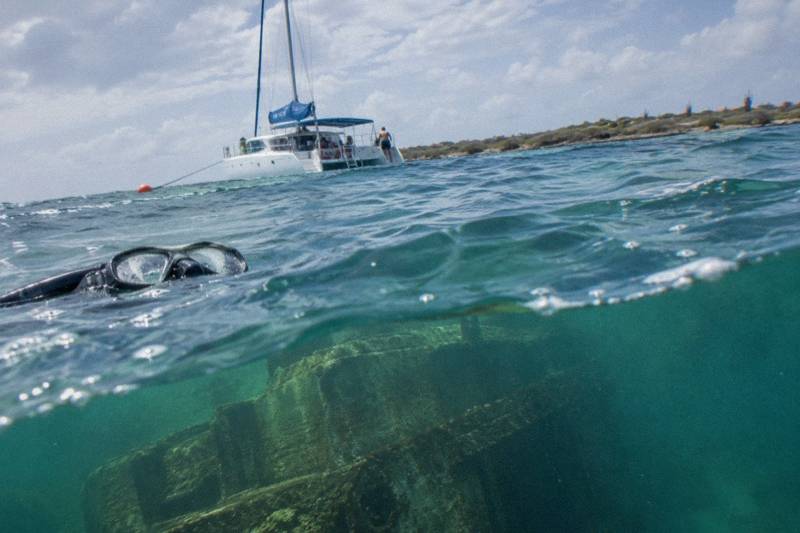
The choppiest water a typical Aruba catamaran guest encounters is the afternoon wind chop on the west coast, which builds as the day warms and the trade winds strengthen, usually from February through July. Morning departures are consistently flatter and clearer for snorkeling. Beyond routine chop, genuinely rough days are uncommon enough that operators treat them as cancellation or reroute events rather than something to sail through. You will feel routine chop as a short, quick bobbing rather than long swells, and the snorkel sites sit in shallow, sheltered pockets where it barely registers. Boca Catalina and the coves around Malmok are protected by the coastline itself; the Antilla wreck lies shallow enough that its upper parts reach within about 15 feet of the surface on a 398-foot ship, so the site works in conditions that would close a deeper, more exposed location.
Timing is the tool you control. If your stomach has opinions, book the earliest departure of the day. The Dolphin Catamaran Snorkel and Sail with Open Bar, rated 4.8 across 2,894 reviews from $69 per person for about 3 hours, is a morning-friendly option that pairs the calm part of the day with the wreck and reef stops, departing from the Delphi Watersports beach in front of the Hyatt Regency. You can read more in the Dolphin Catamaran snorkel and sail guide or check availability for the date you have in mind.
Where you sit on the boat is the second lever. The middle of the deck, near the bar and the mast, moves least. The bow nets move most in chop, which is exactly why they are the fun spot for confident guests and the spot to avoid if you are queasy. Outside decks help, fresh air helps, and watching the horizon rather than a phone screen helps more than almost anything else. None of this is specific to Aruba, of course. It is general open-water advice, and it applies anywhere catamarans sail.
Two honest caveats belong here. First, no operator on this island promises sea state, wind, wildlife or a sunset, and any writing that does is selling you something other than a boat trip. Second, the windward side of Aruba is a different body of water entirely, and if you go swimming off an east-coast beach on your own, that roughness has nothing to do with what your catamaran trip will feel like.
What Operators Do When Weather Turns
Every departure on a professional catamaran is a weather decision made by the crew, not the calendar. When conditions look wrong, operators reschedule, reroute along the coast, or cancel with a refund, and free cancellation up to 24 hours ahead is standard across the shared tours here. The crew also adjusts on the water: reefing sails, slowing down, or skipping a stop. This is worth internalizing because nervous guests often imagine being committed to a bad day. You are not. Most tours compared here include free cancellation; some private charters do not, so check the listing, and remember that an operator would rather move your trip than run it into a squall. Ask about the weather policy when you book, and check the booking page for each trip's exact terms, since details like rebooking windows vary by operator.
Aboard, the crew's job includes reading the guests as much as the sky. If the wind picks up mid-trip, the sails come in and the engine takes over; if a stop looks bouncy, the boat holds position somewhere calmer. The Arusun Catamaran Sail with Snorkeling in Aruba, rated 4.8 across 2,683 reviews from $63 per person for about 2.5 hours with drinks and snorkel gear included, is a good example of a short, flexible itinerary on a big platform, the kind of trip where a change of plan costs nobody their afternoon.
The captain's incentive runs in your favor, which is worth saying plainly. A crew that pushes a nervous group through rough water earns complaints, refunds and bad reviews; a crew that shortens a snorkel stop or motors home early earns a tip. Weather calls on these boats err toward comfort, and the 24-hour cancellation window means the genuinely bad forecasting surprises, the ones you can see coming a day ahead, cost you nothing to walk away from.
One rule of thumb from local guides: check-in is typically 30 minutes before departure, and if you are prone to motion sickness, remedies work best taken before boarding, not after the boat leaves the pier. For the full toolkit, read how to handle seasickness on an Aruba catamaran.
Is A Catamaran Better Than A Single Hull For Nervous Sailors?
For a nervous first-time sailor, a catamaran is usually the better choice, and the reason is rolling. Single-hull sailboats heel, leaning with the wind, and roll on swells, while a catamaran's twin hulls keep the deck close to level and dampen that motion. The trade-off is that a catamaran can pitch quicker over short chop, but on Aruba's sheltered coast that difference is minor compared with the comfort of staying upright. Practically, the catamaran also removes the mental load of a tilting boat. On a heeling single hull, everything from your drink to your sense of balance participates in the sail. On a catamaran, the table stays flat, the bar counter stays usable, and you can sit on the net with your feet in the spray while the boat itself barely changes attitude. For families and for guests who simply want to enjoy the water rather than prove anything, that steadiness is the product.
Note that not every boat marketed in Aruba is a catamaran, and the distinction matters for stability comparisons. Some island operators run schooners and one well-known party boat is listed as a trimaran, which is a different hull form again. Every tour compared on this site is a catamaran, so the stability picture described here applies across the board; the site's name, Aruba Catamaran Tours, reflects exactly that focus.
Which Tours Suit A First-Time Or Nervous Sailor?
Choose by duration, departure time and itinerary, in that order. Shorter morning trips on big, well-reviewed catamarans are the gentlest introduction, roughly 2 to 3 hours with an open bar and snorkel stops. If even mild motion worries you, a sunset sail along the coast is mainly cruising, though some crews stop for a swim. Private charters let a nervous group go at their own pace entirely. The table below pulls the options nervous sailors ask about most, with prices and ratings exactly as each tour is sold. Reviews mean different things at different pool sizes, so the counts are printed alongside every rating.
| Tour | Duration | Price | Rating | Why It Suits A Nervous Sailor |
|---|---|---|---|---|
| Arusun Catamaran Sail with Snorkeling | ~2 hours 30 minutes | from $63 per person | 4.8 across 2,683 reviews | Short, big boat, wreck and reef stops in sheltered water |
| Dolphin Catamaran Snorkel and Sail with Open Bar | ~3 hours | from $69 per person | 4.8 across 2,894 reviews | Morning-friendly, open bar, gear included |
| Banana Adventure Catamaran Tropical Sunset Sail | ~2 hours | from $50 per person | 5 across 141 reviews | Coasting cruise only, no snorkel stop, lowest price point |
| Aruba Sunset Catamaran Sail with Appetizers and Open Bar | ~2 hours | from $92 per person | 4.5 across 2,407 reviews | Coastal sunset route, food and drinks, no anchoring |
| Private Catamaran Adventure Cruise with Rope Swing and Water Slide | ~3 hours | from $2,500 per group, up to 15 guests | 4.9 across 41 reviews | Private group sets the pace; per-group price, not per person |
Two of these deserve a closer look. The sunset-only trips, like the Banana Adventure Tropical Sunset Sail from $50 per person, rated 5 across 141 reviews, involve cruising the Palm Beach to Eagle Beach coast rather than stopping, which some nervous guests prefer because the boat keeps a steady, gentle motion rather than pitching at anchor. Dinner options extend the same principle, trading a shorter sail for a meal on board; the Aruba Sunset Sail with Caribbean Dinner and Live Music runs about 2 hours 30 minutes from $109 per person, rated 4.7 across 279 reviews.
And for a group that wants the water all to itself, the private option in the table above turns the whole question of conditions into a conversation with the captain rather than a roll of the dice among strangers. A private group can ask for a shorter route, a calmer bay, or a slower pace, and on a per-group price the arithmetic is simply the flat fee split among your own party.
Common Questions About Catamarans And Rough Seas
Can Catamarans Handle Rough Seas?
Yes. A catamaran's twin hulls and wide stance resist rolling and keep the deck close to level, which makes them one of the steadier choices in unsettled water. In Aruba, rough conditions on the sheltered west coast are uncommon, and operators reschedule or cancel when the weather warrants rather than sail through it.
Will I Get Seasick On An Aruba Catamaran?
Most guests do not, thanks to calm lee-side water and stable boats, but motion sickness varies by person. Take remedies before boarding, choose a morning departure when the water is flattest, and stay mid-deck near the center of the boat rather than at the extremes.
What Time Of Year Is The Sea Calmest In Aruba?
Local guides report September through November as the calmest stretch of the year. December through April is also dependable, with dry weather and light, steady trade winds. The windiest period runs roughly February into July, when afternoon chop builds.
Do Catamaran Tours Get Cancelled For Weather?
Yes, when conditions warrant, operators reschedule, reroute along the coast, or cancel. The shared tours compared here all carry free cancellation, and crews adjust sails, speed and stops on the water. Check each booking page for the exact rebooking terms.
Is A Catamaran More Stable Than A Regular Sailboat?
For the rolling motion that bothers most passengers, yes. A catamaran stays nearly upright where a single-hull sailboat heels with the wind. The trade-off is quicker pitching over short chop, which on Aruba's sheltered coast is a minor factor.
Are Morning Or Afternoon Catamaran Trips Calmer In Aruba?
Mornings. The water is flatter and clearer before the trade winds build, which also makes morning the better window for snorkeling. Afternoon and sunset trips are still gentle, but expect more chop and spray, especially from February through July.
The short version: the boats are built for this, the coast protects them, and the crew holds the veto. Pick a morning departure, take any remedy before you board, and the odds are strongly in favor of a flat, warm, entirely forgettable-in-the-best-way sea.