Aruba Sea Conditions And Hurricane Season
Aruba sits outside the main hurricane belt, but wind, swell and the odd rough afternoon still shape which catamaran sail you should book and when. Here is what the sea actually does around the island, and what happens if your trip gets called off.
Short answer
Aruba's Atlantic hurricane season runs 1 June to 30 November, but the island lies south of the main belt and direct hits are rare. Catamaran tours run year round on the sheltered leeward coast. Most shared tours carry free cancellation, and morning departures usually meet the flattest water.
What Are Sea Conditions Like Around Aruba?
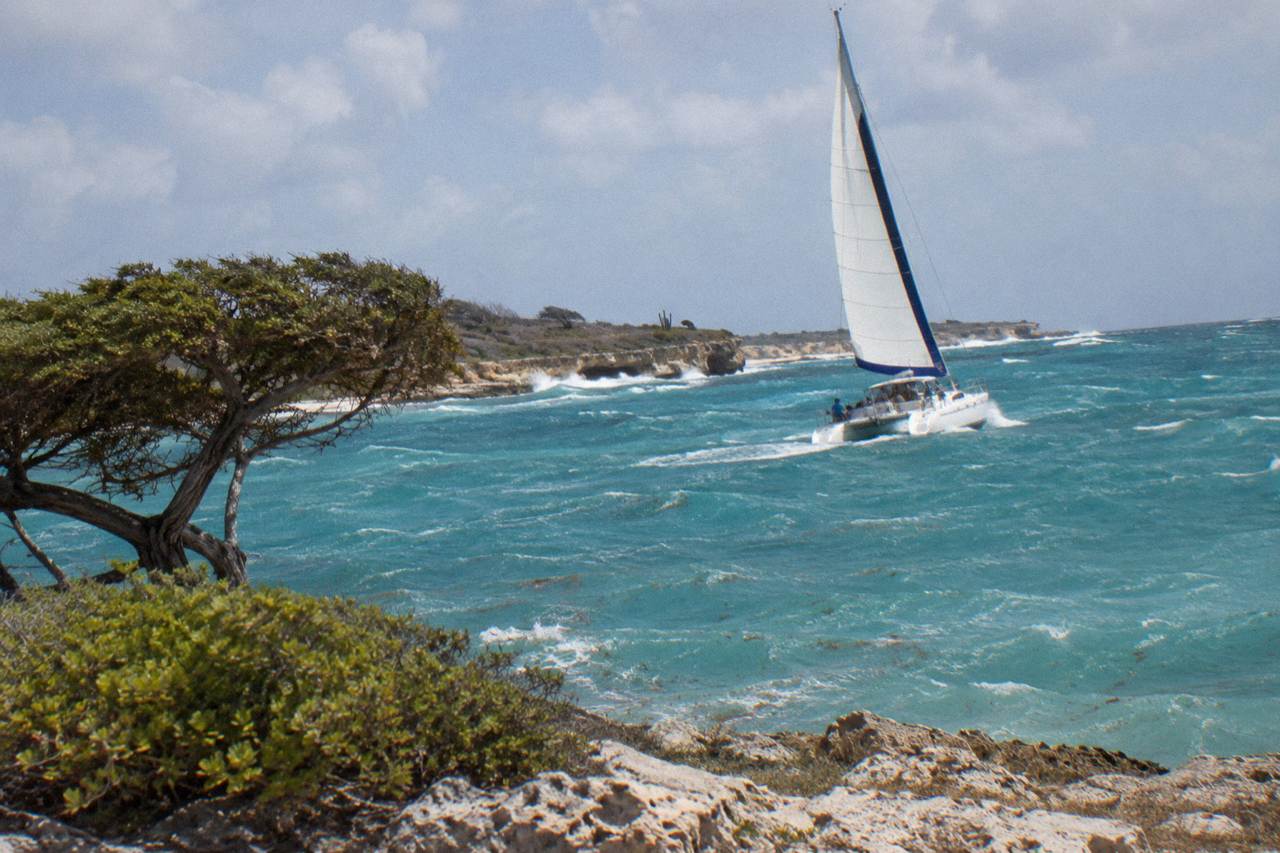
Aruba's leeward west coast, where nearly every catamaran sails, is sheltered from the open Atlantic by the island itself, and that geography is why Palm Beach and Eagle Beach trips run in weather that would ground boats elsewhere in the Caribbean, with sea temperature holding near 79 to 83 F all year. Persistent northeasterly trade winds blow across the island but arrive on the sailing side as a steadier, gentler force rather than open-ocean swell. What changes week to week is wind strength and surface chop, never warmth.
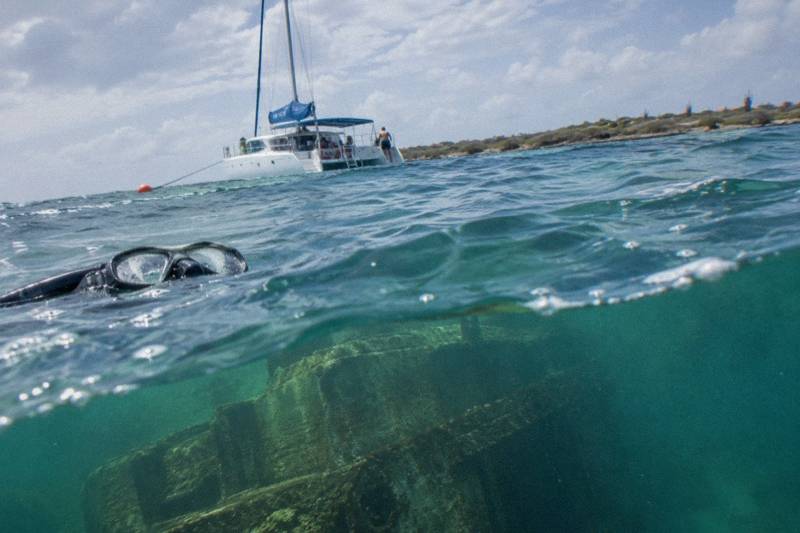
That geography matters more than the calendar. The high-rise hotels of Palm Beach, the departure point for most catamaran piers, face west into the Caribbean basin rather than the trade-wind-beaten windward shore. Snorkel stops such as the Antilla wreck off Malmok and Boca Catalina sit on that same protected side. Parke Marino Aruba, the marine park created by national decree in 2018 and managed by Fundacion Parke Nacional Aruba since 2019, prohibits anchoring on seagrass or coral, with mooring buoys the alternative where provided.
The practical pattern, confirmed across operator schedules and visitor reports, is a morning-to-afternoon shift. Early departures tend to meet the flattest, clearest water of the day. As the trade winds build through the afternoon, the surface gets more chop, which matters more for snorkel visibility than for safety. A sunset sail barely notices it. A 1 PM snorkel trip sometimes does.
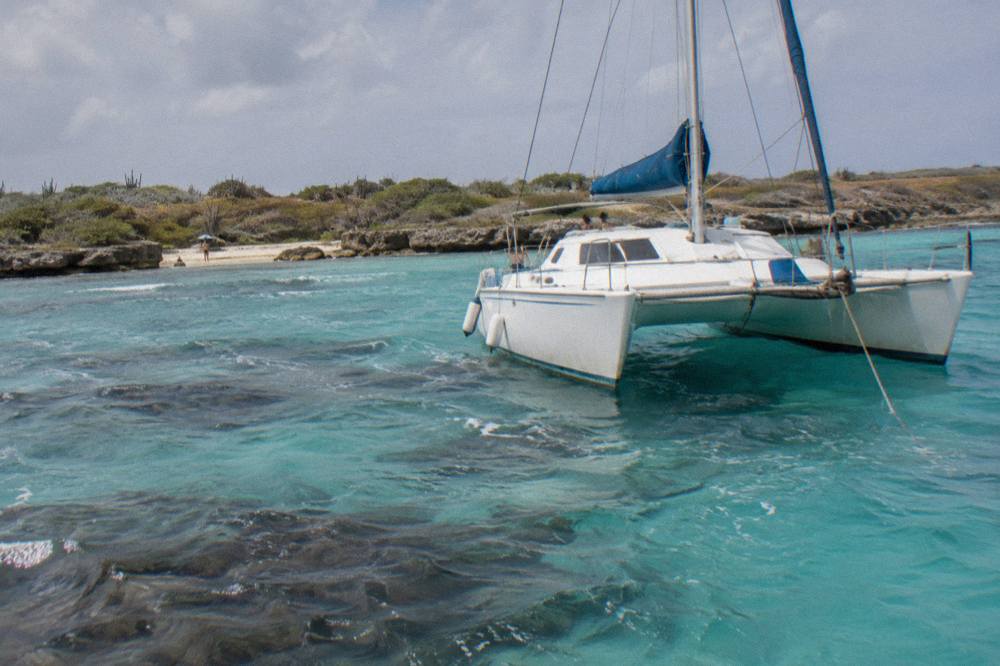
If you are choosing between a morning and afternoon slot and you care about snorkeling, take the morning. If you care about light and photographs, the afternoon and sunset slots deliver, and the boats handle the chop without issue. Anyone unusually sensitive to motion may want to read the site's piece on seasickness on an Aruba catamaran before locking a time slot.
When Is Hurricane Season In Aruba?
The Atlantic hurricane season runs from 1 June to 30 November each year, and by late October it is nearly over; Aruba falls inside those dates on paper but sits at the southern edge of the Caribbean, well away from where most storms actually track, so local sailing rarely notices. Storms that lash the northern Antilles tend to form and curve far north of Aruba's latitude. Direct hits on the island are historically rare, and the standard pattern is distant storms sending occasional long-period swell or extra wind rather than any local emergency.
It helps to picture the basin in layers. The Leeward Islands and the Greater Antilles absorb the bulk of hurricane activity. Aruba, together with Bonaire and Curacao, sits close to the South American coast at the belt's southern margin, a position that has spared it the worst of nearly every season on record. That is why the island markets itself as a year-round sailing destination, and why catamaran schedules in September and October look much like schedules in February.
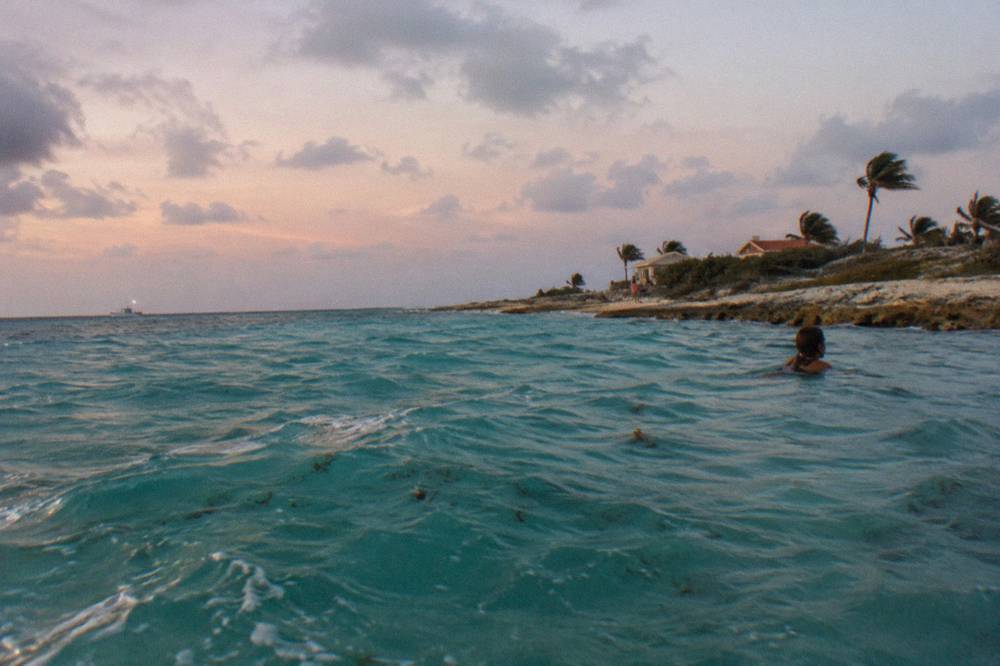
September to November is a period worth a closer look, because the pattern is not what most visitors expect. Rather than rough storm-season water, this stretch brings some of the calmest seas of the year as the trade winds relax, and the boats keep sailing through it. For the details on shoulder-season calm and wind timing, see the site's guide to the best time to visit Aruba.
Which Months Have The Best Sea Conditions?
December through April offers the most reliable combination of dry weather, light steady trade winds and flat leeward water, while September through November brings some of the calmest seas of the year despite technically falling inside hurricane season; no month closes the fleet, and the differences are about texture, not availability. February to July carries the stronger end of the trade-wind range, which produces brisker sailing and more afternoon chop.

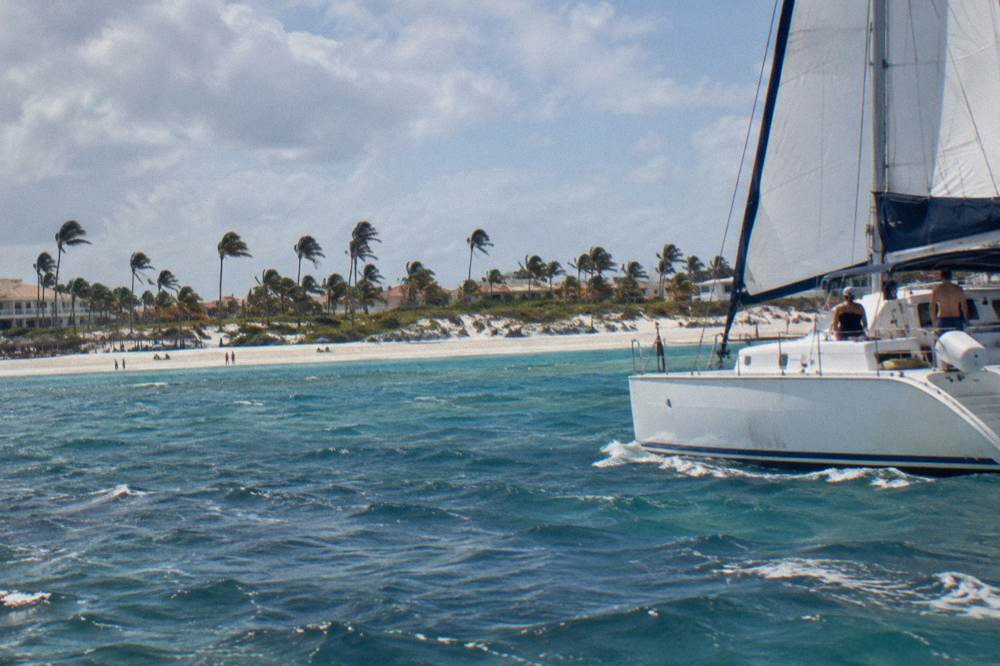
Here is the seasonal picture in one view:
| Period | Typical pattern | What it means for a catamaran tour |
|---|---|---|
| December to April | Dry, light steady trade winds, reliable flat leeward water | Smooth sailing, clear snorkel visibility, and peak demand for sunset and snorkel sails. |
| February to July | Trade winds at their stronger end | Brisker sailing, more afternoon surface chop, mornings noticeably calmer |
| August to November | Drier shoulder, quieter crowds, calmest seas of the year by September to November | Excellent value window; distant hurricane-belt activity rarely affects local sailing |
| June 1 to November 30 | Atlantic hurricane season dates | Applies to Aruba on paper only; the island sits south of the main storm belt |
The counterintuitive entry in that table is the shoulder season. Visitors often assume autumn means rough water because it means hurricanes up north. Around Aruba the opposite shows up: September through November often brings some of the calmest, glassiest water of the year, a general pattern noted by climate sites, with the trade winds at their most relaxed. The trade-off is a small chance that a distant storm system disrupts a given week.
Morning versus afternoon is a real decision inside any month. The Arusun Catamaran Sail with Snorkeling, from $63 per person and rated 4.8 across 2,683 reviews, departs the Aruba Watersports Center on Palm Beach, and its morning slot is the one to pick when you want the water at its flattest before the wind builds.
Afternoon trips are not a poor second. The Banana Adventure Catamaran Tropical Sunset Sail, from $50 per person and rated 5.0 across 141 reviews, sails the Palm Beach to Eagle Beach coast in the evening hours, exactly when chop matters least because nobody is putting a face in the water.
What Happens If A Catamaran Tour Is Cancelled?
If the operator cancels because conditions are unsuitable, you get your money back in full, and if you cancel yourself, nearly every shared tour on the island carries a free-cancellation window that ends shortly before departure; the exact cut-off time lives on each booking page, so read it before you pay. Operator cancellations for weather are the straightforward case: the money returns to the original payment method, typically within days rather than weeks. Traveller-initiated cancellations are where the wording deserves a closer look. If you're wondering how choppy the water can get before a captain calls it off, this look at how catamarans handle rough seas explains the conditions behind those weather decisions.
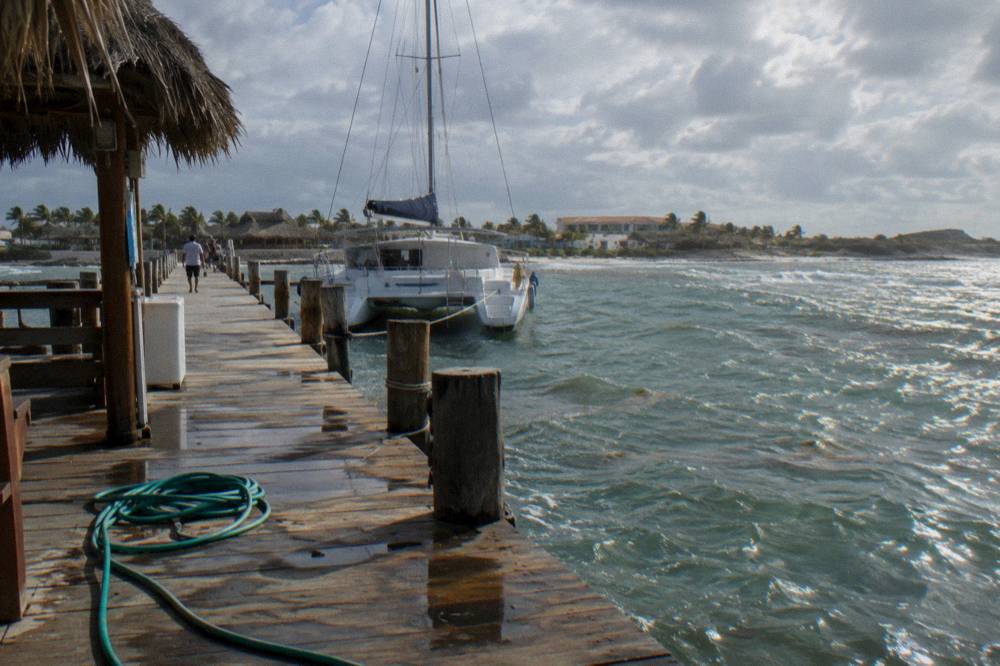
Across the shared and private trips covered on this site, free cancellation is the standard, not the exception:
| Tour | Price basis | Free cancellation |
|---|---|---|
| Dolphin Catamaran Snorkel and Sail with Open Bar | From $69 per person | Yes |
| Aruba Sunset Catamaran Sail with Appetizers and Open Bar | From $92 per person | Yes |
| Morning Snorkel Sail with Premium Champagne Brunch | From $85 per person | Yes |
| Half-Day Snorkel Sail Tour with Caribbean Lunch | From $107 per person | Yes |
| Private Catamaran Adventure Cruise with Rope Swing and Water Slide | From $2,500 per group | No |
Two distinctions in refund wording matter. Free cancellation means you can back out yourself within the stated window and pay nothing; it is not the same as a weather guarantee, which is an operator promise to refund or rebook if they cancel. The private charters in the table above are priced per group, not per person, so a cancellation decision on those is a bigger number: from $2,500 per group for up to 15 guests on the rope-swing and water-slide charter.
The second distinction is who decides. Captains make the call on the day, based on wind and swell at the pier, not on a forecast printed a week ahead. A trip can run under a cloudy sky and cancel under a blue one if the wind is wrong. When the captain calls a trip for weather, refund handling sits with the operator; most listings here carry free cancellation, so check the exact terms on the booking page, which is why the cut-off time on the booking page is worth ten seconds of reading.
If a rough-morning forecast has you hedging, a longer trip with more inclusions gives the operator more flexibility to shift timing or swap stops. The Half-Day Snorkel Sail Tour with Caribbean Lunch, from $107 per person and rated 4.8 across 860 reviews, lists four stops including the Antilla wreck and Malmok Reef, which leaves room to reorder the day around conditions.
Does Aruba Get Hit By Hurricanes?
No Caribbean island is immune on paper, but Aruba's position at the southern edge of the hurricane belt means direct hits are rare enough that locals plan around wind and swell rather than storm warnings, and most years pass without a single serious local impact. The storms that dominate regional headlines form well north of Aruba's latitude and recurve toward the Greater Antilles, Bermuda or the United States coast. What Aruba usually experiences from a distant system is a few days of added swell on the windward shore and freshened trade winds.
The island's sailing industry is built around that reality. Catamaran operators publish year-round calendars, keep the same departure piers in every season, and treat September and October as ordinary working months. When a rare system does approach the southern Caribbean, tours postpone or cancel with full refunds, and the disruption is measured in days, not weeks. For trip-planning context beyond boats, the site's overview of things to do in Aruba covers which activities are weather-flexible.
A related set of rules protects the reefs those tours visit, and they apply in every season. Parke Marino Aruba consists of four marine protected areas totalling 60.2 square km, including the reefs off Mangel Halto and the Oranjestad reef islands, and its management plan bars anchoring on seagrass or coral, with mooring buoys provided instead. On land, Aruba prohibits the import, sale and distribution of sunscreens containing oxybenzone, in force since 1 July 2020, bundled with the single-use plastics ban, and the island's visitor code of conduct asks guests not to touch or feed marine life and not to pick up starfish. Bring a mineral formula with zinc oxide or titanium dioxide, per the official Aruba code of conduct.
Is It Safe To Book A Catamaran In September Or October?
Yes, and these two months are among the better-kept secrets in Aruba sailing: hurricane season is at its statistical peak up north, but the island's southern position keeps local waters calm, crowds are thinner, and September through November is described by operators as the calmest sea window of the year. The honest caveat is a slightly higher chance that a given week sees added swell from a distant storm, and a slightly higher chance your specific departure gets rescheduled. Free cancellation on nearly every shared tour caps the downside at inconvenience.
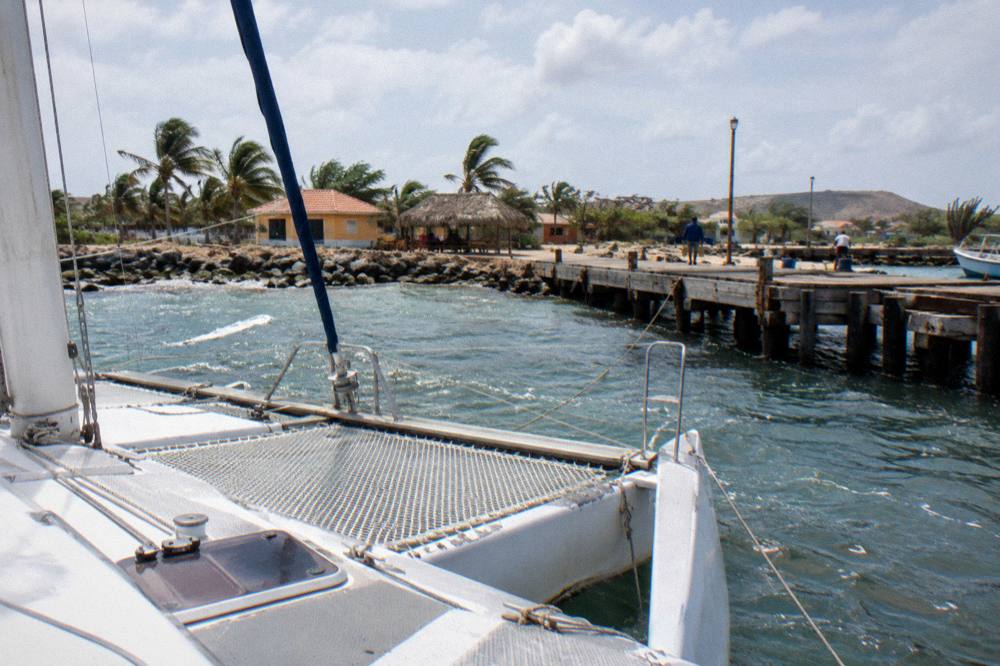
Think of it as a trade rather than a gamble. You give up the near-guaranteed blue-sky pattern of February and gain quieter boats, easier bookings and glassy mornings. The trade winds that strengthen from roughly February to July are at their gentlest in the shoulder months, which is precisely when snorkelers get the best visibility over sites like Boca Catalina and the Antilla, the 398-foot German cargo ship scuttled off Malmok in 1940.
A sensible shoulder-season booking has three parts. Choose a morning departure for the flattest water. Pick a tour with free cancellation, which is nearly all of them. And leave a spare day or two in your trip so an operator reschedule costs you nothing but a calendar shuffle. Travelers arriving by air should also complete the island's online ED Card in the final week before departure, a free form that carries a $20 sustainability fee for most air travelers aged 8 and up; the process is covered in the site's guide to Aruba entry requirements.
What Do Trade Winds Mean For Your Sail?
The northeasterly trade winds are Aruba's constant, blowing across the island year round and strongest from roughly February to July, and they shape your sail more than any other single factor: they cool the deck, fill the sails and build a predictable afternoon chop on the leeward coast. Without them the island would feel noticeably hotter and the catamarans would be motoring. With them, the same boats sail upright on two hulls, sails up, doing what they were built for.
The day runs in two halves. Mornings open lighter, with flatter water and better visibility below the surface, which is when snorkel-heavy trips depart. By early afternoon the wind has built, the surface has texture, and the experience shifts from underwater to on-deck. Sunset sails sit in the sweet spot: enough breeze to sail properly, no snorkeling to disturb, and the light doing the rest. The wind never disappears entirely, which is why evening trips still move under sail rather than engine on most days.
For travelers weighing Aruba against its neighbor, the wind is a real differentiator; Aruba sits at the southern edge of the Caribbean alongside Curacao, clear of most storm tracks. On balance, the trade winds are the reason Aruba Catamaran Tours exist as a category at all: a reliably windy, reliably sheltered island is close to ideal catamaran country, per the general climate pattern described at Aruba Buddies' seasonal guide.
One planning note ties the wind back to the water. Sea temperature holds around 79 to 83 F all year, so you are never choosing a month for warmth; you are choosing it for wind and crowd levels. The 2020 oxybenzone sunscreen ban is another constant, applying in every month equally.
How Should You Plan Around Conditions When You Book?
Pick your season for crowds and price, pick your time of day for the water, and pick your tour for its refund terms: those three decisions, made in that order, cover almost everything the sea can do to an Aruba sailing week. A February morning with calm water is lovely but so is an October morning with an emptier boat, and the second one often costs the same or less because shoulder-season availability is generous.
Departure logistics are the one piece that varies by tour rather than by season. Most catamaran trips board at the Palm Beach piers in Noord, a short walk from the high-rise hotels, while trips from Oranjestad, such as the Spronk sails leaving from the dock behind Lucy's Retired Surfers Bar, suit cruise passengers and those staying in the capital. Check-in is typically about 30 minutes before departure, and towels are rarely provided on board, so pack your own. The site's guide to Palm Beach marinas and departures maps the piers in detail. Once you know where you're boarding, the guide to Aruba booze cruises by catamaran covers what the trip actually includes, what it tends to cost, and the age and drinking rules to confirm before you book.
This quick reference pairs each concern with the tour type that handles it best:
| Your concern | Best fit | Why it works |
|---|---|---|
| Choppy-afternoon visibility | A morning snorkel sail, such as the Morning Snorkel Sail with Champagne Brunch, from $85 per person | Early water is the flattest and clearest of the day |
| Motion sensitivity | A short sunset sail, such as the Sunset Sail Experience, from $73 per person | Two hours on sheltered leeward water with no swim stops |
| Weather indecision | Any shared tour with free cancellation, such as the Iconic Aruba Sail and Snorkel Experience, from $67 per person | Back out yourself within the window at no cost |
| A fixed group date | A private charter such as the Private Sunset Catamaran Adventure Cruise, from $1,800 per group | One booking for up to 15 guests, reschedulable if the operator cancels |
The final habit that ties all of this together is simple: watch the forecast two days out, not two weeks out. Conditions around Aruba are decided close to departure, by the captain at the pier, and a same-week forecast tells you far more than an early one. Between free cancellation, year-round departures and an island that sits outside the storm belt, the sea rarely gets the last word on an Aruba catamaran booking.
Common Questions About Aruba Sea Conditions
When Is Hurricane Season In Aruba?
The Atlantic hurricane season runs 1 June to 30 November. Aruba sits south of the main storm belt, so direct hits are rare and catamaran tours run throughout the season.
Do Catamaran Tours In Aruba Get Cancelled For Weather?
Occasionally. Captains decide on the day, and a weather cancellation by the operator comes with a full refund. Most shared tours also carry free cancellation if you back out yourself within the stated window.
What Is The Calmest Time Of Year For Sailing In Aruba?
September through November is reported as the calmest sea window of the year, and December through April is the most reliable for dry weather and steady, gentle winds. Mornings are calmer than afternoons in every month.
Are The Trade Winds A Problem For Snorkeling?
Rarely a safety problem, but afternoon wind builds surface chop that can cut visibility. Book a morning snorkel departure if clear water is the priority.
Is September A Good Month For An Aruba Catamaran Tour?
Yes. Seas are calm, crowds are thin, and free cancellation on nearly every shared tour protects your booking if a rare distant storm disrupts the week.
What Is The Sea Temperature In Aruba?
About 79 to 83 F year round, warm enough for swimming and snorkeling in any month.