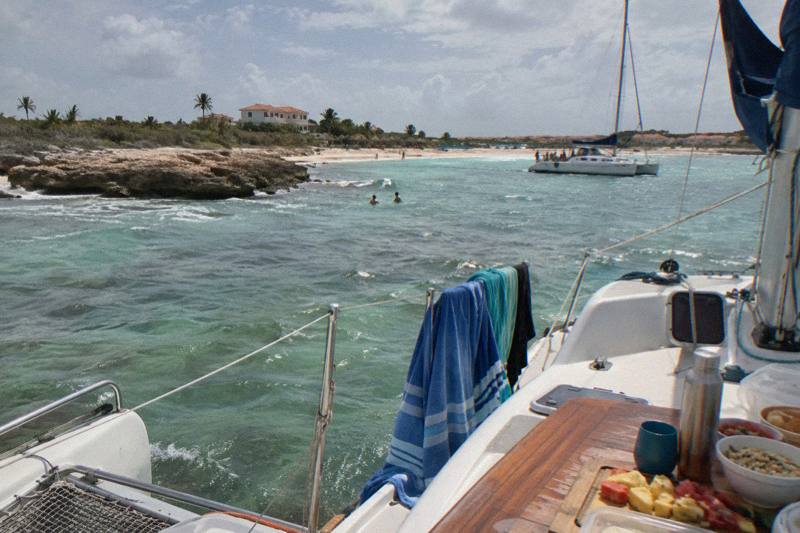
Seasickness On An Aruba Catamaran
Most worried passengers never feel a thing on an Aruba catamaran. Here is why the boats are stable, which sails and seats are calmest, and what actually helps before you board.
Short answer
Catamarans are among the most stable boats you can board, and Aruba's leeward west coast is sheltered from the trade winds. Shared snorkel sails run from $63 to $199 per person. Morning departures usually have the flattest water, mid-ship seats near the center move least, and simple habits before boarding help most nervous passengers.
Most people who worry about seasickness on a boat in Aruba never feel it. The island's catamarans sail the sheltered leeward west coast between Palm Beach, Eagle Beach and the northern snorkel sites, in water that is usually far gentler than the open Caribbean. The trade winds that keep the island breezy also build a light afternoon chop, so timing and seat choice matter more than most passengers expect. Where you base yourself on the island affects which dock you leave from and how calm the water feels that day, so our guide to the nicest part of Aruba to stay in is worth a read before you book any sail.
This guide walks through why catamarans behave the way they do, which Aruba sails suit nervous passengers, where to sit, and what genuinely helps before you board. The Dolphin Catamaran Snorkel and Sail with Open Bar, rated 4.8 across 2,894 reviews and priced from $69 per person for about three hours from the Delphi Watersports beach in front of the Hyatt Regency, is a good reference point throughout: a typical shared catamaran trip with two snorkel stops, the Antilla Shipwreck and Boca Catalina.
Will I Get Seasick On An Aruba Catamaran?
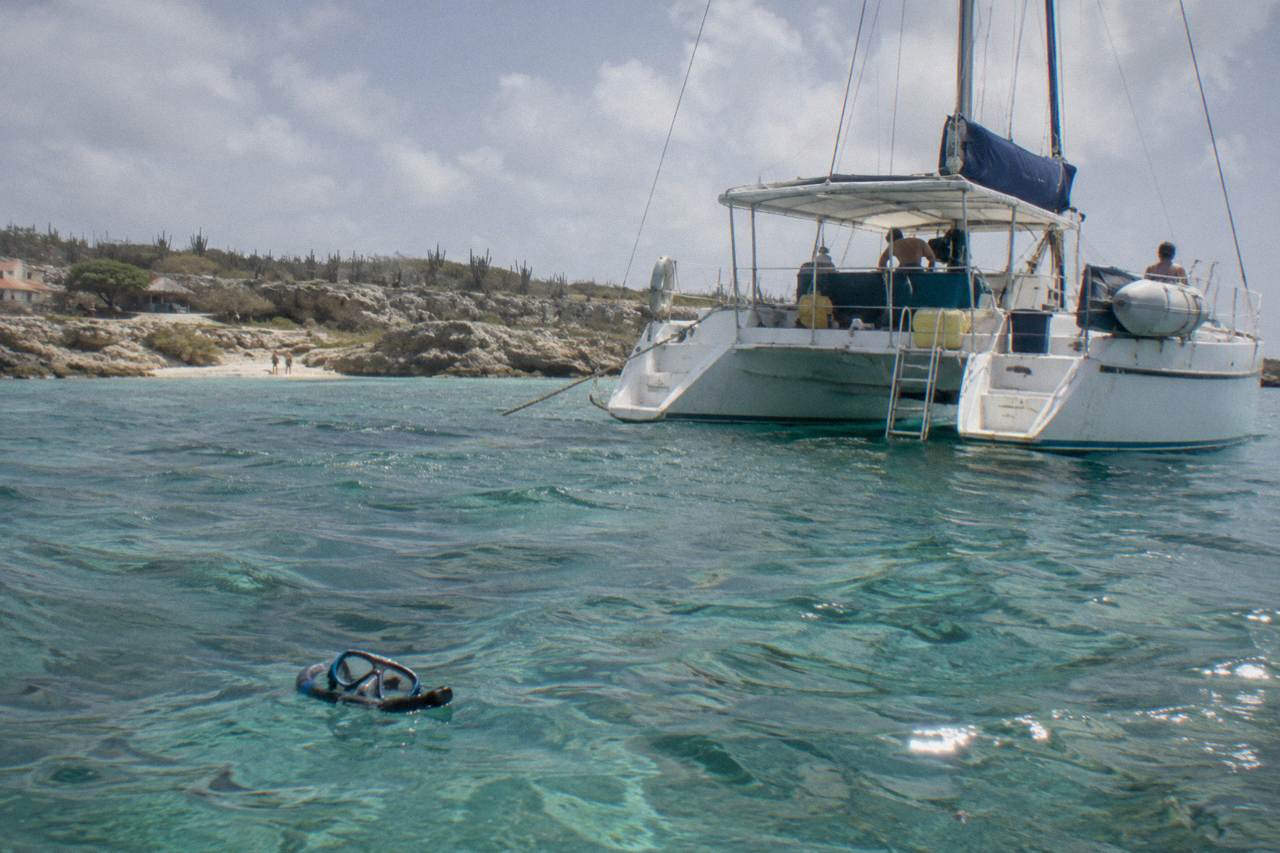
Probably not: your odds are better on an Aruba catamaran than on most Caribbean sailing trips, because two widely spaced hulls resist the rolling motion that triggers most seasickness, and departures run from the sheltered leeward west coast, where Palm Beach boarding points sit a taxi ride from the Oranjestad cruise terminal, on the typically calmer leeward coast. A small share of passengers still feel queasy in a heavy afternoon chop.
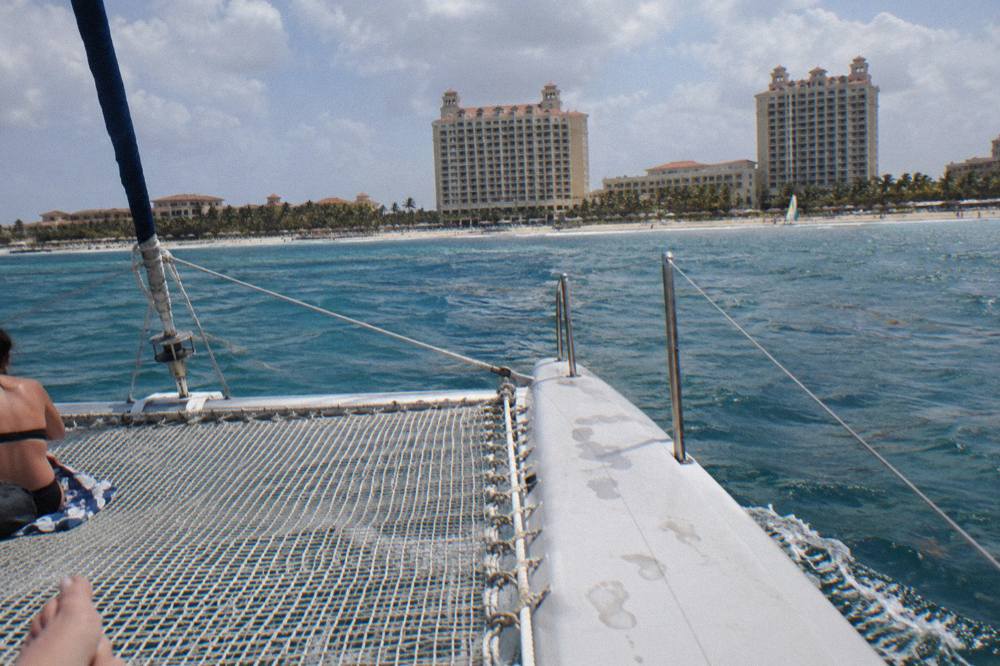
Motion sickness comes from a mismatch between what your inner ear feels and what your eyes see. A monohull boat heels, tilts and rolls, which floods the brain with conflicting signals. A catamaran's twin hulls stay nearly level and slice through chop rather than rocking over it, so the signal conflict is much smaller. That is the core reason operators choose catamarans for mixed crowds of first-time sailors, families and cruise passengers with only a few hours ashore.
Aruba adds two more advantages. The persistent northeasterly trade winds blow onshore along the east coast, but the departure piers at Pelican Pier, De Palm Pier, Piet's Pier Bar, the Delphi Watersports beach and Hadicurari Fishermen's Pier all sit on the protected west side. Sea temperature runs about 79 to 83 F year round, and the island sits south of the main hurricane belt, so direct storm disruption is rare even during the June to November season. None of this promises a glass-flat day, sea state always varies, but the baseline is forgiving. If that forgiving baseline has you leaning toward booking, our safety guide for US travelers visiting Aruba walks through entry steps, storm season timing, and what a day on a catamaran actually involves.
Who should still take care? Passengers who get carsick easily, who have been sick on ferries or fishing boats before, or who are sailing in the afternoon when the trade winds have had all day to build chop. For that group, the sections below on timing, seating and remedies are the ones that matter. If you want the deeper picture on boat behavior in rough water, the companion guide whether catamarans can handle rough seas covers hull design in detail.
Why Are Catamarans More Stable Than Other Boats?
Catamarans stay steadier because their two hulls sit several meters apart, letting the boat resist side-to-side rolling the way a wide stance resists a shove, while a monohull or narrow vessel rolls with every passing wave, and that rolling is the single biggest trigger of seasickness. Wide, flat decks give you room to walk around and fix on a stable horizon, so your eyes and inner ear agree, though short chop can produce quicker pitching.

Twin hulls, a wide beam and a shallow bridge deck are the mechanics. Instead of tilting as a wave passes, a catamaran tends to stay level and pass over it, which is why the platform feels more like a floating patio than a boat. Being able to stand up, walk to the bar, sit facing forward or lie on the trampoline netting at the bow gives you options a monohull never offers. Changing position is itself a relief strategy, because motion sickness sets in faster when you are confined below deck or staring at a fixed point close by.
The one weakness is bridge-deck slamming. When short, steep chop passes between the hulls, the flat panel spanning them can slap the water with a thud and a brief shudder. On a windy Aruba afternoon this happens in bursts, and it feels more dramatic than it is. It is uncomfortable noise, not danger, and it is one more reason nervous passengers prefer morning sails, when the water is usually at its flattest. September to November tends to bring the calmest seas of the year, while trade winds blow strongest roughly February to July, so season shapes the experience as much as time of day.
What this means for choosing a tour in Aruba is simple: every tour here runs on a catamaran, so the stability baseline is already set. The differences worth weighing are duration, time of day and stops, which the next section compares.
Which Aruba Sails Are Calmest For Nervous Passengers?
Nervous passengers do best on shorter sails in calmer water: the roughly two and a half hour Arusun Catamaran Sail with Snorkeling (from $63, rated 4.8 across 2,683 reviews) keeps exposure short, while the roughly two hour Sunset Sail Cruise aboard the Dolphin Catamaran (from $59) stays on the coastal sunset route; avoid longer four and a half hour trips with more open water, and pick morning departures for the flattest conditions.
For a worried passenger, three variables drive the day: how long you are out, what time you leave, and how far offshore the route runs. Coastal sunset sails along Palm Beach and Eagle Beach stay in sheltered water the whole way. Snorkel sails that head to the Antilla Shipwreck and Boca Catalina, off Malmok at the northwest tip, spend more time in open water but still inside the sheltered leeward zone. The longest trips, like the four and a half hour turtle and shipwreck sails, simply multiply exposure, which is fine for most people and worth thinking about twice if you are anxious.
| Tour | Duration | Price | Rating | Exposure Notes |
|---|---|---|---|---|
| Arusun Catamaran Sail with Snorkeling | ~2 hours 30 minutes | from $63 per person | 4.8 across 2,683 reviews | Short sail, Antilla and Boca Catalina stops |
| Sunset Sail Cruise aboard the Dolphin Catamaran | ~2 hours | from $59 per person | 4.6 across 899 reviews | Coastal route, no listed snorkel stops |
| Sunset Catamaran Sail with Appetizers and Open Bar | ~2 hours | from $92 per person | 4.5 across 2,407 reviews | Palm Beach coast only |
| Half-Day Snorkel Sail Tour with Caribbean Lunch | ~4 hours | from $107 per person | 4.8 across 860 reviews | Three snorkel stops, four hours at sea |
| Snorkel with Turtles at WW2 Shipwreck Includes Sunset & BBQ | ~4 hours 30 minutes | from $119 per person | 4.6 across 379 reviews | Full-day style, open water segments |
The table is a planning aid, not a ranking. A four hour sail is not off limits to a nervous passenger; it just rewards the preparation in the sections below more than a two hour coastal cruise does. If you are leaning toward a long morning trip, the morning champagne brunch snorkel sail format is described in the snorkel tour guide.
Between those two poles sit the mid-length options. The roughly three hour Dolphin Catamaran Snorkel and Sail with Open Bar, from $69 per person from the Delphi Watersports beach in front of the Hyatt Regency, splits the difference: enough time for the Antilla Shipwreck and Boca Catalina, not so much that a nervous stomach has hours to work on you. Its 4.8 rating across 2,894 reviews reflects a large body of guest feedback for a single catamaran trip.
Where Should You Sit To Avoid Seasickness?
Sit as close to the center of the boat as possible, at deck level, facing forward, with a clear view of the horizon. Because the center is the pivot point, it moves the least, so avoid the bow, the stern, enclosed cabins, and the trampoline netting in choppy conditions, and stay outside where your eyes can find the shoreline.
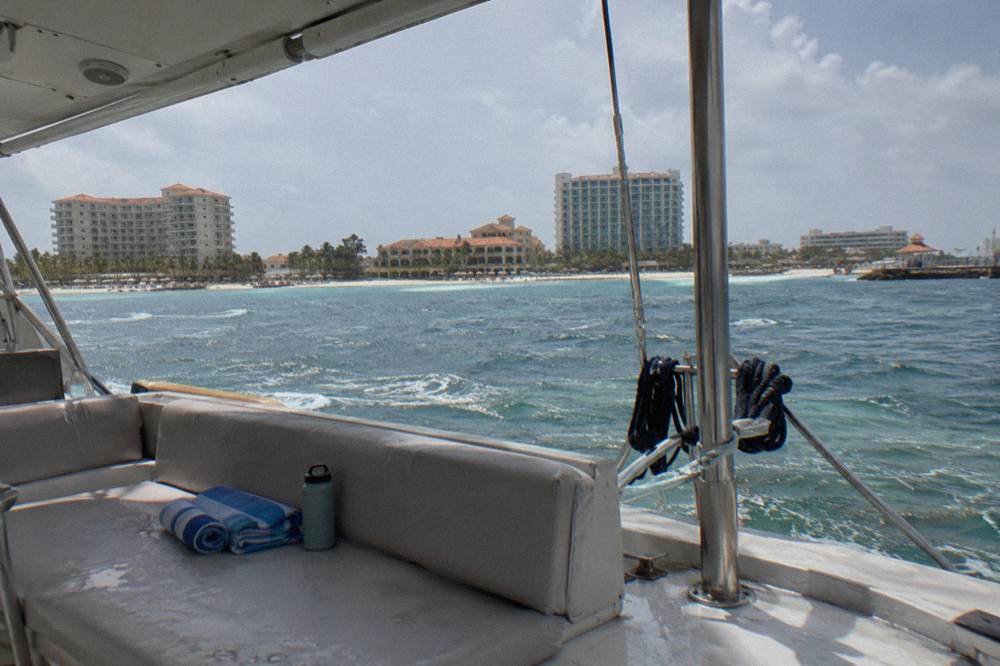
The physics is simple. A boat pitches around its center of gravity, so a seat amidships rises and falls less than one at the bow, where every wave is a small elevator ride. Deck level beats the roof or the upper helm station, because higher points swing through a wider arc. Facing forward helps, because your body then anticipates the motion instead of being surprised by it, the same reason the front seat of a car feels better than the back.
The horizon is your friend. Motion sickness eases when your eyes lock onto a stable distant reference, so a seat with a clear view of the Palm Beach high-rise strip, the California Lighthouse or the coastline gives your brain something steady to reconcile with what your inner ear reports. Reading, scrolling or staring down at gear is the fastest way to trigger queasiness on a moving deck, even in gentle conditions. If you feel the first warning signs, a pale, cold, sweaty feeling, stand up, face the shore and take slow breaths.
On Aruba's shared catamarans the crew knows this drill. Tell them at check-in that you are nervous and they will generally point you to the calmest seats and keep an eye on you. The skipper also watches the chop and adjusts course; a slight change of angle into the swell makes a surprising difference. Check the booking page for each tour's layout details, since deck plans vary by boat.
| Position on the boat | Motion | Best for |
|---|---|---|
| Center, deck level | Least movement | Nervous passengers, first-timers |
| Aft seating, shaded | Moderate, sheltered from spray | Families, anyone avoiding sun |
| Bow trampoline netting | Most bounce, spray in chop | Confident passengers in calm water |
| Upper deck or helm area | Wider swing | Views, not stability |
| Enclosed cabin | Confined, no horizon | Avoid if prone to queasiness |
What Remedies Work Before You Board?
A few simple habits have the widest track record: sleep well the night before, eat a light meal rather than boarding on an empty or heavy stomach, hydrate with water instead of alcohol, and take any motion-sickness remedy before you board, not once you feel ill, since these remedies work preventively. Ginger, taken as candy, tea, or capsules, is a widely used non-medicinal option; for dosing and suitability questions, ask a pharmacist or your doctor.
Timing is the part people get wrong. By the time nausea arrives, preventive measures have largely missed their window, so the work happens on shore. Motion-sickness tablets are conventionally taken well before departure, follow the product's own instructions for timing, and crew members commonly remind passengers to take remedies before boarding if they know they need them. A light meal of plain food an hour or two before check-in settles better than either a skipped breakfast or a full resort buffet. Alcohol the night before, or mimosas at brunch before a morning sail, is a reliable way to make the day harder. The wider set of guides lives on Aruba Catamaran Tours.
| Approach | How it is used | Notes |
|---|---|---|
| Ginger (candy, tea, capsules) | Before and during the sail | Widely used, non-medicinal |
| Motion-sickness tablets | Before boarding, per product instructions | Ask a pharmacist about suitability |
| Acupressure wristbands | Worn from check-in | Popular, inexpensive, no dosing |
| Light meal and water | One to two hours before | Avoid heavy, greasy or empty |
| Horizon watching and fresh air | Continuously on board | Free and immediately effective |
Beyond remedies, plan the practical layer. Check-in is typically about 30 minutes before departure, so arrive without rushing, since stress and heat at the pier are poor preparation. Bring reef-safe sunscreen, Aruba prohibits sunscreens containing oxybenzone under a law in force since July 2020, so a mineral formula with zinc oxide or titanium dioxide is the compliant choice, and apply it before boarding so you are not staring down at a bottle mid-sail. Towels are rarely provided on board, so pack your own. The full packing list lives in what to bring on an Aruba catamaran.
Do Morning Or Sunset Sails Have Calmer Water?
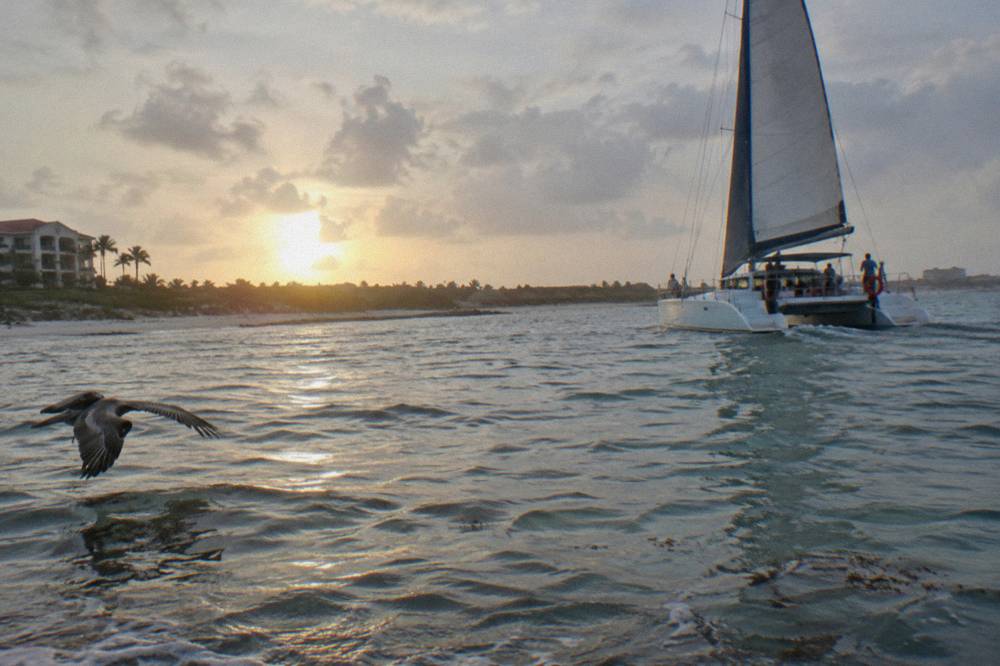
Mornings usually do. The trade winds build through the day, so a morning departure typically sails on the flattest, clearest water, while afternoon and sunset slots carry more chop from winds that have had hours to work the surface. September to November tends to offer the calmest seas of the year overall, and trade winds blow strongest roughly February to July. Sunset sails are still short and coastal, so plenty of nervous passengers enjoy them without trouble.
The daily rhythm on the leeward coast is consistent enough that operators plan around it. Morning catamaran snorkel trips get the glassy conditions, better underwater visibility at the reef stops and cooler air. By early afternoon the wind has freshened, the surface is choppy and the bridge deck starts to thud. Late-afternoon and sunset departures inherit that built chop, but they also stay close to the Palm Beach and Eagle Beach shoreline, which softens the experience. A nervous passenger choosing between a morning snorkel sail and a sunset cruise is choosing between the calmest water and the shortest, most sheltered route.
The calendar matters alongside the clock. December to April brings dry weather and light, steady trade winds that many operators treat as the most reliable window. Roughly February to July, the winds blow harder. September to November, with hurricane season nearly over for the year and the island still south of the main storm belt, tends to deliver the calmest seas. The seasonal detail is covered more fully in Aruba sea conditions and hurricane season.
If calm water is your priority, the morning options stand out. The Morning Snorkel Sail with Premium Champagne Brunch, about four hours from $85 per person, rated 4.7 across 2,238 reviews, sails at the best hour of the day, visiting the Antilla Shipwreck, Boca Catalina and Malmok from Pelican Pier. It is a longer trip, but it combines the calmest conditions with the most relaxed pace.
For a morning on the water, the four hour Morning Snorkel Sail aboard the Palm Pleasure Catamaran from De Palm Pier, from $124 per person and rated 4.7 across 708 reviews, hits the Antilla, Boca Catalina and Arashi Beach before the wind builds. Either way, booking a morning slot is the single easiest decision a worried passenger can make.
What Should You Eat, Drink And Pack For A Calm Sail?
Eat a light, plain meal one to two hours before check-in, drink water steadily through the morning and keep alcohol minimal until you know how the boat treats you, since the open bar is included but optional. Pack reef-safe mineral sunscreen, your own towel, a hat, sunglasses and a light layer for the wind. Skip heavy, greasy food before boarding and treat the pre-sail hours as gentle preparation rather than a warm-up party.
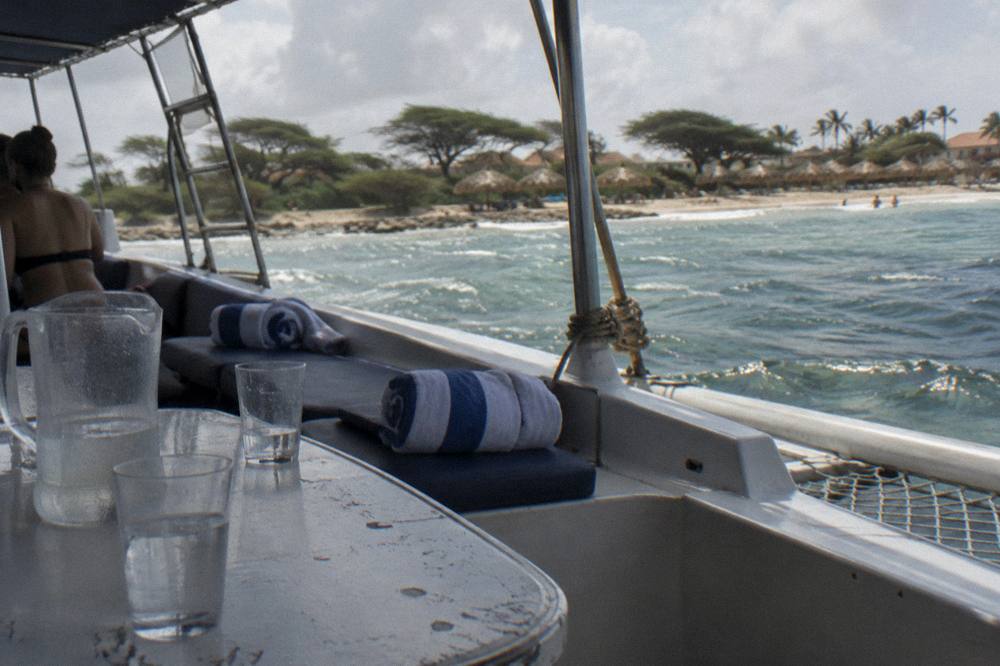
Many shared sails include an open bar, and snorkel gear belongs to the snorkel trips, not the sunset and dinner cruises, but what your body does with them is up to you. Rum punch on an empty stomach under the Caribbean sun is a bad combination even on a perfectly stable boat. A common pattern among passengers who sail comfortably is water first, food early, and the first cocktail only after the boat is underway and you know how you feel. The crews pour generously and the bar stays open, so there is no prize for starting fast.
Packing is a small list done well. Reef-safe sunscreen, applied on shore, protects both you and the reefs at Boca Catalina and Mangel Halto, which sits inside one of Aruba's four marine protected areas. A towel, because few boats provide them. A hat that will survive wind, sunglasses, and something warm-ish for the sail home after sunset, when the trade breeze turns cool on wet skin. Seasickness remedies, if you use them, go in your day bag, not your hotel safe, and the wristband or ginger lives where you can reach it at the first sign of trouble.
What If You Feel Queasy Anyway On The Day?
**Move to the center of the boat at deck level, face the horizon or the shoreline, and breathe slowly and deeply while you tell a crew member. If you start to feel unwell on board, tell a crew member early rather than waiting it out; most early seasickness fades once you are off the water.
The progression is predictable, which makes it manageable. It starts with pallor, cold sweat and vague unease, then builds to nausea. Catching it at the first stage matters: stand up, walk to mid-ship, fix your eyes on the California Lighthouse or the high-rise strip, and let your body re-sync. Sipping cold water helps. Lying flat on the shaded aft deck with eyes closed works for some people, though staying upright with a horizon view works for more. The worst moves are retreating to an enclosed space, staring at a phone, or trying to sleep it off below deck.
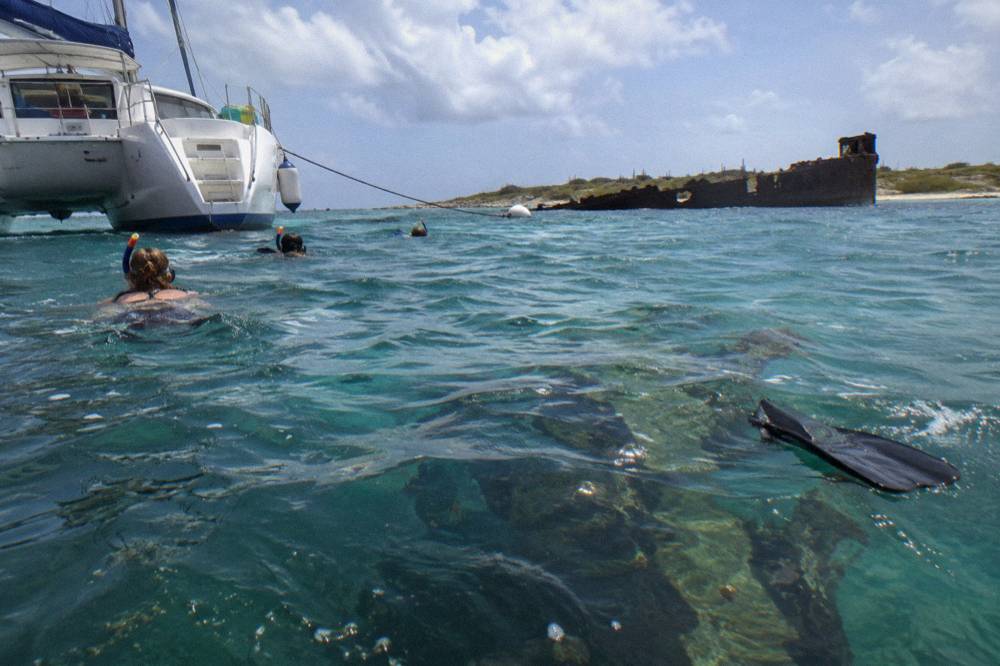
Snorkel stops are a secret weapon. In the water you are not being rocked by the boat at all, and floating face-down in 80-degree water with a reef below is about as motion-friendly as the ocean gets. Nervous passengers often find the swimming segments the easiest part of the day. If your trip includes the Antilla Shipwreck, a 398-foot German cargo ship scuttled in 1940 and now one of the largest wrecks you can snorkel in the Caribbean, the distraction alone is worth the trip out.
Communicate early. The crew would far rather reseat you at the first symptom than clean up at the second. On the rare occasion someone is genuinely ill for a whole trip, the consolation is that it ends: these are two to four and a half hour sails, not ocean crossings, and departure points sit close together, with many trips leaving from the Palm Beach piers. Operators cannot promise conditions, wildlife or a smooth sail, sea state varies, but they can and do handle uneasy passengers daily.
Which Tour Should A Worried First-Timer Actually Book?
Start with the roughly two and a half hour Arusun Catamaran Sail with Snorkeling, from $63 per person and rated 4.8 across 2,683 reviews, because it is the gentlest full experience: two snorkel stops, an open bar, and a quick return to the Aruba Watersports Center pier on Palm Beach. If even that feels long, a roughly two hour sunset cruise from $59 per person keeps you within sight of the beach the entire time.
The logic is exposure in manageable doses. A first-timer who sails a short coastal route, feels how stable a catamaran actually is, and steps back on the pier thinking "that was it?" is well placed for a half-day snorkel trip on the next visit. The reverse order, booking a four and a half hour turtle and shipwreck sail as your first-ever boat trip, stacks every risk factor at once, duration, open water and a long day in the sun. No tour is the wrong pick, only better and worse sequences to try.
Budget rarely decides it. Shared catamaran tours on Aruba run from $50 per person for the roughly two hour Banana Adventure Tropical Sunset Sail, rated 5 across 141 reviews, up to $199 per person for the four and a half hour champagne and lobster sails, rated 4.8 across 237 reviews, with most snorkel options clustered between $63 and $124. At those prices the choice is really about duration, departure time and route, all covered above. For the wider comparison, including dinner and private options, see how much an Aruba catamaran tour costs.
One last reassurance: bookings on these tours carry free cancellation where the tour is marked with it, so a nervous passenger can reserve a morning slot, watch the forecast, and still change plans. Reserve the seat, prepare like the sections above, and let the boat do the stable, twin-hulled thing it was designed to do.
Common Questions About Seasickness On An Aruba Catamaran
Will I Get Seasick On An Aruba Catamaran?
Most passengers do not. Catamarans resist the rolling motion that triggers most seasickness, and Aruba's departure piers sit on the sheltered leeward west coast. Passengers who get carsick easily or who sail in the afternoon chop are the group most worth preparing, with a mid-ship seat, a horizon view and remedies taken before boarding.
Why Are Catamarans More Stable Than Other Boats?
Two widely spaced hulls keep the deck nearly level and stop the side-to-side rolling that makes monohulls uncomfortable. The wide deck also lets you move around and find a stable horizon. The trade-off is an occasional thud when short chop passes between the hulls, which sounds worse than it feels.
Where Should I Sit On A Catamaran To Avoid Seasickness?
As close to the center of the boat as possible, at deck level, facing forward, with a clear view of the shoreline or horizon. Avoid the bow trampoline in choppy water and any enclosed space where your eyes cannot find a stable reference.
Do Morning Or Sunset Sails Have Calmer Water In Aruba?
Mornings, usually. Trade winds build through the day, so early departures sail the flattest water while afternoon and sunset slots carry more surface chop. Sunset cruises compensate by staying short and close to the Palm Beach and Eagle Beach coast.
What Should I Eat Before A Catamaran Sail?
A light, plain meal one to two hours before check-in, with steady water through the morning. Skip heavy or greasy food, keep alcohol minimal before departure, and take any motion-sickness remedy before boarding rather than after symptoms start.
What If I Feel Queasy On The Boat Anyway?
Move to the center of the boat at deck level, face the horizon, breathe slowly and tell a crew member immediately. Crews handle uneasy passengers every week. Symptoms usually fade quickly once you are back on the pier, and snorkel stops often feel better than the boat itself.