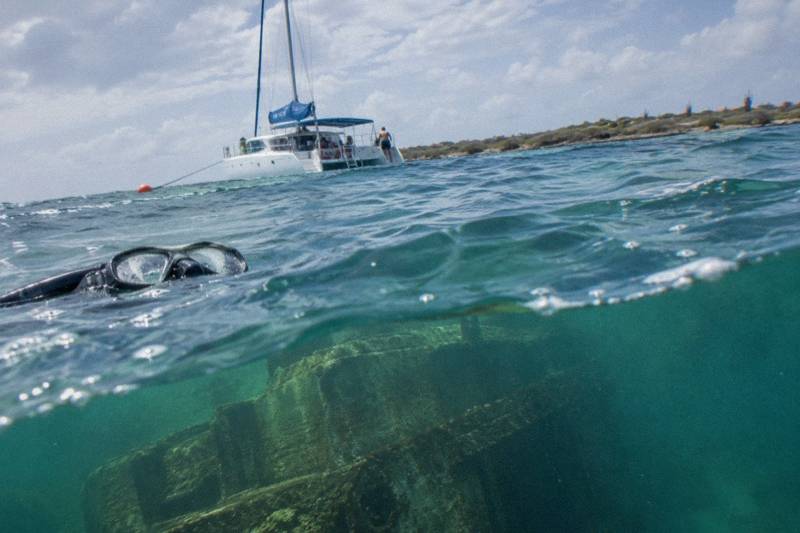
Best Beaches In Aruba
Aruba has more than 20 public beaches, every one of them free to walk onto, and the differences between them matter more than most guides admit. Here is how the island's best beaches actually compare, and which ones you can only reach from the water.
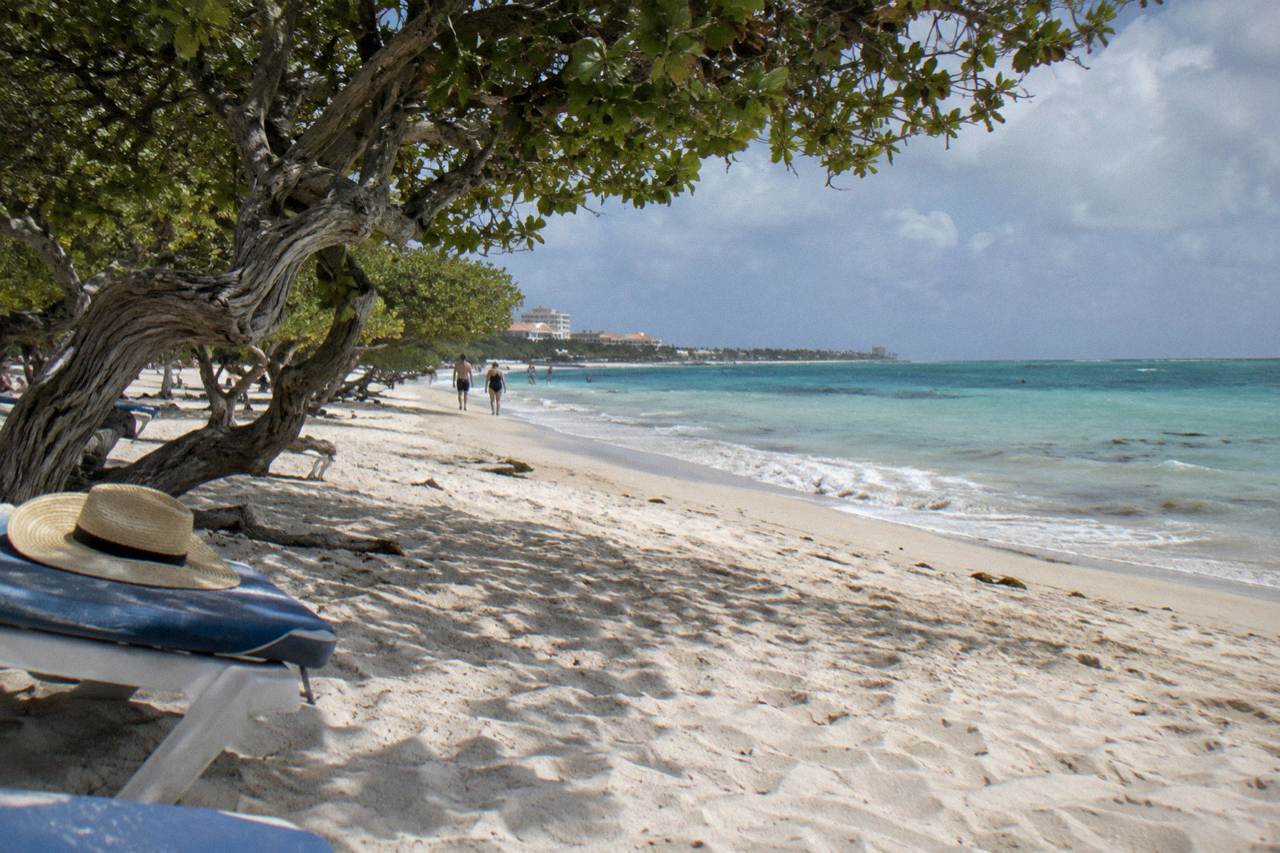
Short answer
Eagle Beach was named the number one beach in the Caribbean in the 2026 Travelers' Choice Awards, with Palm Beach at number six. Both are free public beaches with more than 20 others across the island. Quieter spots like Boca Catalina and Mangel Halto reward travelers who arrive by boat or with their own gear.
Eagle Beach took the top spot as the number one Best of the Best beach in the Caribbean in the 2026 Travelers' Choice Awards, and Palm Beach came in at number six on the same list. That is an unusual result for one small island, and it frames the real question for a visitor: not whether Aruba has good beaches, but which of its more than 20 public beaches fits the day you actually want. All of them are open to everyone with free public access, per the island's official tourism site, so the choice comes down to sand, water, crowds and how you get there. Once you've settled on a stretch of sand, our guide to free and budget-friendly things to do in Aruba points you toward shore snorkeling spots, viewpoints, and cheap ways to get out on the water.
This roundup covers the headline beaches, the quieter snorkel coves, the shore access rules that catch visitors out, and the way a catamaran sail fits into a beach day. Several of the best water spots on the island, Boca Catalina, Tres Trapi and the Antilla shipwreck, are simpler to reach from a boat than from the road, which is why a beach guide on this site also spends time on piers and sailing options. For a wider look at the vessels themselves, start with the guide on how to choose the best catamaran in Aruba.
Which Are The Best Beaches In Aruba Overall?
The two banner names are Eagle Beach and Palm Beach, ranked number one and number six in the Caribbean in the 2026 Travelers' Choice Awards, and both are free public beaches. Beyond them, Aruba lists more than 20 public beaches, all open to everyone, stretching from the calm leeward west coast to the windward south point. The honest answer is that the best beach depends on what your day looks like: swimming, snorkeling, people-watching or quiet. If a quiet stretch of sand sounds appealing, the guide to Aruba's overlooked snorkel bays and shipwreck sites points you toward the corners of the island most beachgoers never reach.
Eagle Beach is the classic postcard: wide sand, the famous fofoti and divi trees, and enough room that it never feels packed even in high season. Palm Beach, a few minutes north, is the resort strip, backed by high-rise hotels, beach bars and water sports operators. The two sit close together on the leeward coast, where the water stays sheltered from the persistent northeasterly trade winds that rake the exposed eastern shore. Sea temperatures run about 79 to 83 F year round, so the swimming window never really closes.
North of the strip the character changes. Arashi Beach, at the island's northern tip, is a locals' favorite with good shore snorkeling, while Boca Catalina and Mangel Halto are smaller, quieter and known for clear, fish-filled water. Baby Beach at the far southern tip is a shallow, nearly enclosed lagoon that families like for its calm. The island's official beach listing confirms the free-access rule across all of them, which is worth knowing because some visitors assume resort backing means private sand. It does not. The official Aruba beach guide lists the full set with locations.
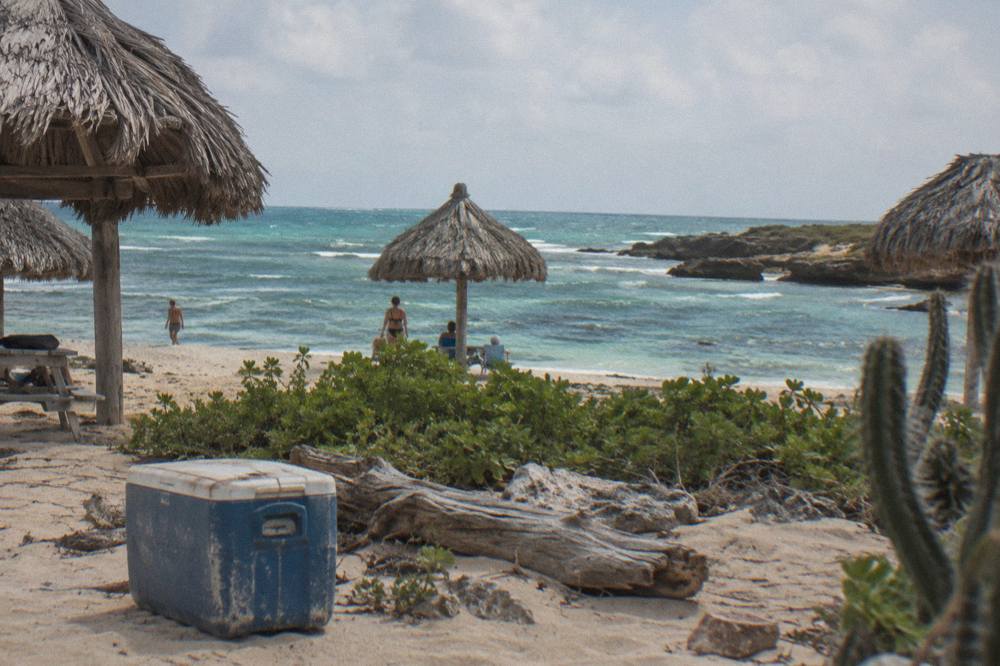
A useful way to sort the options is by what you plan to do once your towel is down. The table below groups the main names by style, using only what is confirmed about each.
| Beach | Character | Best for | Access notes |
|---|---|---|---|
| Eagle Beach | Wide sand, iconic divi trees | Walking, swimming, sunrise photos | Free public beach, public parking |
| Palm Beach | Resort strip, busy | Beach bars, water sports, people-watching | Free public access behind the high-rise hotels |
| Arashi Beach | Relaxed northern tip | Shore snorkeling, calmer weekdays | Free public beach, reachable by road |
| Boca Catalina | Small cove | Snorkeling with turtles and reef fish | Free with your own gear, limited parking |
| Mangel Halto | Quiet southern shore | Snorkeling, mangroves | Free public beach, one of four marine park areas |
| Baby Beach | Shallow lagoon at the south point | Families, wading | Free public beach |
Is Eagle Beach Or Palm Beach Better For Your Trip?
Eagle Beach wins on space, sand and scenery, holding the number one Caribbean beach ranking in the 2026 Travelers' Choice Awards, while Palm Beach, ranked number six, wins on convenience, restaurants and things to do within a short walk. Eagle Beach suits travelers who want a quiet stretch of sand. Palm Beach suits travelers who want a full day of activity without moving their car.

Eagle Beach sits in front of the low-rise hotel zone, and its width is its superpower. Even at busy times you can walk two minutes along the sand and find open space. The divi trees bent by the trade winds are the island's most photographed natural feature, and sunset there is the real spectacle. The trade-off is simple: fewer bars, fewer vendors and a quieter food scene than the strip to the north. Travelers who base themselves here tend to be couples and families who value calm over nightlife.
Palm Beach is where the energy is. The high-rise resorts line the sand, the piers stretch out over the water, and a jet ski or parasailing operator is never far away. It is also the departure point for most of the island's catamaran sails, since Pelican Pier, De Palm Pier, Piet's Pier Bar and the Delphi Watersports beach in front of the Hyatt Regency all sit on this stretch. If a sunset sail or a snorkel cruise is on your list, staying near Palm Beach puts you a short walk from the dock. The guide to Palm Beach departures covers each pier in detail, but the short version is that most shared catamarans leave from this coast, roughly 15 to 20 minutes by taxi from the Oranjestad cruise terminal.
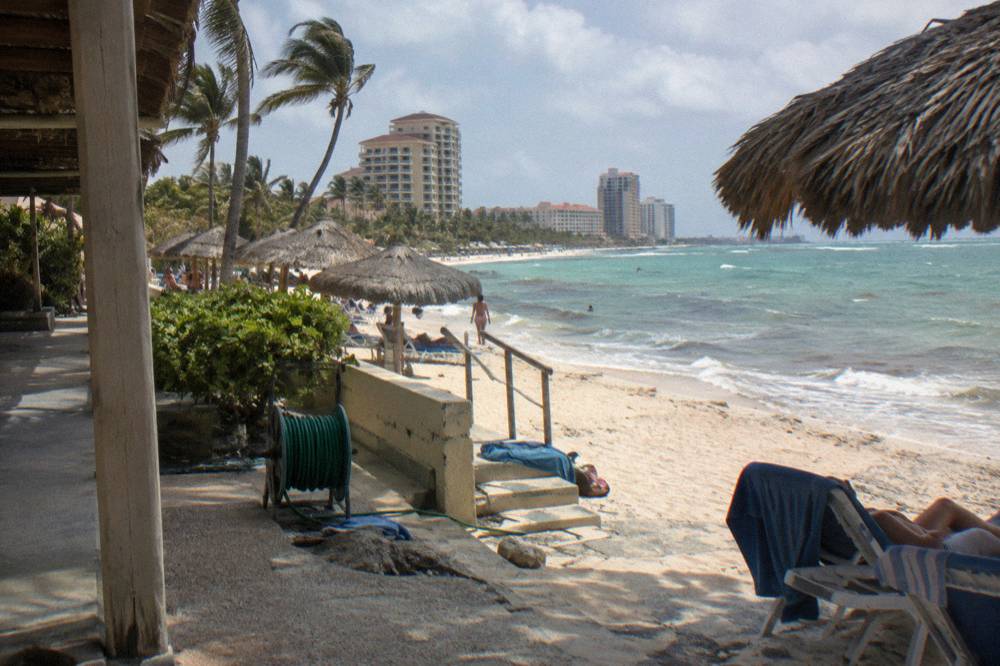
For a combined day, many visitors split the two: mornings on the water or at Palm Beach, late afternoon on Eagle Beach for the light and the space. There is no bad answer here, only a fit question, and the comparison below makes it explicit.
| Question | Eagle Beach | Palm Beach |
|---|---|---|
| Crowd level | Lower, wide sand absorbs people | Higher, resort strip |
| Food and bars | Limited, mostly hotel-side | Extensive, walkable strip |
| Water sports | Few operators | Jet ski, parasail, catamaran piers |
| Shade and scenery | Divi trees, open sand | Piers, resorts, activity |
| Best time of day | Early morning and sunset | Afternoon into evening |
Between the two big names, the Dolphin Catamaran Snorkel and Sail offers a middle path: it departs from the Delphi Watersports beach in front of the Hyatt Regency on Palm Beach, visits the Antilla shipwreck and Boca Catalina, and returns you to the strip with the rest of your day open. It runs about 3 hours, is rated 4.8 across 2,894 reviews, and costs from $69 per person with drinks and snorkel gear included. Check availability if a sail-and-beach combination sounds right, and read the longer rundown in the guide to the Dolphin Catamaran snorkel and sail.
Can You Reach The Quieter Beaches Without A Boat?
Mostly yes, but not all of them easily. Arashi Beach, Boca Catalina and Mangel Halto all have road access and free public entry, while the Antilla shipwreck sits offshore and is realistically a boat trip, while the coral at Boca Catalina can be reached from shore. The listing for the Antilla Shipwreck and Catalina Bay Snorkel Sail names exactly those two stops, a pairing shore swimmers cannot replicate.
The distinction matters because the famous snorkel sites are not beaches in the sunbathing sense. The Antilla is a 398-foot German cargo ship scuttled by her own crew in May 1940, lying on her port side with the shallowest parts about 15 feet down and the seabed at roughly 60 feet. You do not swim to it from sand; you arrive on a boat that ties off at a mooring. Boca Catalina, by contrast, is a genuine shore option, and free: with your own mask and fins you can swim out to reef fish and, often, turtles, without any tour at all. Parking and road access are the only friction.
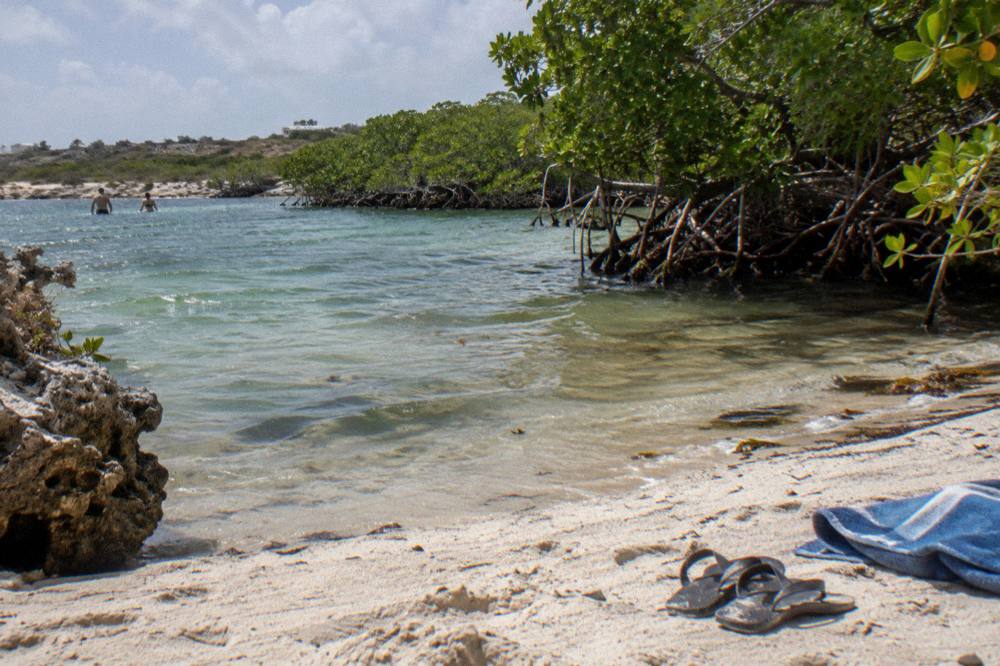
Tres Trapi, a small rocky entry point popular with turtles, is likewise free from shore, and Mangel Halto on the south coast combines a sandy beach with mangrove-lined, clear shallows. What the boat adds is efficiency and comfort: multiple stops in one trip, gear and drinks carried for you, and a crew who knows where the water is clearest that day. Sea state varies, and operators report conditions rather than promise them, so a morning departure, when the water is typically flattest, is the safer bet for snorkel-focused trips.
The Half-Day Snorkel Sail Tour with Caribbean Lunch shows how much ground a boat can cover in one outing. Its listing names four stops, the Antilla shipwreck, Boca Catalina, the Naufragio Baboo shipwreck and Malmok Reef, over about 4 hours, rated 4.8 across 860 reviews, from $107 per person with lunch, drinks and gear included. No shore-based day matches that list.
Where Can You Snorkel Straight From The Sand?
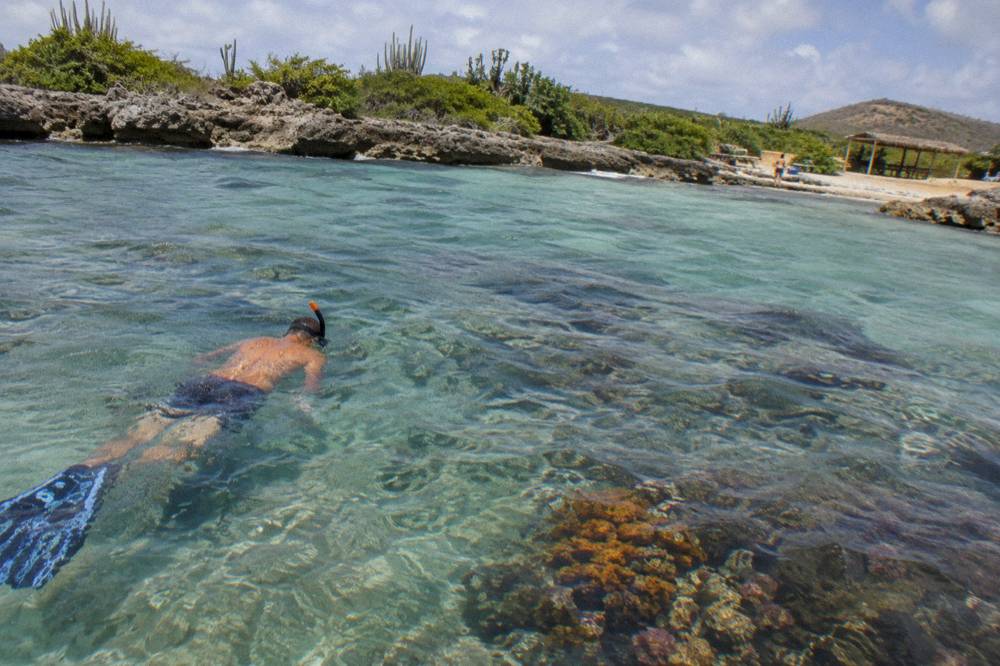
Boca Catalina, Arashi Beach and Tres Trapi are the three dependable shore-snorkeling spots, all free with your own gear, and all known for reef fish with turtles reported regularly. Mangel Halto on the south coast adds calm, clear shallows over seagrass and reef. None of these needs a tour, a ticket or a booking page, just a mask, fins and reef-safe sunscreen.
Boca Catalina earns its reputation through combination: a small sandy cove, an easy entry and water clear enough that shore swimmers regularly cross paths with turtles. The site is close to the Palm Beach strip, which cuts both ways, since the parking is limited and midday brings more people. Early morning is the quiet window and, as local guides note, the flattest water, since the trade winds build through the afternoon and add chop. Arashi Beach, at the island's northern tip, has a wider sandy spread, more parking and decent reef along its edges.
Tres Trapi is the smallest of the three, a rocky ledge rather than a beach, but the grassy shallows just offshore make it one of the more reliable turtle spots on the leeward coast. It appears on several boat itineraries too, including the Banana Adventure Catamaran Shipwreck Snorkel and Turtle Swim, whose listing names Tres Trapi as its stop; that trip runs about 3 hours, is rated 5 across 231 reviews and costs from $65 per person with a meal, drinks and gear. Free from shore or catered from a boat, the site itself does not change.
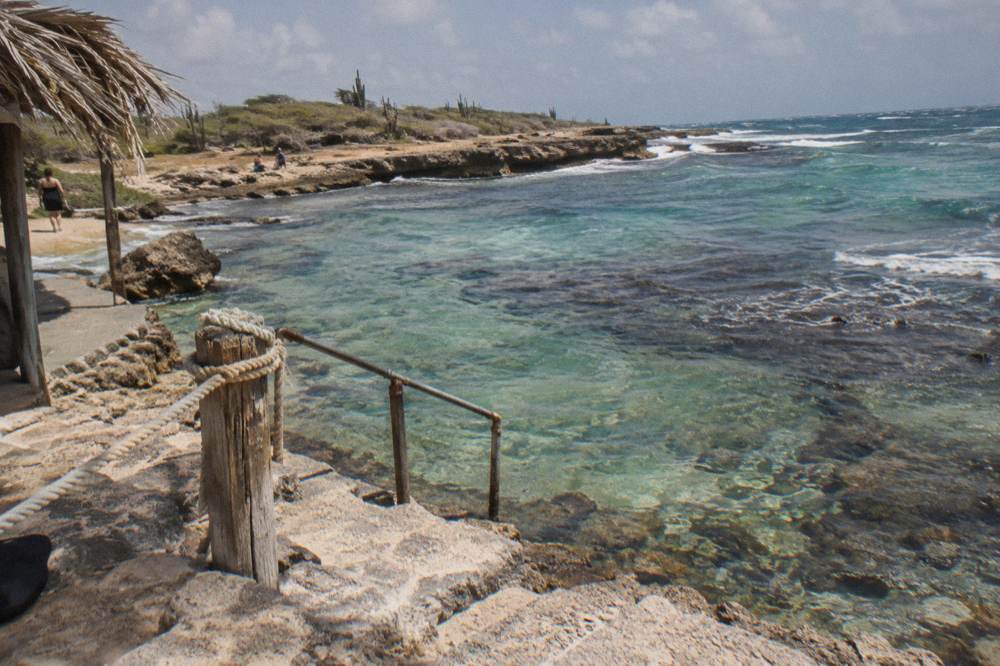
Two rules protect what you are looking at. Aruba's code of conduct asks visitors not to feed marine life, including fish and turtles, and not to pick up starfish, and Aruba law has prohibited the import, sale and distribution of sunscreens containing oxybenzone since July 1, 2020, with fines of up to Afl. 10,000 per violation. Mineral formulas using zinc oxide or titanium dioxide are the accepted choice; note that the law names oxybenzone only, not octinoxate. The official visitor code of conduct sets out the rest.
| Shore snorkel spot | Entry type | Known for | Cost from shore |
|---|---|---|---|
| Boca Catalina | Small sandy cove | Reef fish, turtles | Free with own gear |
| Arashi Beach | Wide sandy beach | Reef along the edges | Free with own gear |
| Tres Trapi | Rocky ledge | Turtles in grassy shallows | Free with own gear |
| Mangel Halto | Sandy beach by mangroves | Calm shallows, reef | Free with own gear |
For travelers weighing shore snorkeling against a boat day, the deeper comparison is in is snorkeling in Aruba worth it, and the full site-by-site breakdown is in the guide to the best snorkeling in Aruba by boat.
Which Beaches Are Closest To Oranjestad And The Cruise Port?
The closest swimmable options to Oranjestad are Surfside Beach, a short taxi ride from the cruise terminal, and Druif Beach just beyond it, both on the calm leeward coast. For cruise passengers on a tighter clock, most catamaran tours board at the Palm Beach piers in Noord, roughly 15 to 20 minutes by taxi from the terminal, which is why beach-plus-sail days need planning rather than improvisation.
Oranjestad itself is a harbor town first, and its waterfront is more marina and promenade than swimming beach. Surfside, near the airport side of town, is the practical answer for a couple of relaxed hours, with calm water and a view of the ships. Renaissance Island, the private islet across from the Renaissance Wind Creek resort, is a different animal: day passes cost $125 per adult, children 4 and under free, include the water taxi from the resort, and go on sale every Saturday at 9:00 AM Aruba time for the following week. That release rhythm matters, since passes for popular weeks move fast.
For a beach day with a sail attached, the pier geography does most of the deciding. The Spronk catamaran BBQ trips dock behind Lucy's Retired Surfer Bar in the Renaissance Marina area, walkable from the cruise port, while most other shared catamarans leave from the Palm Beach and Noord piers. Cruise passengers usually do not need an ED Card, since the requirement applies to arrivals clearing immigration, so a valid ID and a taxi plan are the only logistics. Check the booking page of whichever trip you choose for check-in timing; operators typically ask passengers to arrive around 30 minutes before departure. Where you sleep ends up shaping which pier you walk to, so a quick read of our breakdown of the best area to base yourself in Aruba can save you a long taxi ride on sail day.
How Do You Combine A Beach Day With A Catamaran Sail?
Book a morning or midday catamaran snorkel sail from Palm Beach, then spend the late afternoon on Eagle or Palm Beach catching the sunset. Most shared sails run two to four hours and return you to the pier with daylight left, and prices run from $50 per person for a two-hour sunset sail to $199 per person for a champagne and lobster sail, with most snorkel sails between $63 and $124.
The reason the combination works is geography. The piers and the beaches share one coastline, so a 9:30 or 10:00 boarding at De Palm Pier, Pelican Pier or the Delphi beach puts you back on sand by early afternoon with no transfer beyond a walk. The Morning Snorkel Sail with Premium Champagne Brunch by Pelican Aruba is the most reviewed example: 4 hours, rated 4.7 across 2,238 reviews, from $85 per person, with brunch, drinks and gear included on a route that stops at the Antilla shipwreck and Catalina Bay. You snorkel the two sites that are awkward from shore, then eat, then land.
Its evening counterpart is a sunset sail, and the Sunset Catamaran Sail with Appetizers and Open Bar ranks as the most reviewed sunset option here: a 2-hour trip rated 4.5 across 2,407 reviews, from $92 per person. Red Sail Sports runs it from Piet's Pier Bar on Palm Beach, with drinks and appetizers built into the fare. Pair a morning on Eagle Beach with a late afternoon boarding at Piet's Pier Bar and the day covers both halves of the island's appeal, sand and water, without a car. The Aruba sunset cruise on a catamaran guide walks through the full sunset fleet if evening is your priority.
| Trip | Length | Price | Stops named on the listing | Rating |
|---|---|---|---|---|
| Banana Adventure Tropical Sunset Sail | ~2 hours | from $50 per person | Palm Beach to Eagle Beach coast | 5 across 141 reviews |
| Dolphin Catamaran Snorkel and Sail | ~3 hours | from $69 per person | Antilla shipwreck, Boca Catalina | 4.8 across 2,894 reviews |
| Arusun Catamaran Sail with Snorkeling | ~2 hours 30 minutes | from $63 per person | Antilla shipwreck, Boca Catalina, Palm Beach coast | 4.8 across 2,683 reviews |
| Morning Snorkel Sail with Champagne Brunch | ~4 hours | from $85 per person | Antilla shipwreck, Boca Catalina, Malmok | 4.7 across 2,238 reviews |
| Half-Day Snorkel Sail with Caribbean Lunch | ~4 hours | from $107 per person | Antilla, Boca Catalina, Naufragio Baboo, Malmok Reef | 4.8 across 860 reviews |
| Sunset Catamaran Sail with Appetizers | ~2 hours | from $92 per person | Palm Beach coast | 4.5 across 2,407 reviews |
When Is The Best Time Of Year For Aruba's Beaches?
December through April is the peak window, with dry weather and steady, light trade winds, while September through November offers the calmest seas of the year for water-based days. Aruba sits south of the main hurricane belt, whose official season runs June 1 to November 30, and direct impacts on the island are rare. Sea temperature holds between about 79 and 83 F all year, so cold water is never the constraint. That steady warmth and calm are just part of the story, and our guide to Aruba's biggest draws covers the shipwreck, snorkel sails, and beaches that round out the island's appeal.
The practical differences between seasons are smaller in Aruba than almost anywhere else in the Caribbean, which is the island's core selling point. The trade winds blow persistently from the northeast and run strongest roughly February to July; the leeward west coast, where every beach in this roundup except Baby Beach and Mangel Halto sits, stays sheltered from them. What the winds do affect is afternoon chop for snorkelers, which is why morning slots are the standard advice for water clarity and flat surfaces regardless of month.
Hurricane season deserves one honest paragraph rather than panic. The official Atlantic season runs from the start of June to the end of November, and it is nearing its end, but Aruba's southern position means direct hits are historically rare. Beach weather in the so-called shoulder months is often excellent, crowds are thinner and the seas are at their calmest between September and November. The trade-off is a slightly higher chance of a disrupted day, and every shared trip on this site carries free cancellation, so a weather-driven change of plan is an inconvenience rather than a sunk cost. The full seasonal picture, including what it means for sailing days, is in the guide to the best time to visit Aruba.
What Should You Bring For An Aruba Beach Day?
The essentials are reef-safe mineral sunscreen, your own snorkel gear if you want the free shore spots, water shoes for rocky entries like Tres Trapi, and cash for beach bar tabs and crew tips, since towels are rarely provided on boat trips and check-in is typically 30 minutes before departure. A valid ID is needed for sailings, and a copy is often accepted. Everything else is optional weight.
The sunscreen point is legal, not preference. Aruba prohibits oxybenzone sunscreens, and mineral formulas with zinc oxide or titanium dioxide are the recommended replacement; bringing a banned bottle in your luggage technically counts as an import, so buy before you fly or on the island. Gear is the other money question: a mask and fins pay for themselves in a single week at Boca Catalina or Tres Trapi, where the snorkeling is free and the only barrier is equipment. The what to bring on an Aruba catamaran guide carries the full packing list for the boat side of the day, including motion sickness advice for sensitive stomachs.
Tipping rounds out the practicalities. Crew gratuities are customary on Aruba catamarans, cash is the reliable form and tips are rarely bundled into base pricing, so plan a small cash reserve for the sail day even when the ticket itself is paid by card. On the beach side, the free-access rule means no entry fees anywhere in this roundup, with the sole paid exception of Renaissance Island's $125 day pass. That leaves parking, food and drinks as the only variable costs of a beach day, and they are entirely under your control.
For readers whose beach day is really a water day, the three trips below cover the range: a high-review-count snorkel sail, a wreck-and-bay alternative and a sunset sail for the evening half.
Common Questions About Aruba's Best Beaches
Which Is The Best Beach In Aruba?
Eagle Beach was named the number one Best of the Best beach in the Caribbean in the 2026 Travelers' Choice Awards, with Palm Beach at number six. Eagle Beach is the pick for wide sand and quiet, Palm Beach for bars, water sports and catamaran piers within walking distance.
Are Aruba's Beaches Free To Access?
Yes. Aruba has more than 20 public beaches, all open to everyone with free public access, including the sand in front of the high-rise resorts on Palm Beach. The only paid beach in this roundup is Renaissance Island, whose day pass costs $125 per adult and includes the water taxi.
Can You Snorkel From The Beach In Aruba Without A Tour?
Yes. Boca Catalina, Arashi Beach, Tres Trapi and Mangel Halto are all free to snorkel from shore with your own gear, and turtles and reef fish are reported regularly at all four. The Antilla shipwreck, the island's signature snorkel site, is offshore and realistically reached by boat.
Which Beach Is Closest To The Cruise Port In Oranjestad?
Surfside Beach is the closest swimmable option to the Oranjestad cruise terminal, a short taxi ride away. For catamaran trips, most shared sails board at the Palm Beach piers in Noord, roughly 15 to 20 minutes by taxi from the terminal, while Spronk's BBQ trips dock in the Renaissance Marina area closer to port.
Do You Need Reef-Safe Sunscreen On Aruba Beaches?
Yes, and the rule is law rather than etiquette. Aruba has prohibited sunscreens containing oxybenzone since July 1, 2020, with fines up to Afl. 10,000 per violation. Use a mineral formula with zinc oxide or titanium dioxide instead.
When Is The Best Time To Visit Aruba's Beaches?
December through April brings the driest, most reliable beach weather with steady light trade winds. September through November offers the calmest seas of the year and thinner crowds, and sea temperatures hold between about 79 and 83 F all year, so swimming is never off the table.