Catamaran Vs Trimaran In Aruba: What Is The Difference
Searchers chasing a famous trimaran in Aruba often land on catamaran pages, and the confusion is understandable: both are multihulls, both sail the same leeward coast, and photos of the two look alike at a glance. This page separates the two honestly and explains why every sail bookable here is a catamaran.
Short answer
A catamaran has two parallel hulls of equal size; a trimaran has one main hull with two smaller outriggers. The vessel known as Octopus in Aruba is a trimaran per its listing text, not a catamaran, and is not bookable here. Shared catamaran sails run from $50 to $199 per person, and charters from $1,399 per group.
Aruba's west coast is a sheltered sailing corridor, and almost every boat working it is a multihull. That is where the confusion starts. Travellers see a wide, stable boat with more than one hull, hear "sailing catamaran cruise", and book, only to learn later that some of the island's best known vessels, including the one called Octopus, are actually trimarans. The distinction matters if you care about deck space, stability at anchor, or simply booking the boat type you researched.
This site is called Aruba Catamaran Tours for a reason: every trip listed on it runs on a catamaran, confirmed through operator sites and sister listings. This guide explains the hull difference in plain terms, sets the record straight on Octopus, and shows which catamaran sails deliver the day most trimaran seekers are actually after, from the Antilla shipwreck snorkel runs out of Palm Beach to the sunset sails along Eagle Beach.
What Is The Difference Between A Catamaran And A Trimaran?
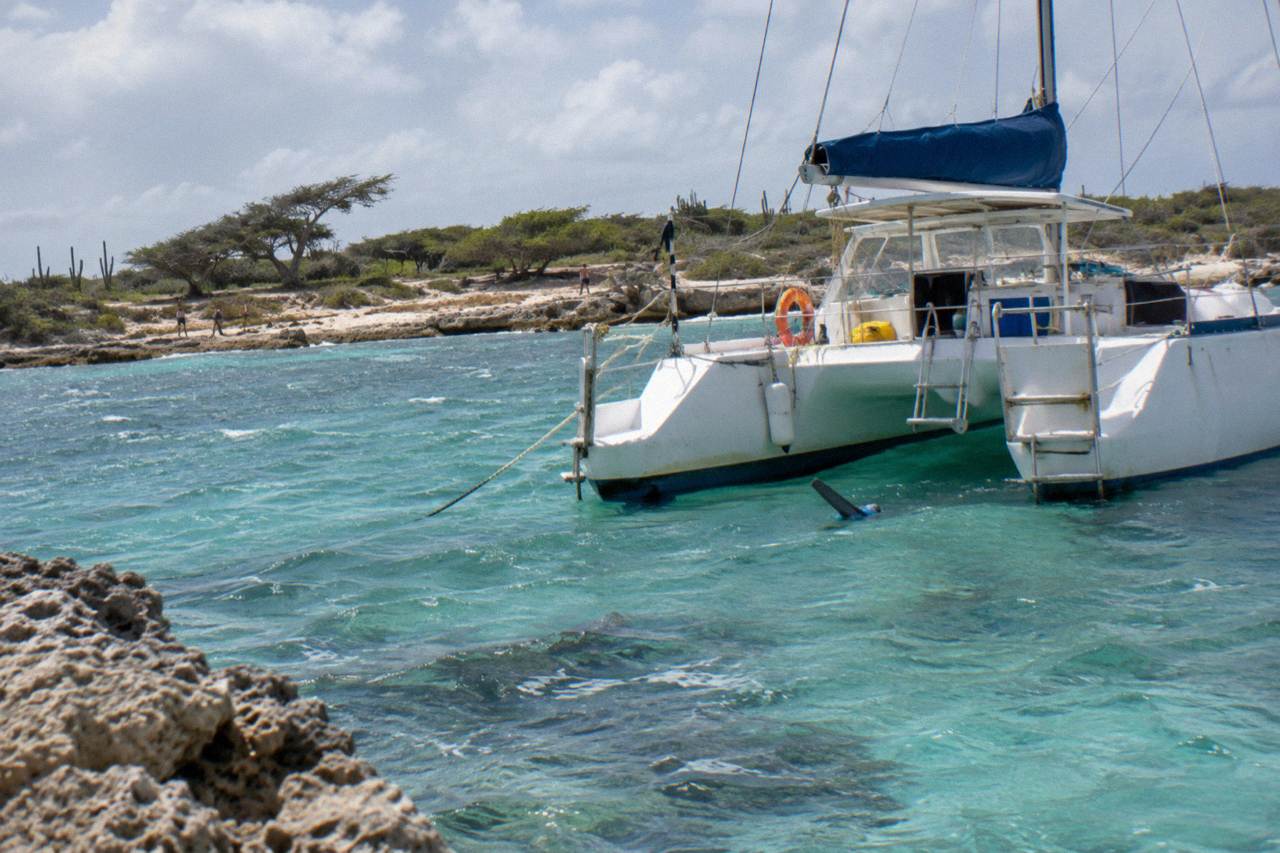
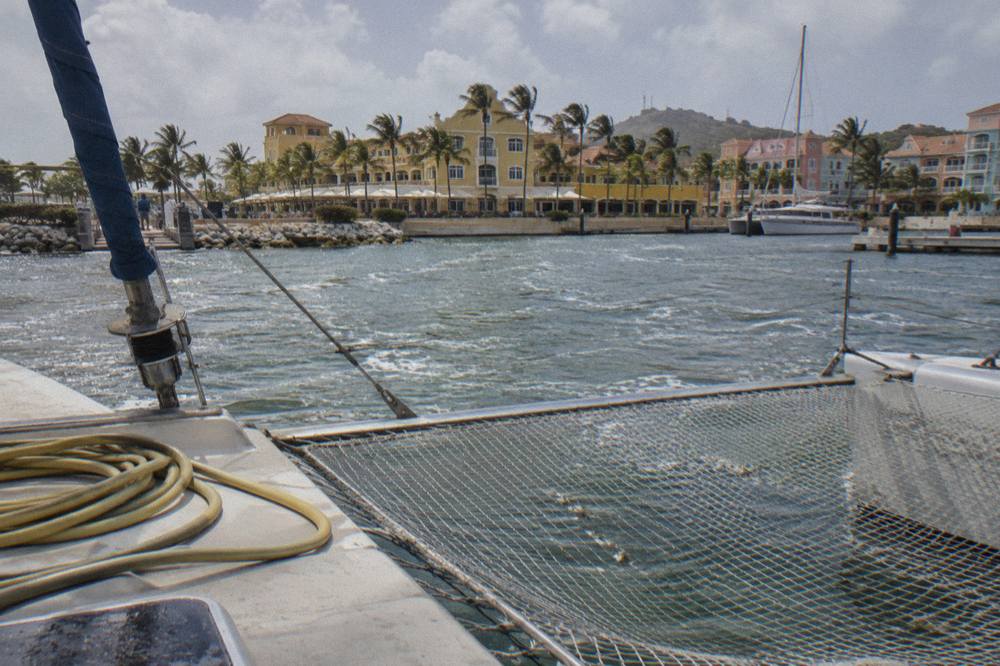
A catamaran has two hulls of equal size joined by a wide deck, while a trimaran has one main hull flanked by two much smaller outrigger hulls. In practice the catamaran's full-width deck yields more open lounge and net space, and the trimaran's central hull trades some of that deck for a different motion through the water.
Think of it structurally. On a catamaran, both hulls carry the boat, so the bridging deck between them becomes usable space: trampolines at the bow, seating across the stern, a bar in the middle. Guests spread out. On a trimaran, the ama hulls on each side are slender floats that mostly stay clear of the water; the cabin, galley and seating live in the single central hull, so the usable width narrows even though the overall beam is similar.
Under sail the differences sharpen. A catamaran rarely heels, which is why operators favor it for cocktail and sunset cruises where guests are standing with drinks. A trimaran can heel more before its outrigger engages, and its longer central hull slices swell rather than riding over it. Neither is better in absolute terms; they are tuned for different jobs. Charter fleets around Aruba have overwhelmingly chosen catamarans precisely because the island's signature trips, open-bar sails and swim-stop snorkels, reward a flat, wide, walk-anywhere platform.
The reef-sailing context matters too. Aruba's snorkel fleet stops at shallow, mooring-protected sites, and a stable deck that stays level while everyone shifts to one side for a turtle sighting is a genuine safety and comfort asset. That stability-at-anchor quality, more than speed, is why the catamaran became the default party-and-snorkel hull in the Dutch Caribbean. For a broader look at the choice, see how to choose the right sail.
The hull differences side by side, in plain terms:
| Feature | Catamaran | Trimaran |
|---|---|---|
| Hull count | Two equal hulls | One main hull plus two outriggers |
| Deck space | Full-width bridge deck, nets and bar | Narrower usable deck around central cabin |
| Heel under sail | Rarely heels | Can heel before outrigger engages |
| At anchor | Level platform for swimmers and bars | Central hull carries most of the motion |
| Aruba fleet presence | Every sail bookable on this site | The vessel called Octopus, not bookable here |
Is Octopus Aruba A Catamaran Or A Trimaran?
The vessel marketed as Octopus in Aruba is a trimaran, not a catamaran, per its own tour listing text, which describes a 40-foot trimaran; its operator's site uses different wording. It is not bookable through this site, which lists catamarans only, so no price or rating appears here.
This is the single most common mix-up on the island, and it is worth being precise about why. The Octopus Aruba listing text describes the boat as a trimaran, so it does not appear among the catamaran tours here. The operator's own website says catamaran, and that contradiction is exactly why an honest boat-type page exists: when the sources disagree, say so, and never print a price or rating for a vessel that is not part of the catalog.
Nothing here is a knock on trimarans. Octopus, listed as a 40-foot trimaran, runs sunset sails of about two hours from the Palm Beach area with cocktails and appetizers in the late afternoon slot. If a trimaran ride is specifically what you want, book it directly through that operator's own channel. What you cannot honestly do is call it a catamaran, and what this site will not do is sell you one hull type under another hull type's name.
The same discipline applies to other famous Aruba boats. Jolly Pirates runs schooners, not catamarans. Pelican Adventures, by contrast, sails custom-built catamarans. Spronk's Rubaiyat and Shamwari are schooner-rigged catamarans of Peter Spronk's own design, per the operator's history page. Spronk's sailing catamarans are on the lineup here; the schooners are not. When a tour name says "sail" without naming the vessel, check the booking page for the hull type before assuming catamaran.
For readers who arrived here searching Octopus and now want the equivalent day on a true catamaran, three options cover the ground: a snorkel-and-sail with open bar from $69 per person, a sunset sail with appetizers from $92 per person, and a private catamaran charter with a rope swing and water slide from $2,500 per group.
Which Boat Gives The Smoother Ride Along Palm Beach?
In Aruba's conditions the catamaran's two wide hulls give a flatter, slower-roll ride that suits swimmers and drinkers alike, while a trimaran's single main hull gives a drier, more driven motion that some sailors prefer. Operators here have voted with their fleets: the shared-sail market is overwhelmingly catamaran.
The leeward coast from Palm Beach to Eagle Beach sits sheltered from the island's north-easterly trade winds, which blow harder roughly February to July. Sea temperature holds between about 79 and 83 degrees year round, and Aruba sits south of the main hurricane belt, so direct storms are rare even in the season that ends 30 November. What guests feel on the water is mostly wind chop, not swell, and that is the regime where a catamaran shines: two hulls spread the weight, the bridging deck resists rolling, and the boat stays level enough for a bar service. Those same steady conditions are a big part of what makes Aruba famous, from catamaran snorkel sails to the calm weather itself.
Motion sensitivity is worth planning around, and hull type is only part of it. Morning departures tend to meet the flattest, clearest water, while afternoon slots catch more chop as the trade winds build, a pattern reported consistently across the season guides. If anyone in your group is prone to seasickness, a morning catamaran snorkel sail is the gentlest combination available, and there is a full page on handling seasickness on an Aruba catamaran.
One honest caveat cuts the other way. At anchor, a catamaran sits level and steady, a stable platform for swimmers and bar drinks, which matters because Aruba sails spend significant time parked at snorkel stops. Most guests never notice; a few notice nothing else. The practical answer is not hull theology but timing: pick the calmer window, and either hull type will treat you kindly.
Which Catamaran Sails Out Of Palm Beach Match A Trimaran Day?
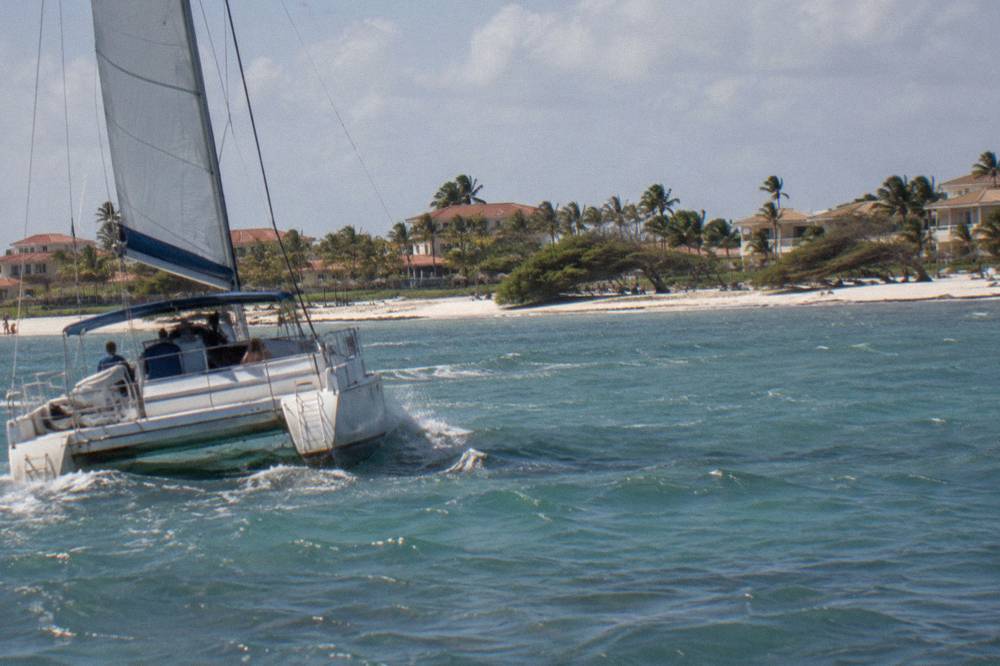
The closest catamaran equivalents to a happy-hour trimaran sail are the two-hour sunset runs: from $59 per person on the Dolphin Catamaran and from $92 per person with appetizers on the Red Sail sunset sail, both from Palm Beach piers with open bars and free cancellation.
If the trimaran appeal was the cocktail-in-hand, music-on, coast-sliding-past feeling, the sunset catamaran fleet delivers it. The Dolphin Catamaran sunset cruise runs about two hours from the Delphi Watersports beach in front of the Hyatt Regency, from $59 per person with drinks included, rated 4.6 across 899 reviews. The Banana Adventure Tropical Sunset Sail, from $50 per person and rated 5 across 141 reviews, departs MooMba Beach Bar on Palm Beach and follows the coast toward Eagle Beach. The Red Sail sunset sail with appetizers, rated 4.5 across 2,407 reviews, boards at Piet's Pier Bar between the Barcelo and Hyatt.
If the appeal was the snorkeling, the match is even easier, because the standard catamaran snorkel day is built around the two stops everyone wants: the Antilla shipwreck and Boca Catalina. The dinner end of the spectrum is covered too, with a sunset dinner cruise with open bar from $137 per person, rated 4.8 across 456 reviews, and a four-course Caribbean dinner cruise from $172 per person, rated 4.5 across 229 reviews. No trimaran day includes a rope swing and water slide, but several catamaran tours here do, from shared snorkel sails to the private adventure cruise from $2,500 per group for up to 15 guests.
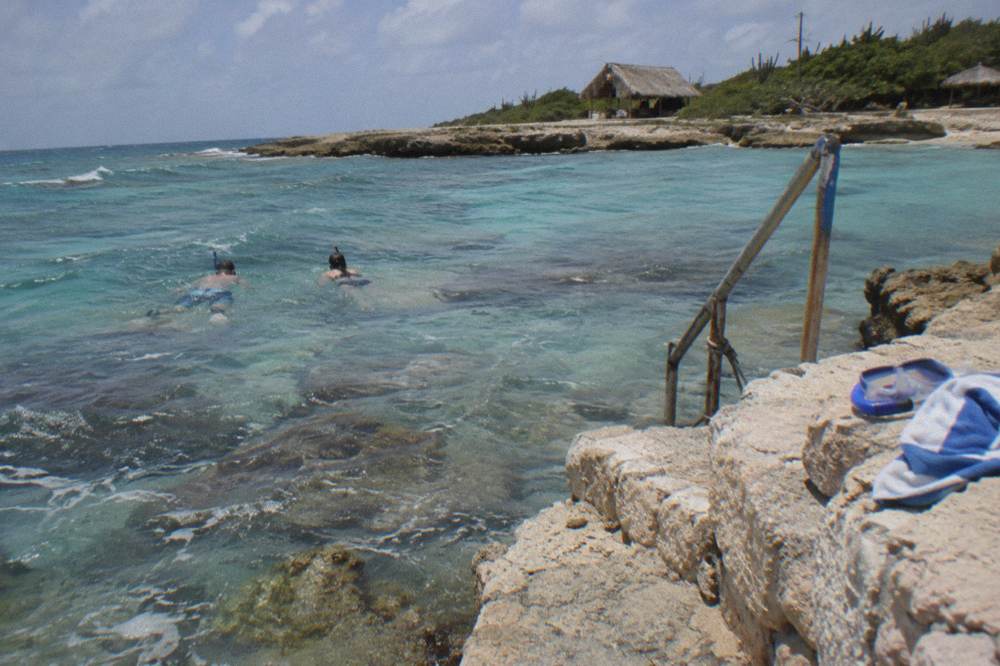
Here is the honest comparison of the day each style of booking buys:
| Experience | Boat type | Duration | From (basis) | Rating | Departure pier |
|---|---|---|---|---|---|
| Dolphin Catamaran sunset cruise | Catamaran | ~2 hours | $59 per person | 4.6 across 899 reviews | Delphi Watersports, Palm Beach |
| Sunset sail with appetizers | Catamaran | ~2 hours | $92 per person | 4.5 across 2,407 reviews | Piet's Pier Bar, Palm Beach |
| Sunset dinner cruise with open bar | Catamaran | ~3 hours | $137 per person | 4.8 across 456 reviews | Piet's Pier Bar, Palm Beach |
| Private catamaran adventure cruise | Catamaran | ~3 hours | $2,500 per group (up to 15) | 4.9 across 41 reviews | J.E. Irausquin Blvd 85, Palm Beach |
| Octopus happy-hour sail | Trimaran | ~2 hours | Not listed here, book direct | Not listed here | Palm Beach area |
The featured catamaran on this page, the Dolphin Catamaran snorkel and sail, deserves a special mention for trimaran shoppers: it is the most reviewed sailing day among the tours here, rated 4.8 across 2,894 reviews, from $69 per person for three hours with an open bar and snorkel gear, departing the Delphi Watersports beach. Check availability
Does Hull Type Matter For Snorkeling At The Antilla?
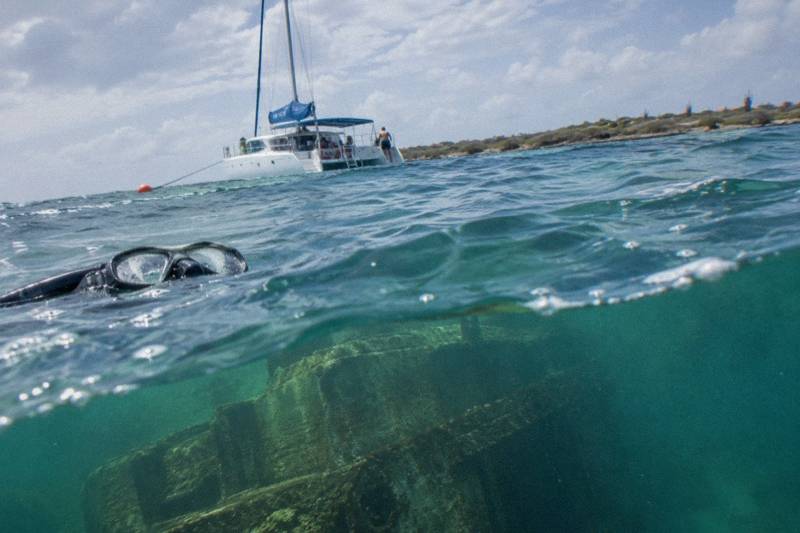
For the snorkeling itself, hull type matters far less than stops, gear and timing; what the catamaran adds is a stable, spacious platform for gearing up and reboarding. Every snorkel sail here includes gear, and the Antilla and Boca Catalina pair is the standard route.
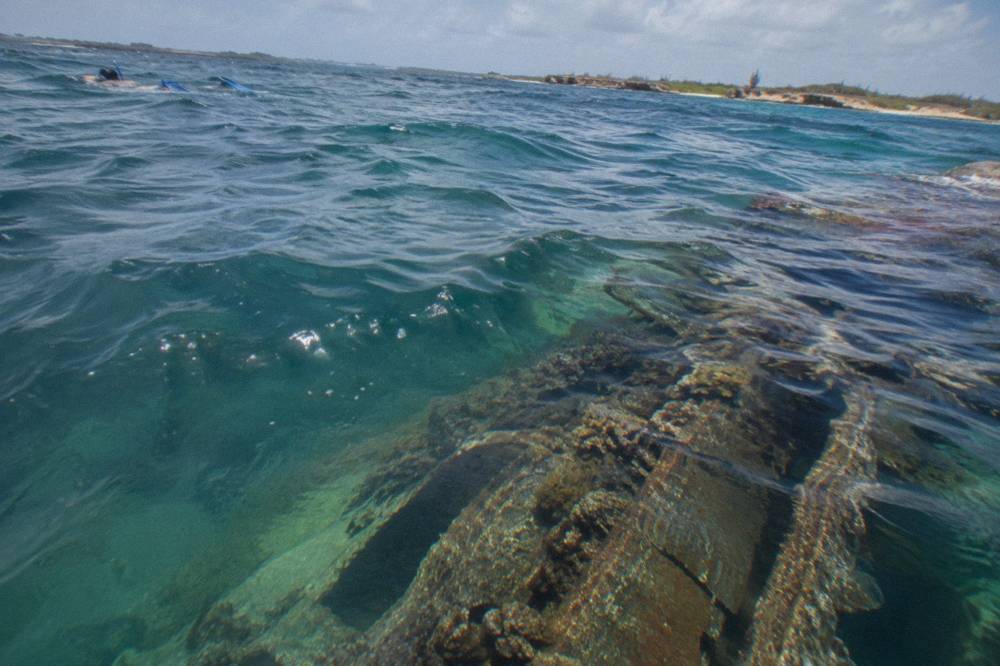
The SS Antilla is the draw. Scuttled by her own German crew on 10 May 1940, the 398.3-foot cargo ship lies on her port side off Malmok in as little as about 15 feet of water at the shallow end, reaching about 60 feet at the seabed, making her one of the largest wreck snorkels in the Caribbean. You do not need any particular hull to visit her, per the ship's record; you need a boat that moors rather than drops anchor, and the management plan for Parke Marino Aruba, four protected areas covering 60.2 square km, bars anchoring on coral and seagrass.
Where the catamaran tours earn their keep is the between-stops part of the day. Two tours here make the point. The morning snorkel sail with champagne brunch, about four hours from $85 per person and rated 4.7 across 2,238 reviews, visits the Antilla, Boca Catalina and Malmok with brunch and gear included. The Arusun Catamaran sail, from $63 per person and rated 4.8 across 2,683 reviews, covers the Antilla, Boca Catalina and the Palm Beach coast in about two and a half hours. On both, guests move between net, bar and ladder on a deck that stays level, which is the whole catamaran argument in one sentence.
Rules of the water apply regardless of hull. Do not touch coral or marine life, do not feed fish or turtles, and leave the starfish where they lie, per Aruba's visitor code of conduct. And check your sunscreen: Aruba has prohibited the import, sale and distribution of oxybenzone sunscreens since 1 July 2020, with fines up to Afl. 10,000 per violation, so bring a mineral formula with zinc oxide or titanium dioxide, per the text of the law. The full packing list is in what to bring on an Aruba catamaran.
What Do Catamaran Sails In Aruba Cost?
Shared catamaran sails run from $50 per person for a two-hour tropical sunset sail to $199 per person for a sunset champagne and lobster sail, while private catamaran charters run from $1,399 to $2,500 per group depending on guest count and inclusions. All figures are the operators' listed from-prices.
The budget end is genuinely cheap for what it includes. The Banana Adventure sunset sail at from $50 per person and the Dolphin sunset cruise at from $59 per person both include an open bar, which is hard to match anywhere in the Caribbean. The mid-market, from $63 to $107 per person, is where the snorkel fleet lives, and the dinner tier, from $109 to $199 per person, adds a full meal on the water. Because the tiers are this far apart, the same evening out can cost wildly different totals for the same group depending purely on format, so pick the tier before you pick the boat.
| Tier | Tours (examples) | Price range | What is included |
|---|---|---|---|
| Budget sunset | Banana Adventure sunset; Dolphin sunset | $50 to $59 per person | Drinks |
| Snorkel sails | Arusun sail; Dolphin snorkel sail; half-day lunch sail | $63 to $107 per person | Drinks, snorkel gear, some meals |
| Long snorkel days | Turtle and shipwreck BBQ sails; champagne brunch sail | $85 to $119 per person | Drinks, meal, snorkel gear |
| Dinner cruises | Caribbean dinner and music; four-course dinner | $109 to $199 per person | Drinks, meal |
| Private charters | Sunset charter up to 15; adventure cruise up to 15 | $1,800 to $2,500 per group | Drinks, some meals, exclusivity |
Private pricing deserves its own honesty note, because per-group figures trip people up. The sunset charter at from $1,800 per group for up to 15 guests and the rope-swing adventure cruise at from $2,500 per group for up to 15 are flat rates for the boat, not per-person tickets, and the per-head math depends entirely on how many people you fill it with. A full boat of fifteen makes a charter competitive with the dinner tier; a small group makes it the most expensive evening on the water. Never divide a per-group price by the wrong denominator, and check the booking page for what the base rate actually covers, since some charters include meals and some do not.

What Should You Check Before Booking Any Aruba Sail?
Before booking, verify four things on the tour's own page: the vessel type if hull matters to you, the exact departure pier, the cancellation window, and whether food is included. Most sails here carry free cancellation; some private charters do not, and piers are spread from Palm Beach to Oranjestad.
Start with the pier, because Aruba is small but not walkable end to end in flip-flops. Pelican Pier and De Palm Pier serve the Palm Beach high-rise strip; Piet's Pier Bar sits between the Barcelo and Hyatt; the Delphi Watersports beach departs in front of the Hyatt Regency; the Spronk BBQ sails leave from the dock behind Lucy's Retired Surfer Bar in the Renaissance Marina area of Oranjestad; and private charters often use Varadero Aruba Marina. Cruise passengers should read the pier against their dock time carefully; there is a dedicated page on catamaran tours for cruise ship passengers.
Then read the inclusions line by line. Drinks are included on every tour here, but meals are not: the two-hour sunset sails are drinks-only or drinks-plus-snacks, while the brunch, BBQ and dinner sails include full meals. Snorkel gear is stated on each line, and when a sunset sail lists no snorkel stop, that means just that: a coastal cruise with no swim, not a hidden dip. Where a detail such as child pricing or the exact check-in lead time is not stated, check the booking page rather than assuming.
Finally, book with the calendar, not against it. September through November brings the calmest seas of the year; December through April is the peak-conditions crowd season; and February through July sees the strongest trade winds, which is exactly when a catamaran's flat, stable deck earns its keep. Whatever the month, conditions on the day decide the ride, and no operator can promise a sea state, a sunset or a turtle sighting; the honest framing is that operators report good odds at the turtle stops, never guarantees.
Common Questions About Catamarans Vs Trimarans In Aruba
Is Octopus Aruba A Catamaran Or A Trimaran?
Octopus is a trimaran per its own tour listing text, which describes a 40-foot trimaran; its operator's site words it differently. It is not a catamaran and it is not bookable through this site, which lists catamaran tours only and prints no price or rating for it.
What Is The Difference Between A Catamaran And A Trimaran?
A catamaran has two equal hulls joined by a wide deck, giving more open lounge and net space and a very flat ride. A trimaran has one main hull plus two smaller outriggers, concentrating cabin space in the center hull. In Aruba's shared-sail market, the catamaran's stable platform is why it dominates.
Which Catamaran Sail Is Closest To A Trimaran Sunset Cruise?
The two-hour sunset runs: the Dolphin Catamaran sunset cruise from $59 per person, rated 4.6 across 899 reviews, or the sunset sail with appetizers from $92 per person, rated 4.5 across 2,407 reviews. Both include drinks, board on Palm Beach, and carry free cancellation.
Do Any Catamarans Visit The Same Snorkel Stops As Other Sails?
Yes. The Antilla shipwreck and Boca Catalina are the standard pair, named on most snorkel lines here, with some sails adding Arashi Beach, Malmok or Tres Trapi. A sunset sail with no listed stops is a coastal cruise, not a snorkel trip.
Are Trimarans Smoother Than Catamarans In Aruba?
Neither is universally smoother. Catamarans stay flatter underway, which suits drinks and snorkel stops; some trimaran designs slice chop more cleanly but give up deck width. Morning departures and the September to November window matter more to comfort than hull count.