Water Sports In Aruba: Parasailing And Jet Ski
Parasailing and jet skiing get the adrenaline going, but the most rewarding water days in Aruba pair a powered thrill with a slow catamaran sail over the same reefs. Here is how the pieces fit together.
Short answer
Parasailing and jet ski operators work the Palm Beach and Eagle Beach hotel strips, priced at the beach hut since neither is a catamaran tour. The strongest pairing is a morning catamaran snorkel sail from $63 per person, then a powered ride in the afternoon. Sunset sails from $50 per person close the day.
Aruba's leeward west coast is one long water-sports runway. Behind the high-rise hotels of Palm Beach, jet skis buzz the glassy morning water while parasail canopies climb a few hundred feet above the strip; a mile south, Eagle Beach, named the number one Best of the Best Caribbean Beach in the 2026 Travelers' Choice Awards, offers the same sports with fewer engines in earshot. And spread between the two, catamarans leave the piers all day for reefs, a World War II shipwreck and the island's famous sunsets.
This guide covers how the powered sports fit with the sailing side of an Aruba water day. The site's own focus is catamaran tours, so every boat price and rating below comes from the tours on offer here; parasailing and jet ski pricing is set at each beach operator's hut and is not on any booking page this site carries.
What Water Sports Can You Do In Aruba?
The full menu splits into three layers: powered sports off the beach (parasailing, jet skiing, and their cousins), towed and surface fun behind boats, and sailing-based trips on catamarans. Powered rides launch straight off Palm Beach and Eagle Beach with no tour booking structure, while the catamaran side runs as ticketed trips from named piers. Most visitors end up mixing at least two of the three.
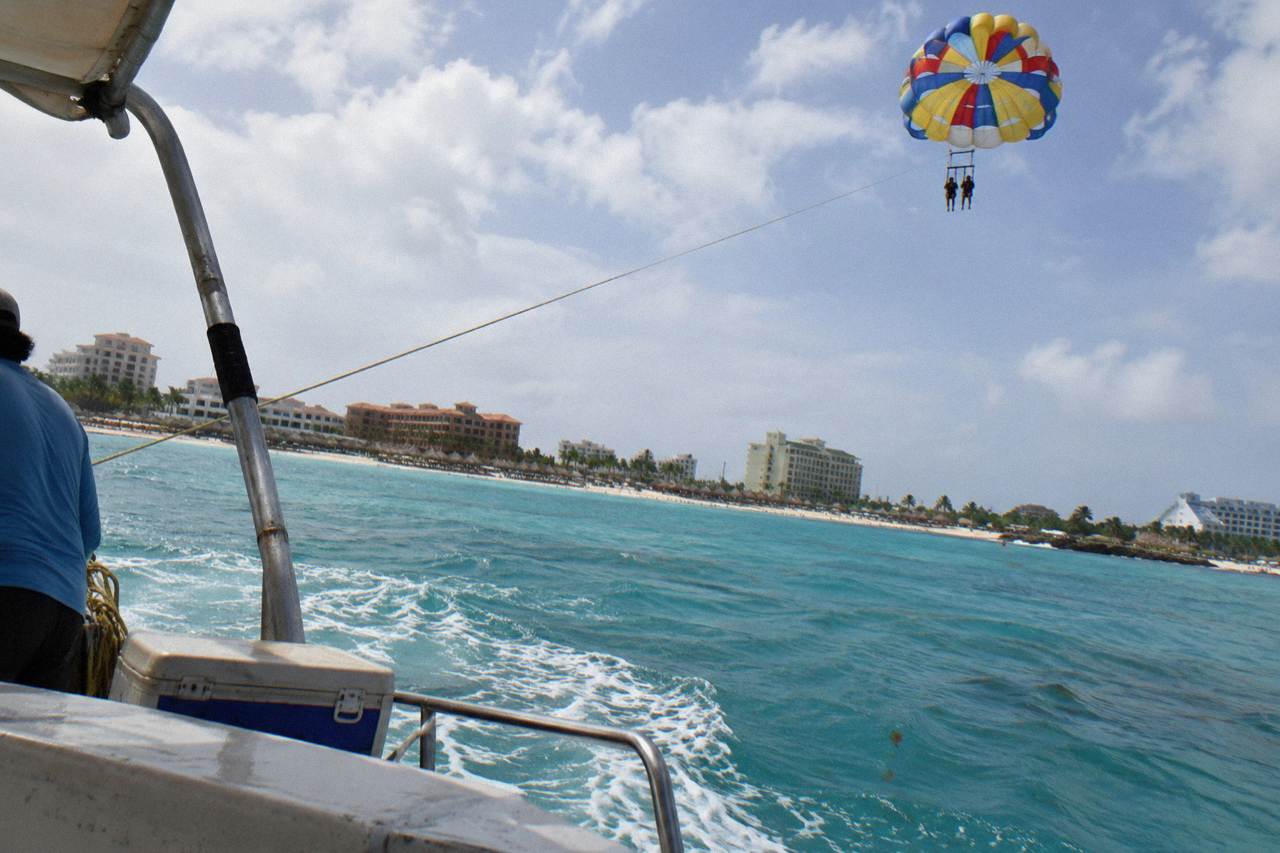
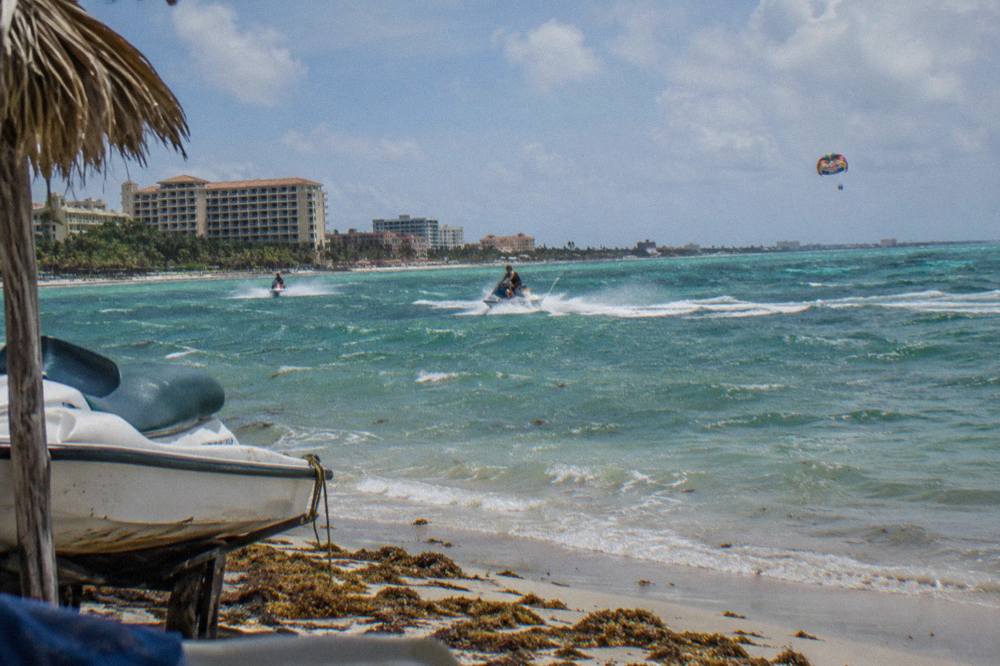
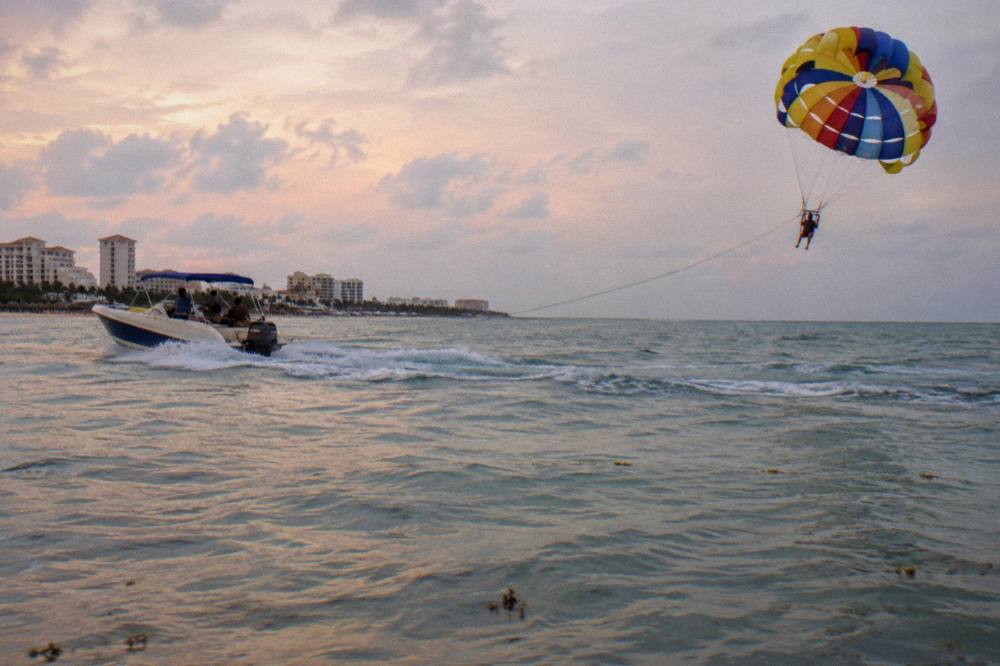
Parasailing is the headline powered sport: you are harnessed to a canopy and towed behind a speedboat, rising above the coast for a silent, slow arc with the whole hotel strip and the Caribbean laid out below. Jet skiing needs no introduction; Aruba's calm leeward water makes it forgiving for first-timers, and the operators cluster on the sand in front of the high-rises where the sea stays flattest.
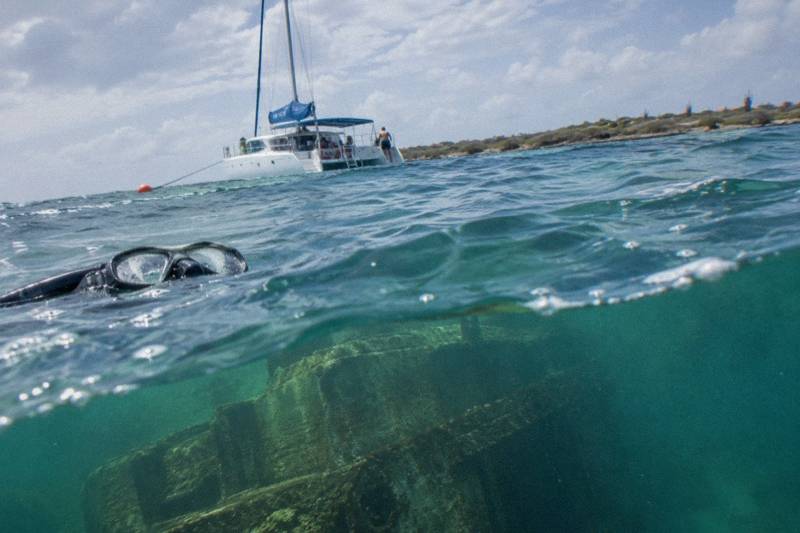
The third layer is the one this site knows best. Catamaran snorkel sails, sunset cruises and dinner trips depart daily from the piers at Palm Beach, and they cover the things a jet ski cannot reach: the Antilla shipwreck, a 398-foot German cargo ship scuttled by her own crew in 1940, the reef at Boca Catalina, and the turtle spots at Tres Trapi. The Dolphin Catamaran Snorkel and Sail with Open Bar, rated 4.8 across 2,894 reviews and priced from $69 per person, is the classic example: about three hours, departing the Delphi Watersports beach in front of the Hyatt Regency, with snorkel gear and drinks included. You can read the full trip profile on the Dolphin Catamaran snorkel sail page or Check availability.
For a wider view of everything on the water, the Aruba boat tours compared guide breaks down how the sailing options stack up, and the general things to do in Aruba guide places the water sports against land activities.
Where Can You Go Parasailing And Jet Skiing In Aruba?
Palm Beach is the center of gravity: the powered-sports operators work the sand directly in front of the high-rise hotels, where the water is calmest and the piers are close. Eagle Beach is the quieter alternative with the same sports, and beach operators elsewhere along the coast offer rides by arrangement. Pricing is quoted at each hut, walk-up, since neither sport is sold through this site's booking pages.

The geography matters more than you would expect. Palm Beach in the Noord area is home to several of the departure piers used by Aruba's catamaran tours, and its sheltered, shallow approach means jet ski operators can run circuits without fighting swell. The same beach hosts the departure piers for nearly every catamaran trip on this site: Pelican Pier, De Palm Pier, Piet's Pier Bar and the Delphi Watersports beach. A family can realistically split up for an hour, riders on a jet ski, non-riders at a beach bar, and reconvene at a pier for an afternoon sail. The Palm Beach marinas and departures guide maps every pier.
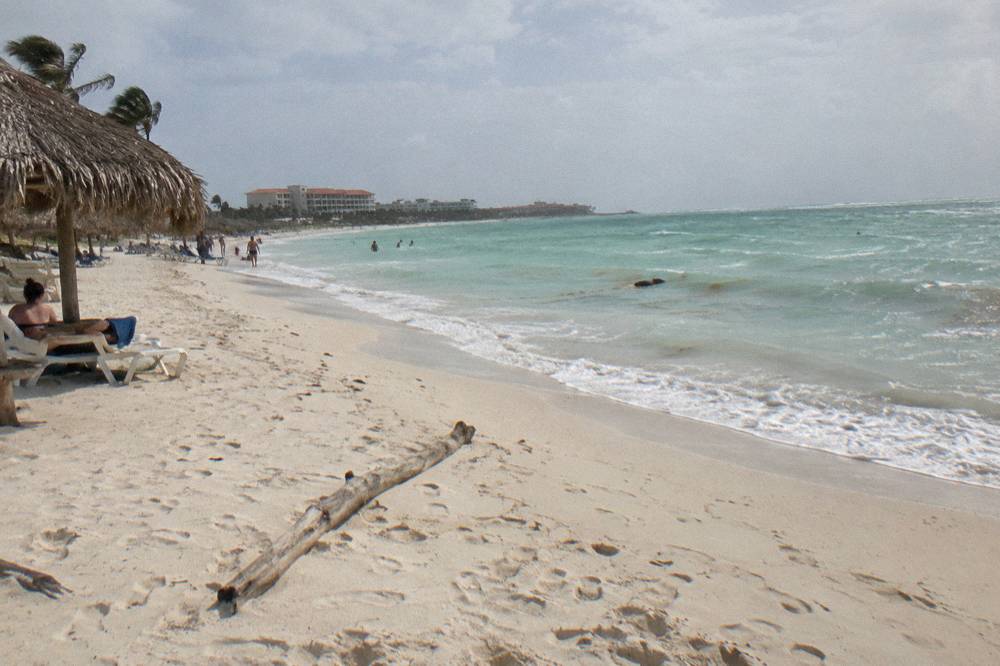
Eagle Beach, a short taxi ride south, trades the high-rise density for wider sand and fewer engines. The same trade winds that power the parasail canopies blow all afternoon, so the standard local advice is simple: powered sports in the morning when the water is flattest, sailing later.
If combining a powered morning with a relaxed sail appeals, these three catamaran trips pair naturally with a beach-side session:
The first is the flagship snorkel sail described above. The second, the Aruba Catamaran Snorkel Sail with Appetizers, Slide, Swing and Open Bar from $76.93 per person, departs the Hotel Riu Palace Antillas and lists four stops including Malmok Beach, Boca Catalina, Arashi Beach and Tres Trapi; it is a new trip with no reviews yet, so judge it on its route rather than a rating. The third is the volume favorite: the Sunset Catamaran Sail with Appetizers and Open Bar, rated 4.5 across 2,407 reviews, from $92 per person out of Piet's Pier Bar, a pure evening cruise with no swimming.
How Do Catamaran Tours Compare With Parasailing And Jet Skiing?
Parasailing and jet skiing deliver short, high-intensity bursts measured in minutes; catamaran tours deliver slow half-days measured in hours, with snorkeling, food and an open bar built in. The powered sports are pay-per-ride at the beach, while the sailing trips here run from $50 per person for a two-hour sunset sail to $199 per person for a lobster and champagne sail.
The honest comparison is about what each does to a day. A jet ski session and a parasail ride consume perhaps ninety minutes between them, including the safety briefing and the walk down the sand. A catamaran snorkel sail consumes a morning or an afternoon: the Arusun Catamaran Sail with Snorkeling, rated 4.8 across 2,683 reviews, from $63 per person, runs about two and a half hours and lists the Antilla Shipwreck, Boca Catalina and the Palm Beach coast as its stops, with gear and drinks included. Riders who want more water time can step up to the four-and-a-half-hour trips that add a BBQ meal.
| Experience | Time on the water | Listed price | Rating and reviews | What it includes |
|---|---|---|---|---|
| Parasailing or jet ski (beach operator) | Minutes per ride | Quoted at the beach hut | Not rated here | Ride and briefing only |
| Arusun Catamaran Sail with Snorkeling | About 2 hours 30 minutes | From $63 per person | 4.8 across 2,683 reviews | Gear, drinks, three listed stops |
| Dolphin Catamaran Snorkel and Sail | About 3 hours | From $69 per person | 4.8 across 2,894 reviews | Gear, open bar, Antilla and Boca Catalina |
| Sunset Catamaran Sail with Appetizers | About 2 hours | From $92 per person | 4.5 across 2,407 reviews | Open bar, appetizers, no swimming |
There is also a physical dimension worth naming. Jet skiing pounds the shoulders and parasailing is gentler than it looks, but a catamaran day is the recovery option: sit on the trampoline net, let the crew pour the rum punch, and drift over a wreck instead of buzzing past it. Visitors prone to motion sickness will find the sailing side needs planning the powered sports do not; the seasick on an Aruba catamaran guide covers the practical fixes.
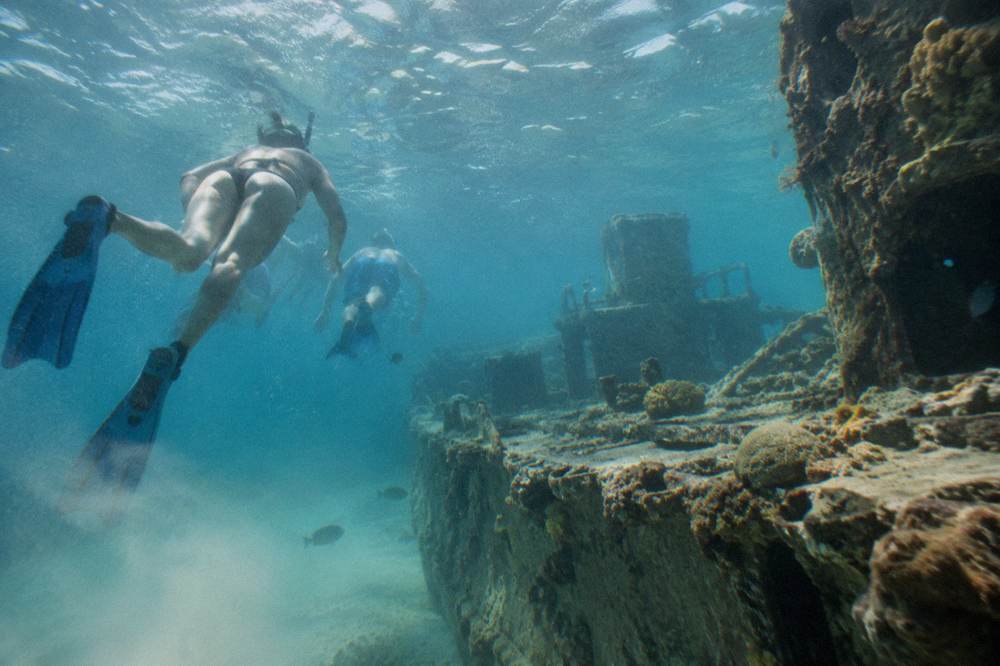
If turtles are the priority, one mid-length trip earns a closer look. The Banana Adventure Catamaran Shipwreck Snorkel and Turtle Swim, rated 5 across 231 reviews, from $65 per person, runs about three hours from Hadicurari Fishermen's Pier, lists Tres Trapi as its stop, and throws in a meal, gear and drinks.
Can You Combine Water Sports And A Catamaran Sail In One Day?
Yes, and the tour times fit that pattern: powered sports in the calm of the morning, a catamaran sail in the afternoon, or a snorkel sail in the morning and a sunset cruise to finish. The constraint is departure times and piers, not stamina; most catamaran trips leave from the Palm Beach piers a short walk from the jet ski stands, so the two halves of the day rarely conflict.
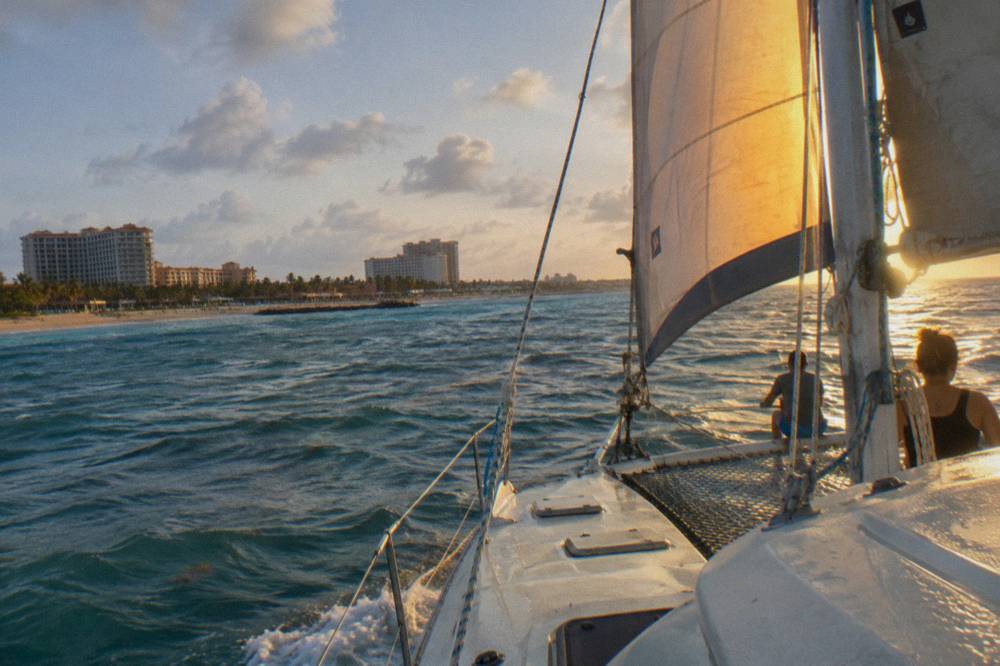
The timing logic comes from the sea itself. Trade winds build through the day, so the flattest, clearest water sits in the morning; that is when you want the jet ski and, honestly, also when the best snorkeling happens. The morning departures carry the biggest snorkel payloads: the Morning Snorkel Sail with Premium Champagne Brunch, rated 4.7 across 2,238 reviews, from $85 per person, spends about four hours on the Antilla Shipwreck, Boca Catalina and Malmok, with brunch, gear and drinks aboard. Other pages covering the same trip are gathered on Aruba Catamaran Tours.
That leaves the afternoon free. Two practical shapes for a combo day:
| Combo shape | Morning | Afternoon | Works best for |
|---|---|---|---|
| Thrill then chill | Jet ski and parasail off Palm Beach | Afternoon Snorkel Sail aboard the Palm Pleasure, from $90 per person | First-time visitors wanting both worlds |
| Sail then sail | Champagne brunch snorkel sail | Sunset cruise, from $50 per person for the Banana Adventure sunset sail | Water lovers who skip the engines |
| Ride then dine | Morning jet ski session | Sunset Sail with Caribbean Dinner and Live Music, from $109 per person | Couples celebrating something |
One warning worth passing on: do not book a powered ride and a catamaran departure back to back. Check-in for sailing trips is typically 30 minutes before departure, and the walk down the beach plus wet clothes and sunscreen reapplication eat more time than people expect. Give yourself a buffer of an hour, and check the booking page for each trip's exact check-in window since it varies by operator.
What Should You Know Before Booking Water Sports In Aruba?
Three rules cover most of it: reef-safe sunscreen is law, not a suggestion, since Aruba bans sunscreens containing oxybenzone; the marine park's protected areas have no-touch rules for coral and marine life; and air arrivals need the free online ED Card, with a $20 sustainability fee for travelers aged 8 and older. Cruise passengers on standard itineraries usually do not need the ED Card.
The sunscreen rule surprises people. Aruba prohibited the import, sale and distribution of oxybenzone sunscreens to protect its reefs, a law in force since 2020, and it applies to the bottle in your suitcase too. Mineral formulas with zinc oxide or titanium dioxide are the compliant choice, and they matter most on the snorkel trips, where you will be floating directly over the reef the law protects. Visitors can read the island's own guidance on the Aruba code of conduct for visitors, which also covers not feeding marine life and not touching coral.
The marine park side is quieter but real. Parke Marino Aruba, created by national decree in 2018 and managed since 2019, spans four protected areas covering 60.2 square kilometers, including Mangel Halto, one of the stops the southern lobster and champagne sails visit. Its management plan imposes a no-touch policy for corals and marine life and directs boats to mooring buoys rather than anchors. Check the live booking page for any extra charges before you sail.
For the sailing half of the day, a few booking habits pay off. Free cancellation up to 24 hours ahead is standard on the trips offered here, which matters in a place where wind can shift plans. Towels are rarely provided on board, cash tips for the crew are customary, and the what to bring on an Aruba catamaran guide has the full packing list.
How Much Does A Water Day In Aruba Cost?
The catamaran side runs from $50 per person for a two-hour sunset sail to $199 per person for the longest champagne and lobster trips, with most shared snorkel sails between $63 and $124 per person. Private charters are priced per group, from $1,399 to $2,500. Parasailing and jet ski prices are set at the beach huts and are not part of any booking page carried here.
The price ladder on the sailing side is remarkably clean. At the bottom sit the pure sunset sails: the Banana Adventure Tropical Sunset Sail, rated 5 across 141 reviews, from $50 per person, and the Dolphin Catamaran sunset cruise, rated 4.6 across 899 reviews, from $59 per person. The middle band is the snorkel fleet, and the top band is the food-forward trips.
| Tour | Duration | Price | Rating |
|---|---|---|---|
| Banana Adventure Tropical Sunset Sail | About 2 hours | From $50 per person | 5 across 141 reviews |
| Arusun Catamaran Sail with Snorkeling | About 2 hours 30 minutes | From $63 per person | 4.8 across 2,683 reviews |
| Antilla Shipwreck and Catalina Bay Snorkel Sail | About 3 hours | From $79 per person | 4.7 across 554 reviews |
| Half-Day Snorkel Sail Tour with Caribbean Lunch | About 4 hours | From $107 per person | 4.8 across 860 reviews |
| Sunset Champagne and Lobster Sail on Shamwari | About 4 hours 30 minutes | From $199 per person | 5 reviews, too few to rate |
| Private Sunset Catamaran Adventure Cruise | About 2 hours | From $1,800 per group, up to 15 guests | 5 across 23 reviews |
Two reading notes on that table. The Shamwari lobster sails carry only a handful of reviews, so treat the experience, not the rating, as the sell. And the per-group prices are never per person: divide $1,800 across a full boat of fifteen on the private sunset cruise and it lands lower than several shared dinner trips, which is why larger groups should always price the charter first. The private catamaran charter guide works through that math in detail, and the how much does an Aruba catamaran tour cost guide covers the shared fleet. For everything beyond the catamaran fleet, the Aruba excursions guide that puts boat tours first covers departure piers, real prices, and how to match a trip to your group.
When Is The Best Time For Water Sports In Aruba?
September through November delivers the calmest seas of the year; December through April is the reliable high season with dry weather and steady winds; and within any given day, morning beats afternoon for both jet skiing and snorkeling because the trade winds build through the day. Hurricane season runs June 1 to November 30 but direct hits on Aruba are rare.
Aruba sits south of the main hurricane belt, which is why its water-sports calendar barely flinches: the boats are running and every listing on this page is bookable. The trade-off is wind. The northeasterly trades blow harder roughly February to July, and an afternoon parasail in those months is a livelier ride than a nervous first-timer wants. Sea temperature barely moves, holding about 79 to 83 F all year, so wetsuits never enter the picture and the powered sports run twelve months.
For the sailing side, the season matters differently. Sunset times shift through the year and departure clocks shift with them, so the exact sail time for any given month is on each booking page. The best time to visit Aruba guide and the deeper sea conditions and hurricane season guide cover the weather picture; the practical rule for a water-sports day is unchanged across all of it: engines and snorkels in the morning glass, sails and rum punch after the wind fills in. Before you commit to that afternoon sail, the honest look at catamaran downsides in Aruba covers what the brochures skip, from bridge-deck slam to crowded shared decks, and how to pick a trip that sidesteps each one.
Whichever mix you land on, the catamaran half is the part worth locking down before you fly, since the best-reviewed departures fill first.
Common Questions About Water Sports In Aruba
Where Can You Go Parasailing And Jet Skiing In Aruba?
Powered-sports operators work the sand in front of the Palm Beach high-rise hotels, where the leeward coast is calmest, and offer the same sports on the quieter stretch of Eagle Beach. Prices are quoted at each beach hut on the day, since neither sport is part of a tour booking page.
Can You Combine Parasailing Or Jet Skiing With A Catamaran Tour?
Yes, and the piers make it easy. Jet ski stands and the main catamaran departure piers sit on the same Palm Beach strip, so a morning powered ride flows into an afternoon snorkel sail or an evening sunset cruise. Leave at least an hour between the two and check the sail's check-in time on the booking page.
How Much Do Catamaran Tours Cost Compared With Jet Skiing?
Shared catamaran trips run from $50 per person for a two-hour sunset sail to $199 per person for the longest champagne and lobster sails, with most snorkel sails between $63 and $124 per person including gear and drinks. Jet ski and parasail rides are priced per session at the beach and are not sold through the sailing booking pages.
Do You Need Sunscreen Rules For Water Sports In Aruba?
Yes. Aruba bans sunscreens containing oxybenzone, a law in force since 2020 that covers what you bring in your luggage, so use a mineral formula with zinc oxide or titanium dioxide. The rule matters most on snorkel trips where you float directly over protected reef.
What Is The Best Time Of Day For Water Sports In Aruba?
Morning. The trade winds build through the day, so the flattest water for jet skiing and the clearest water for snorkeling both come before noon. Afternoons suit sailing and sunset cruises, when the wind is exactly what a catamaran wants.
Do Cruise Passengers Need An ED Card For Water Sports In Aruba?
Usually not. The ED Card requirement applies to air arrivals, and cruise passengers on standard itineraries are generally exempt. Air travelers aged 8 and older pay the $20 sustainability fee through the free online form before departure.