What Are The Downsides To A Catamaran In Aruba?
An honest look at the real downsides of catamaran tours in Aruba, from bridge-deck slam and crowded shared sails to weather dependence, plus how to pick a trip that avoids each one.
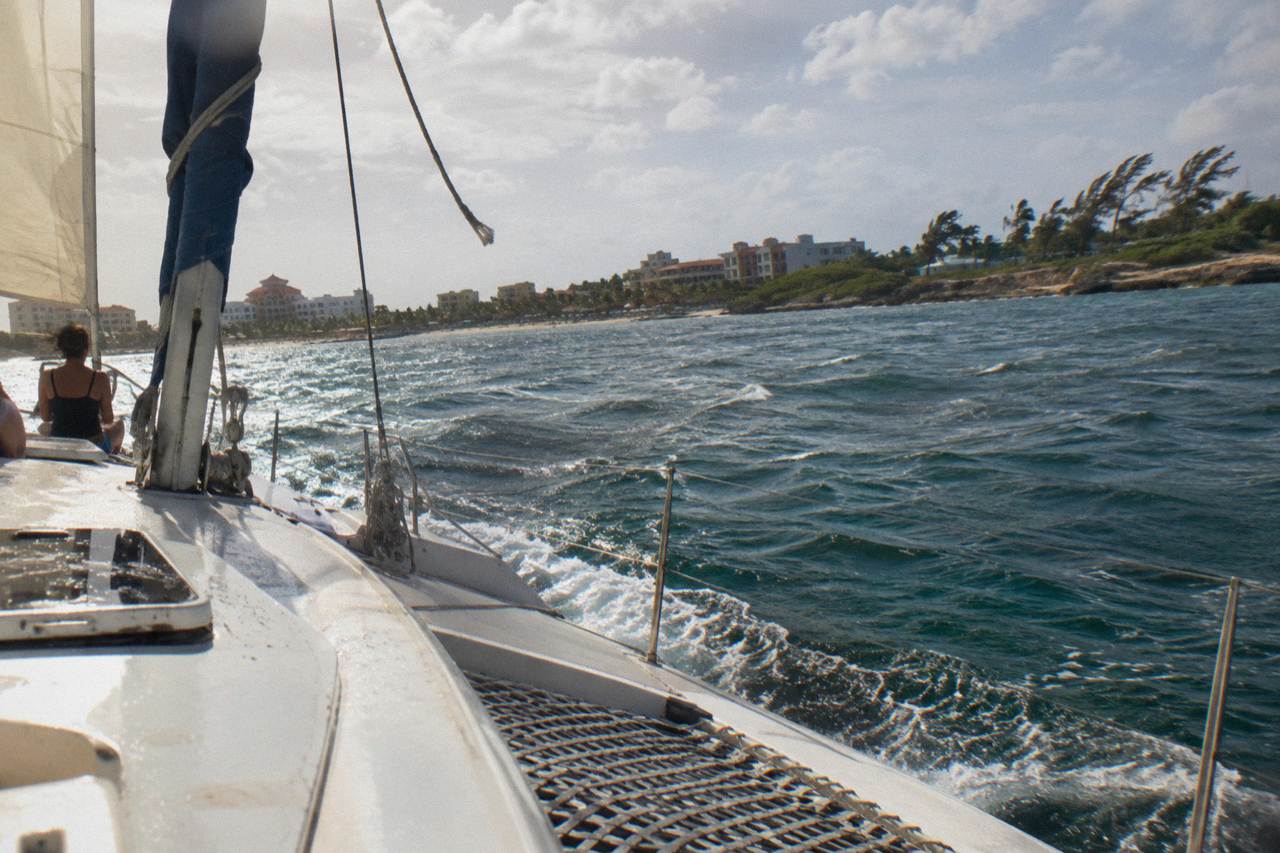
Catamarans sail Aruba's sheltered west coast, where the calmer leeward seas suit them year-round, and the format earns that lead: two hulls mean a stable deck, wide shaded lounging space, and easy water access from a stern platform. None of that makes them perfect. Every boat is a set of trade-offs, and the honest way to choose a trip is to know which trade-offs you are accepting before you pay. This page walks through the downsides guests actually report on Aruba catamaran tours, separates the real complaints from the rare ones, and pairs each drawback with a booking decision that minimizes it.
The main downsides are bridge-deck slam and motion in open-water chop, crowded decks on shared sails, the absence of snorkel stops on sunset-only trips, weather and wind dependence, and the planning frictions of early check-in, no towels, and cash tipping. None of these are deal-breakers, and every one can be reduced by picking the right tour, departure time, and season.
The biggest structural drawback is inherent to the design. A catamaran's two hulls are joined by a wide platform, the bridge deck, that sits above the water. In calm water it stays dry and quiet. When wind builds a short chop, waves can slam the underside of that platform with a hollow bang that surprises first-time guests. It is noisy rather than dangerous, but it is the single most common "nobody told me about this" moment on a catamaran.
The second drawback is social rather than nautical. Shared catamaran tours in Aruba are popular, and popularity means people. Some vessels on these runs carry plenty of other passengers, per operator descriptions of the Delphi Watersports sunset cruise. If you picture a private sail with a dozen friends, a shared ticket delivers something different: a party-adjacent boat with music, an open bar, and lines at the bar.
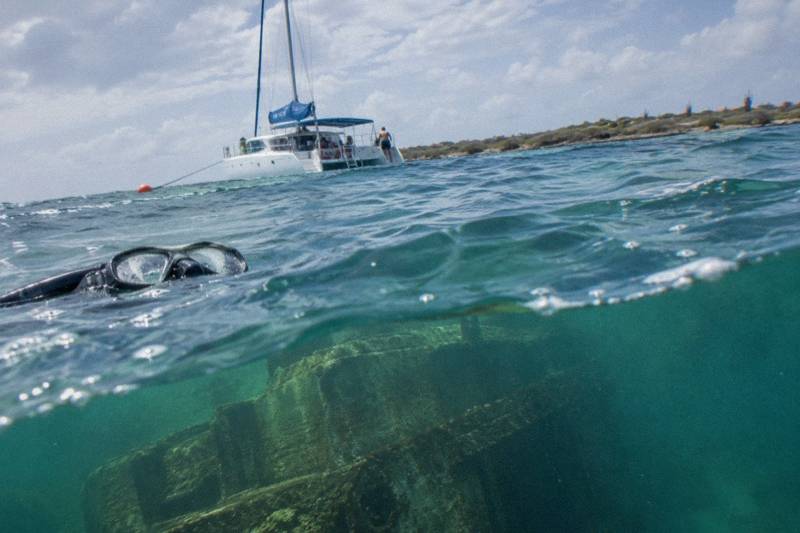
Third, the two most popular formats are not interchangeable. A sunset sail and a snorkel sail are different products, and guests who book one expecting the other are the source of most disappointment. Most two-hour sunset sails on the island include drinks and snacks but no snorkel stop; the shared snorkel sails run longer and visit the Antilla shipwreck and Boca Catalina. Fourth, nature votes: sea state, wind, and the calendar all shape the day, and no operator can promise flat water or a wildlife sighting.
Here is the honest shortlist, side by side with the fix:
| Downside | What It Actually Means | How To Reduce It |
|---|---|---|
| Bridge-deck slam in chop | Loud wave impact under the deck when wind builds; startling but not unsafe | Book morning departures; trade winds build chop later in the day |
| Crowded shared decks | Dozens of passengers, music, bar lines on popular sails | Pick a private charter, or a smaller shared trip |
| No snorkeling on sunset sails | Most two-hour sunset trips sail the coast with drinks only, no water stop | Book a dedicated snorkel sail, or a long trip that ends at sunset |
| Wind and weather dependence | Chop, seasonal wind, and rare storm influence change conditions | Sail September to November for the calmest seas; check the forecast |
| Planning frictions | Check-in 30 minutes early, towels rarely provided, cash tips expected | Read the booking page's details block and pack accordingly |
If you already know you want the classic format that handles most of these drawbacks reasonably well, the most-reviewed starting point on this subject is the snorkel sail:
The Dolphin Catamaran Snorkel and Sail with Open Bar, rated 4.8 across 2,894 reviews and priced from $69 per person, is the format most guests picture when they imagine an Aruba catamaran day: about 3 hours, a stop at the Antilla shipwreck and Boca Catalina, drinks and gear included. For contrast, the band also shows a pure sunset sail and a private charter, the two main ways to buy your way out of the crowd problem. The rest of this page goes through each drawback in turn.
Does A Catamaran Rock More Than Other Boats?
No, in Aruba conditions a catamaran rocks less than a monohull of similar size, and that stability is exactly why tour operators use them. The real motion complaint is not rolling, it is the quicker, sharper pitch and the occasional bridge-deck slam when the wind builds a short chop against the platform joining the two hulls.
Roll and pitch are the two motions that matter. A catamaran's wide beam resists roll, so the side-to-side sway that troubles guests on narrower boats is largely absent. What a catamaran does instead is pitch over waves with a quicker, snappier motion, and in short wind-driven chop the wave crests can strike the underside of the bridge deck. The result is a bang you feel through your feet, sometimes repeated every few seconds. On the leeward west coast where Aruba tours sail, sheltered conditions keep this to a minimum most days, which is why the island's operators lean so heavily on the format.
The timing of your departure matters more than the boat. Morning catamaran snorkel departures tend to provide the flattest, clearest water, while afternoon slots have more chop from building trade winds, per Aruba-based tour guidance. The northeasterly trade winds also run stronger roughly February to July, so a February afternoon sail will usually feel livelier than a November morning one, even on the same route. None of this is a safety issue on sheltered coast runs; it is a comfort issue, and it is predictable enough to plan around.
Motion sickness is the worry behind this question more often than not. The honest answer is that stable does not mean stationary, and guests prone to seasickness should still take their usual remedy before boarding rather than on the boat. The site's seasickness guide for Aruba catamarans covers prevention in detail. Guests curious about the deeper design trade-offs between hull types can also read the catamaran versus trimaran comparison, which explains why the two formats feel different in the same water.
One honest caveat from the operator landscape: not every "sailing" tour in Aruba is a catamaran. Some well-known island operators run schooners, and at least one popular vessel is described in its own listing text as a trimaran. None of that changes the motion logic above, but if the two-hull format is the point of your booking, confirm the vessel on the tour page before you pay.
Are Shared Catamaran Tours Too Crowded?
They can be, and crowding is the most frequent complaint pattern on popular shared sails. Shared sunset sails put multiple booked groups on the same deck, and the busiest trips combine an open bar, music, and a full deck. If you want space and quiet, the only reliable fixes are a smaller shared trip or paying for a private charter.
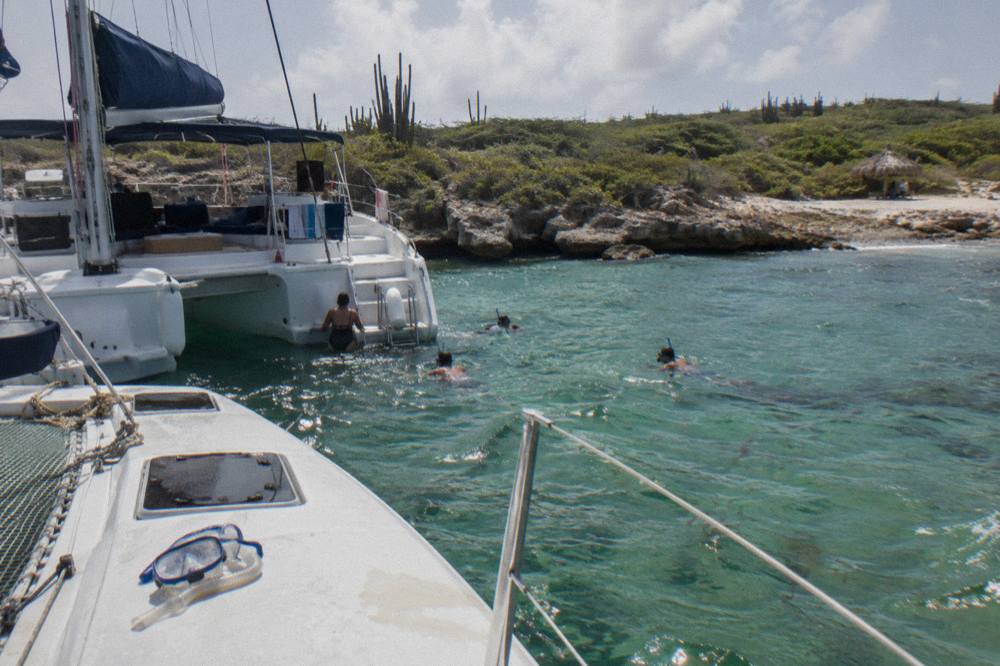
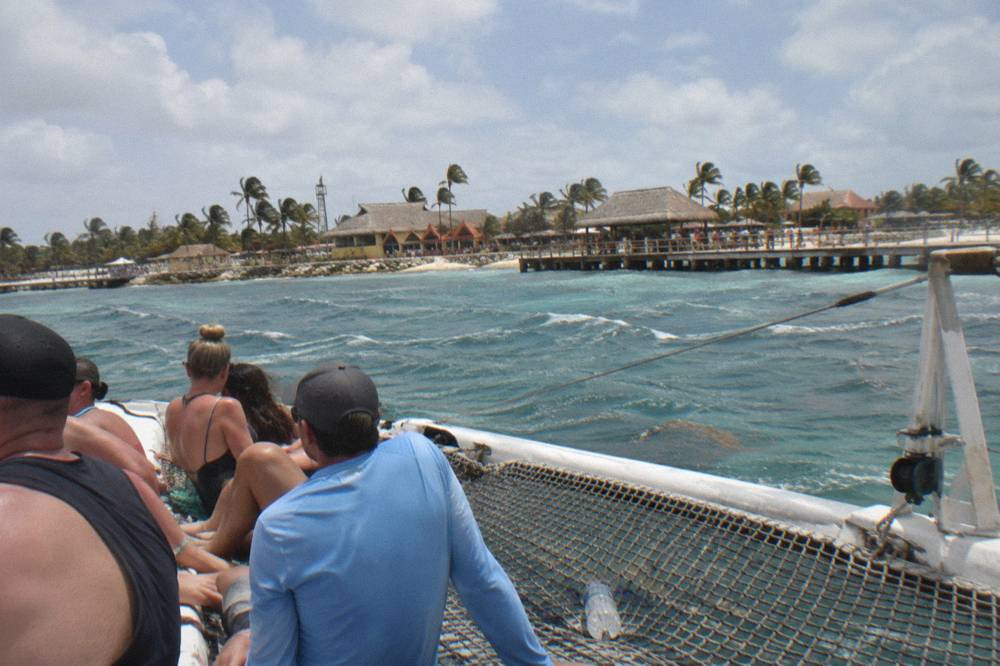
Crowding is a function of success. Aruba catamaran tours sell out in high season, and shared cruises can feel crowded. On a 45-passenger sunset sail that means a crowded rail at photo time, a wait at the bar, and a deck that feels like a floating happy hour rather than a serene sail. For many guests that is the appeal; the party format is a feature. For travelers who pictured a quiet glide past Eagle Beach, it is the downside that defines the review.
The booking decision that removes crowding entirely is a private charter. The Private Catamaran Adventure Cruise with Rope Swing and Water Slide, rated 4.9 across 41 reviews, is priced from $2,500 per group for up to 15 guests, with drinks, a meal, and snorkel gear included. The per-group number looks steep until you divide it by fifteen people; for a family or a wedding group the flat rate covers the entire catamaran, and the deck is yours. The related option on this page sits at the other end of the scale for comparison:
Still deciding whether the shared format is right for your group? The Dolphin Catamaran Snorkel and Sail with Open Bar, from $69 per person with free cancellation, is the classic shared experience, and its review pool of 2,894 guests is large enough to read the honest pattern before you commit.
Between the poles there are quieter shared choices. Longer snorkel sails spread guests across a bigger boat and a longer day, and midday departures draw fewer sunset crowds than the golden-hour slots. Read the tour's details block for passenger capacity where it is stated, and where it is not, check the booking page before assuming either way.
Why Do Sunset Sails Not Include Snorkeling?
Because the two formats serve different moods and different clocks. Most two-hour sunset sails in Aruba cruise the coast with an open bar and snacks while the sun drops, with no swim stop; the trips that include the Antilla shipwreck and Boca Catalina are the dedicated snorkel sails, which run two and a half to four and a half hours and depart earlier in the day.
The lineup of sunset trips makes the pattern plain. The Aruba Sunset Catamaran Sail with Appetizers and Open Bar, rated 4.5 across 2,407 reviews from $92 per person, sails roughly two hours along the Palm Beach coast with drinks and appetizers, and names no snorkel stop. The two-hour sunset runs from $59 and $50 on the lineup keep things simple: drinks and coastline, plus a short swim stop on the Delphi Dolphin trip. These are atmosphere products, timed so the boat is offshore when the sky turns.
Guests who wanted to swim and expected to are the ones who leave disappointed. The fix is simple: match the product to the goal. If the goal is the water, book a snorkel sail. The Arusun Catamaran Sail with Snorkeling, rated 4.8 across 2,683 reviews and priced from $63 per person for about two and a half hours, lists the Antilla shipwreck, Boca Catalina, and the Palm Beach coast, with gear and drinks included. It has 2,683 reviews behind it for a reason, and it costs less than most sunset sails:
If the goal is the sky, accept that a sunset sail is a cruise, dress for the breeze, and treat the lack of a swim stop as the trade that buys you the golden-hour timing. Travelers who want both in one ticket should look at the long afternoon trips that finish near sunset, several of which run about four and a half hours with snorkel stops and a BBQ meal included.
How Much Does Weather Ruin A Catamaran Tour?
Weather shapes the day but rarely cancels it. Aruba's leeward west coast is sheltered, the island sits south of the main hurricane belt, and September to November brings the calmest seas of the year. The honest drawbacks are seasonal wind, building afternoon chop, and the rare storm-influenced day that forces a reschedule or a route change.
The seasonal pattern is worth knowing before you book. The northeasterly trade winds persist year-round and run stronger roughly February to July, which firms up the sailing and adds chop to afternoon departures. Hurricane season officially runs from June 1 to November 30, but Aruba lies south of the main belt and direct impacts are rare, so the season mostly matters as a price and crowd consideration rather than a safety one. December to April brings the peak reliable conditions: dry weather and light, steady trades. The site's Aruba sea conditions and hurricane season guide covers the month-by-month picture in full.
Sea temperature sits between about 79 and 83 degrees year-round, so cold water is not one of the drawbacks. What does vary is surface texture. The same sheltered coastline that keeps tours running can still deliver a bumpy hour when the wind funnels down from the northeast, and the bridge-deck slam covered earlier is the sensory result. Morning slots, again, are the calmer bet.
The genuinely unpredictable parts are the ones no operator controls: sea state on the day, wind strength, and wildlife. Turtles at Tres Trapi, fish over the Antilla, and the quality of a sunset all vary. Operators report sightings and describe stops, but no honest listing will promise them, and any that does should be read with caution. Free cancellation on nearly every shared tour on this lineup is the structural answer: you can rebook around a bad forecast rather than eating it.
What Rules And Restrictions Catch Guests Out?
The three that surprise people are Aruba's oxybenzone sunscreen ban, the no-touch marine rules over the reefs, and the small logistics items: arriving about 30 minutes before departure, bringing your own towel, and carrying cash for crew tips. None require effort to comply with, but each one ruins a morning if you learn about it at the pier.
The sunscreen rule is law, not advice. Aruba prohibits the import, manufacture, sale, and free distribution of topical sunscreens containing oxybenzone, in force since July 1, 2020, with fines reported up to 10,000 Aruban florins per violation. The law names oxybenzone only, and mineral formulas with zinc oxide or titanium dioxide are the recommended choice for the reefs these tours visit; the details are summarized in this legal summary of the Aruba plastics and sunscreen ban. Practically: buy mineral sunscreen before you board, because the products on island shelves comply but your carry-on from home might not.
The marine rules matter more than most guests expect, because several standard snorkel stops sit inside protected waters. Parke Marino Aruba, created by national decree in 2018, spans four marine protected areas covering about 60 square kilometers, including Mangel Halto and the Oranjestad reef islands, per the marine park's documented boundaries. The management plan's rules include no anchoring on seagrass or coral and a no-touch policy for corals and marine life. The visitor-facing version is the island's own code of conduct for visitors: do not feed marine life, do not touch turtles or coral, and use coral-friendly sunscreen. No visitor or user fee for the marine park is confirmed, so do not budget for one.
The logistics items are small but real. Arrive about 30 minutes before departure, bring a valid ID, and pack your own towel because operators rarely supply them. Tipping the crew in cash is customary and is rarely bundled into the base price. Details like minimum ages, life-jacket policy, and alcohol rules vary by trip and are not standardized; check the booking page for the specific tour rather than assuming. Air travelers should also remember the free online ED Card and its $20 sustainability fee for most arrivals aged 8 and up, though standard cruise passengers are usually exempt.
Can You Book Around Every Catamaran Downside?
Almost. Bridge-deck slam shrinks with a morning departure, crowding disappears with a private charter or a smaller shared trip, the no-snorkel trade disappears the moment you book a snorkel sail instead of a sunset cruise, and seasonal wind is a calendar choice. The only drawbacks you cannot buy away are weather on the day and wildlife that has its own plans.
Treat it as a matching exercise. Write down the one thing that would ruin the day for you, and book the product that neutralizes it. If crowds are the fear, the private charter at from $2,500 per group for up to 15 guests is the structural answer, and its 4.9 rating across 41 reviews with drinks, meal, and gear included shows what a small-group format delivers. If motion is the fear, take a morning snorkel sail, take your remedy beforehand, and pick a September to November week. If disappointment about swimming is the fear, book the water product, not the sky product.
For the travelers whose real priority is simply a well-run shared sail with the fewest surprises, the second review pool worth reading is the sunset side of the house:
The Aruba Sunset Sail with Open Bar, rated 4.5 across 392 reviews and priced from $112 per person for about two hours, is one of the few sunset trips on the lineup that lists actual water stops, Boca Catalina, Arashi Beach, and Eagle Beach, alongside its open bar. That combination answers the two most common objections at once: it sails at golden hour and it still reaches the water.
The last piece of honest framing: a downside you know about in advance is a preference, not a disappointment. Crowds, chop, a cruise without a swim stop, and a windy afternoon are all predictable enough to plan around, and all but two of the tours listed here carry free cancellation so a bad forecast is a reschedule rather than a loss. The guests who write frustrated reviews are usually the ones who booked a party sunset sail wanting a quiet snorkel, or a shared boat wanting a private deck. Match the product to the day you want and the catamaran's real weaknesses mostly stop mattering.
For more on choosing well, the site's how to choose a catamaran tour guide walks the full decision, and Aruba Catamaran Tours keeps the whole lineup of sails, snorkel trips, and charters side by side.
Common Questions About Catamaran Downsides
What Are The Downsides To A Catamaran?
The main downsides are bridge-deck slam and quicker pitching in wind chop, crowded decks on popular shared sails, no snorkel stop on most sunset-only cruises, weather and wind dependence, and small frictions like 30-minute-early check-in, no towels, and cash tipping. Each one shrinks with the right tour choice, departure time, or travel month.
Is A Catamaran Worse In Rough Seas Than A Monohull?
In the sheltered conditions where Aruba tours sail, a catamaran rolls less than a monohull of similar size, which is why operators favor the format. The trade-off is a quicker snappy pitch and occasional loud bridge-deck slam when short chop strikes the platform joining the hulls. It is a comfort issue on coast runs, not a safety one.
Why Is My Sunset Cruise Not Stopping For Snorkeling?
Most two-hour sunset sails in Aruba are atmosphere products: an open bar, snacks or appetizers, music, and a coast cruise timed to the sky, with no swim stop. The trips that snorkel the Antilla shipwreck and Boca Catalina are dedicated snorkel sails that run longer and depart earlier. Book the product that matches the goal.
How Crowded Do Shared Catamaran Tours Get?
Popular shared sails can carry up to about 45 passengers per operator descriptions, with music, open bars, and busy decks in high season. Travelers wanting space should book a smaller shared trip, a midday departure, or a private charter. Check the tour's details block or booking page for the stated capacity.
What Sunscreen Rules Apply On Aruba Catamaran Tours?
Aruba law prohibits sunscreens containing oxybenzone, in force since July 1, 2020, with reported fines up to 10,000 Aruban florins. Mineral formulas with zinc oxide or titanium dioxide are recommended for the reefs. Do not feed or touch marine life at the snorkel stops.
When Is The Worst Time To Sail A Catamaran In Aruba?
Afternoon departures during the windier months, roughly February to July, bring the most chop. Hurricane season runs June 1 to November 30, but Aruba sits south of the main belt and direct impacts are rare. September to November offers the calmest seas, and mornings beat afternoons for flat water year-round.