Is It Safe For US Citizens To Go To Aruba Right Now?
A practical safety read for US travelers considering Aruba, covering island conditions, hurricane season timing, entry steps, and what a catamaran day on the water actually involves.
Yes, in the ordinary travel sense that matters to most US visitors. Aruba lies south of the main Atlantic hurricane belt, so direct hits are rare, and tourism authorities describe standard conditions for US travelers with routine precautions advised as of late 2026. Hurricane season runs 1 June to 30 November and is nearly over. The practical safety questions for a sailing day are sea state, sun, and a few simple rules on the water, all covered below.
The honest version of this answer has two layers. The island layer is straightforward: Aruba is a familiar, well-trodden destination for Americans, entry is a simple online form for air arrivals, and the west coast where nearly all catamaran tours sail is the sheltered side of the island. The water layer is where a little knowledge changes the day: trade winds, mooring rules at the marine park, and a sunscreen law that actually gets enforced at the shop level. None of it is complicated, but knowing it before you book makes the difference between a relaxed sail and a surprised one.
This article works through the island picture first, then the seasonal timing, then the entry steps for US citizens, and finally the specifics of a catamaran day: which waters these tours actually sail, what the crews and listings say about gear and conditions, and what to bring. Facts come from official sources and the tour details themselves; where a detail is genuinely individual to a trip, the answer is to check the booking page.
Aruba's tourism authorities describe standard tourist conditions for US visitors, with routine precautions advised and no widespread entry or safety restrictions in effect for US visitors. The island sits south of the main hurricane belt, so direct storms are rare, and its leeward west coast, where the catamaran fleet sails, is the sheltered side. For a US citizen, the practical risks are the ordinary ones: sun, sea state on the day, and normal care with valuables.
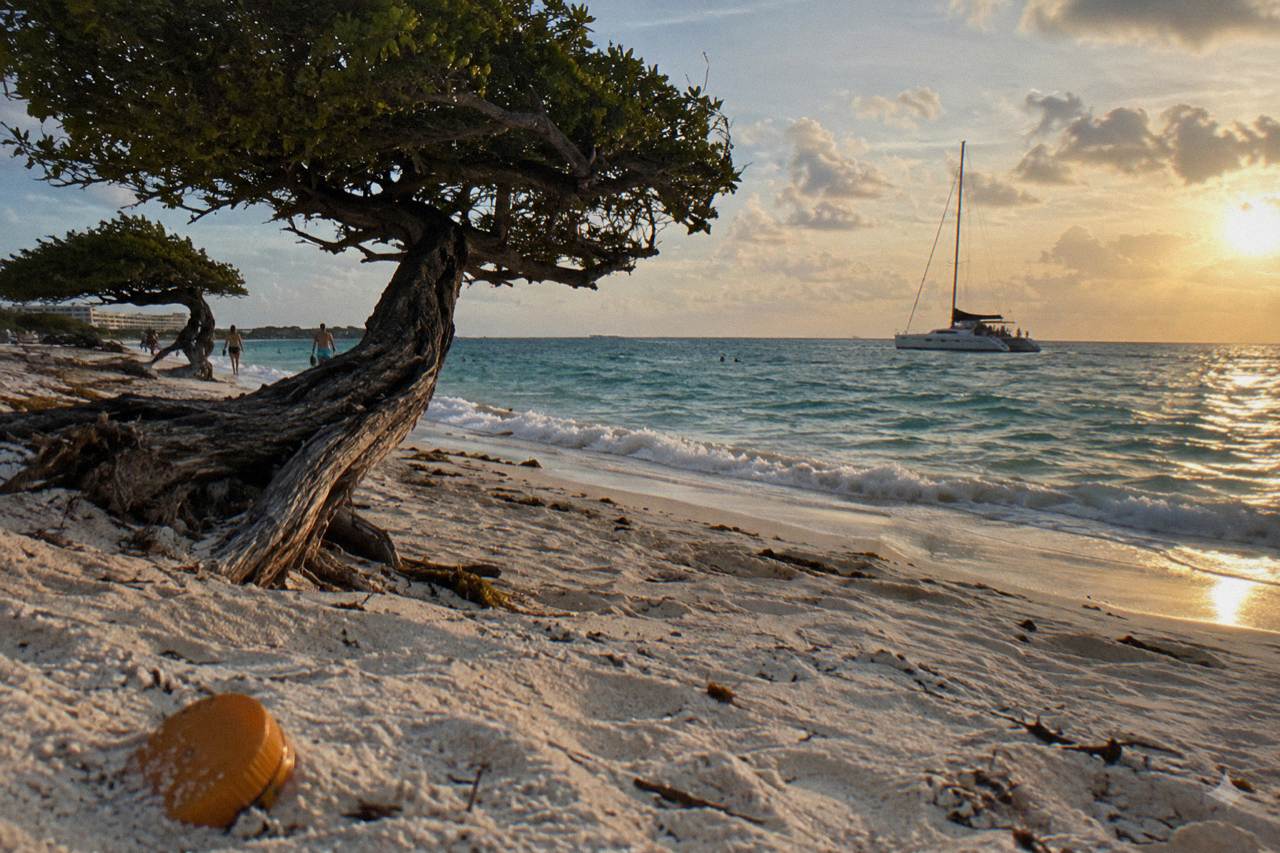
That first paragraph answers the headline question directly, but the useful detail sits underneath it. Aruba's geography does a lot of quiet work for traveler safety. The persistent northeasterly trade winds that keep the island breezy also mean the western, leeward coastline, Palm Beach, Eagle Beach, Oranjestad and the snorkel sites off Malmok, sits in the wind shadow of the island's interior. That is why nearly every catamaran tour boards there, at piers such as Pelican Pier, De Palm Pier, and the Delphi Watersports beach in front of the Hyatt Regency, rather than on the exposed east coast where the waves break.
The island also has more than 20 public beaches, all with free public access, so the environment travelers move through is open and established rather than remote. Eagle Beach was named the number one Best of the Best Caribbean Beach and number four Best Beach in the World in the 2026 Travelers' Choice Awards, and Palm Beach ranked number six in the Caribbean; these are heavily visited, well-serviced stretches of coast, not isolated ones. For travelers whose safety question is really "is this a place that handles tourists well," the answer is visibly yes.
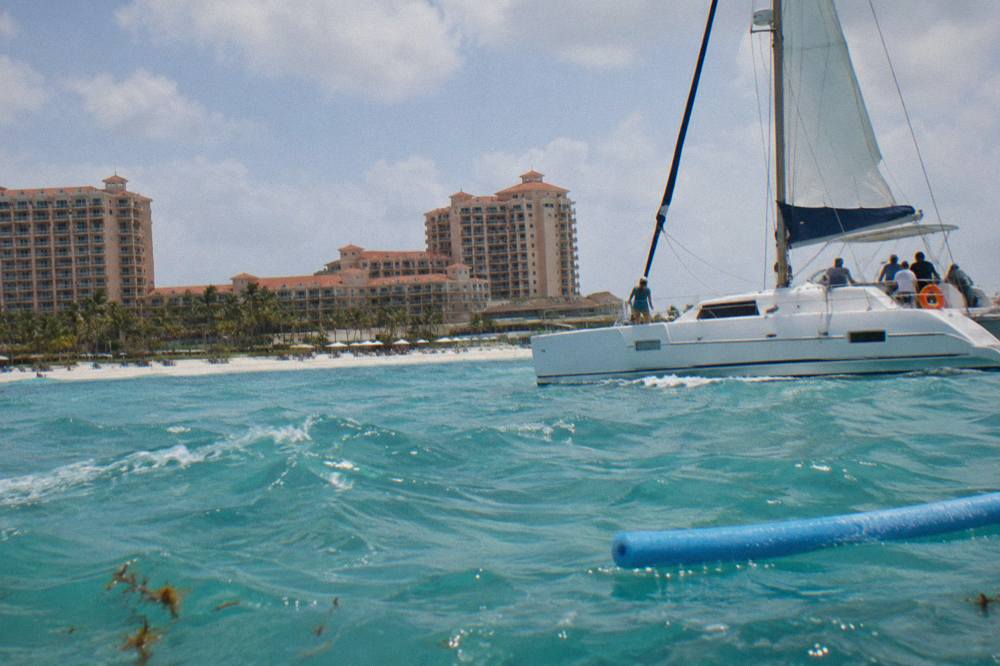
For readers planning time on the water, a shared catamaran is one of the lower-risk ways to see Aruba's coast. Three options that pair well with a first visit: the Dolphin Catamaran Snorkel and Sail, the Sunset Catamaran Sail with Appetizers, and the Half-Day Snorkel Sail with Caribbean Lunch.
The Dolphin Catamaran trip deserves a specific word because it is the one this site pairs with this safety question most often. It runs about 3 hours from the Delphi Watersports beach on Palm Beach, is rated 4.8 across 2,894 reviews, and costs from $69 per person with drinks and snorkel gear included. Two snorkel stops are named on the booking page: the Antilla shipwreck and Boca Catalina, both standard, shallow, well-visited sites. Free cancellation is offered. For a traveler asking whether Aruba is safe right now and wondering what an actual day out there looks like, this is a gentle, well-reviewed starting point, and you can check the Dolphin Catamaran snorkel sail details on its tour page.
What Does Hurricane Season Mean For An October Or November Trip?
Hurricane season in the Atlantic runs 1 June to 30 November, and by late October it is nearly over. Aruba lies south of the main belt and direct impacts are rare. In fact, September through November tends to bring the calmest seas of the year. Trade winds are strongest roughly February to July.
That sequencing surprises people. The words "hurricane season" suggest October is the worst time to sail, but Aruba's position near 12 degrees north, at the edge of the southern Caribbean, puts it below where most tropical systems track. The trade winds that blow steadily across the island moderate temperatures year round, and sea temperature sits around 79 to 83 degrees, warm enough that a swim stop is comfortable in any month.
The pattern that actually affects a sailing day is the daily wind cycle rather than the calendar. Local guides note that morning departures tend to have the flattest, clearest water, while afternoon slots carry more chop as the trade winds build through the day. Neither is unsafe, operators adjust routes and stops to conditions, but travelers who are nervous about motion on the water can stack the odds in their favor by choosing a morning departure and reading the timing advice in the site's guide to Aruba sea conditions and hurricane season.
| Period | What To Expect On The Water | Notes For A Sailing Day |
|---|---|---|
| December to April | Peak reliable conditions, dry weather, light steady trade winds | Busiest with visitors; book catamaran trips early |
| February to July | Strongest trade winds of the year | Afternoon chop builds; morning sails are calmer |
| June 1 to November 30 | Atlantic hurricane season; Aruba south of the main belt, direct hits rare | Storm days are the exception, not the rule |
| September to November | Described in local sampling as the calmest seas of the year | Quietest visitor months; good value timing |
The practical takeaway: there is no month when catamaran tours in Aruba shut down. Operators run year round, and the lineup of trips available through this site covers morning, afternoon and sunset slots in every season. What changes month to month is wind strength, crowd levels, and price, not whether the boats go out. If a specific departure time matters to your plans, check the booking page for the individual trip, since sailing times shift with the season.
What Do US Citizens Need To Enter Aruba?
US citizens do not need a visa for tourist stays up to 90 days. Every air traveler, including Americans, must complete an individual online ED Card at the official portal within 7 days before arrival, and travelers aged 8 and older pay a $20 sustainability fee as part of that process. A passport valid for the whole stay and a return or onward ticket are required. Most cruise passengers do not need an ED Card. Once your paperwork is in order, you can see exactly what to expect on landing in our guide to US citizens clearing customs in Aruba.
The ED Card is free to complete on the official site, and third-party services charging extra fees are neither required nor official, a point worth knowing because copycat sites do exist. The digital QR code confirmation is accepted at airline check-in and Aruba immigration; printing it is only a backup precaution. Children under 8, Aruba residents, and repeat visitors who paid the fee within the prior year are exempt from the $20 charge, which supports island infrastructure and environmental projects.
Immigration officers make the final entry decision even with a completed ED Card, and proof of accommodation or sufficient funds can be requested, as at any border. In practice this is a routine process for the large numbers of American visitors the island receives. The site's Aruba ED card and entry requirements guide walks through the form step by step, including the timing window. If your trip is a cruise call rather than a flight, the rules generally differ, and the details for shore visitors are in the guide to catamaran tours for cruise ship passengers.
Is It Safe To Snorkel From A Catamaran In Aruba?
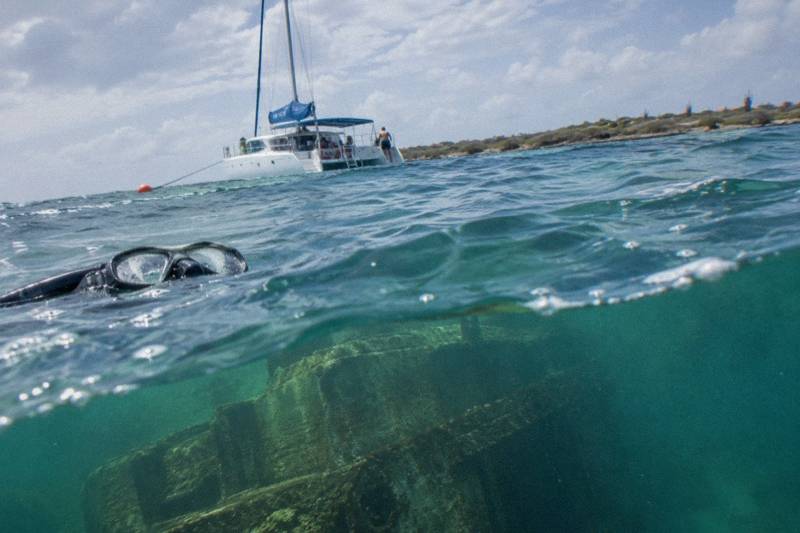
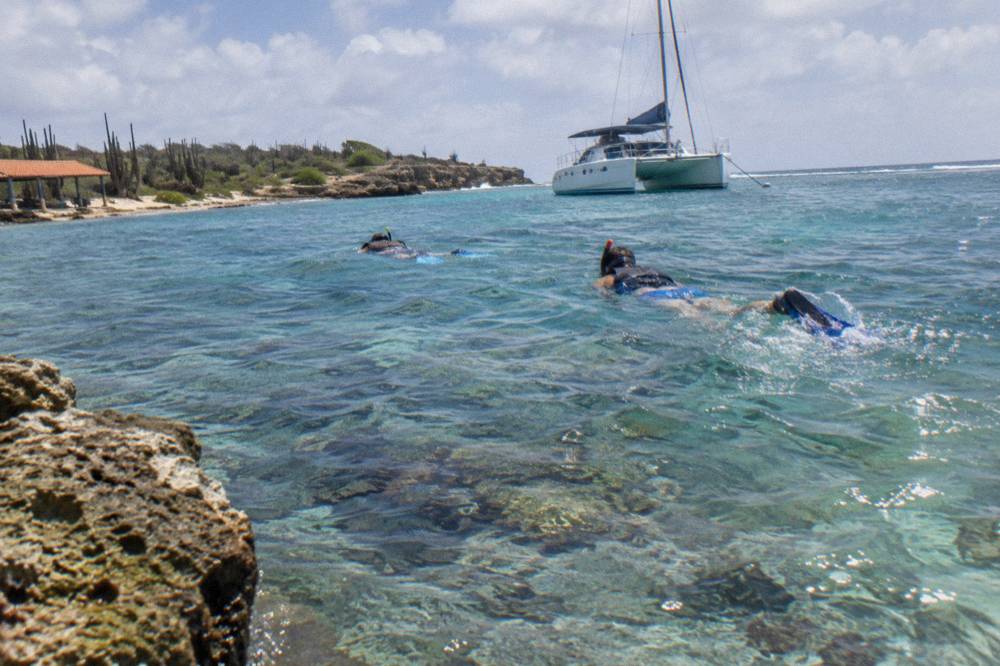
Yes, in the sense the facts support: the standard snorkel stops are shallow, sheltered, and visited daily by the island's fleet, with gear and crew included on the trips that list snorkeling. The Antilla shipwreck, the most famous stop, lies on its port side with shallowest parts around 15 feet and a seabed near 60 feet, so snorkelers stay at the surface above a wreck that rises toward them. Conditions vary, and crews decide stops on the day.
The Antilla is a 1939 German cargo ship scuttled by her own crew in May 1940, about 398 feet long, one of the largest shipwrecks in the Caribbean. Marine park rules call for mooring buoys where provided instead of anchoring on coral or seagrass, which matters because Parke Marino Aruba, the island's marine park, covers four protected areas totaling 60.2 square kilometers, and its management plan prohibits anchoring on seagrass or coral and enforces a no-touch policy for corals and marine life. Guests do not need to memorize these rules; the crews follow them. But knowing them explains why the boats behave the way they do at each stop.
The sunscreen law deserves its own sentence because it is a genuine legal rule, not a suggestion. Reef-safe here means mineral, and travelers who arrive with a oxybenzone-based bottle will not simply be frowned at; the product cannot legally be sold or brought in. Wildlife rules are similar in spirit: do not feed fish or turtles, do not touch coral, do not pick up starfish. Turtles appear at stops like Tres Trapi on trips that list it, but sightings always vary with the day, and no honest operator promises them.
For a first snorkel from a boat, the Half-Day Snorkel Sail with Caribbean Lunch is a strong fit: about 4 hours, from $107 per person, rated 4.8 across 860 reviews, with four named stops including the Antilla, Boca Catalina, Malmok Reef and the Naufragio Baboo wreck, and gear, lunch and drinks all included.
Sea state is the one variable nobody controls. The site's article on whether catamarans can handle rough seas covers the design reasons these boats are steady platforms, and travelers who worry about motion will find practical advice in the guide to not getting seasick on an Aruba catamaran, including the basic point that remedies work best taken before boarding. Morning departures, again, tend toward the flattest water.
Is The Sun And Heat A Real Risk In Aruba?
Yes, and it is the most likely thing to actually affect your day. Aruba sits in the tropics with steady trade winds that mask how strong the sun is; the wind keeps skin feeling cool while UV exposure stays high. Sea temperature of 79 to 83 degrees and constant breeze make overheating feel unlikely, which is exactly why sunburn and dehydration catch visitors off guard on sailing days.
The practical defenses are unglamorous. Mineral sunscreen, reapplied often, both because the law favors it and because reflection off the water doubles exposure. A hat that will survive wind, ideally one with a chin strap or a tight fit. More water than feels necessary, and towels, since local guides note towels are rarely provided on board. Pack swimwear, a dry layer for the wind, and reef-safe sunscreen without oxybenzone, which also covers the reef-safe sunscreen question in detail.
Alcohol is the quiet multiplier here. Nearly every catamaran trip on the island includes an open bar; that is part of the appeal. But sun, wind, rum punch and swimming together dehydrate people faster than any one of them alone, and the crew's job is easier when guests pace themselves. None of this is a reason to skip the bar; it is a reason to alternate with water, a habit that costs nothing and protects the whole afternoon.
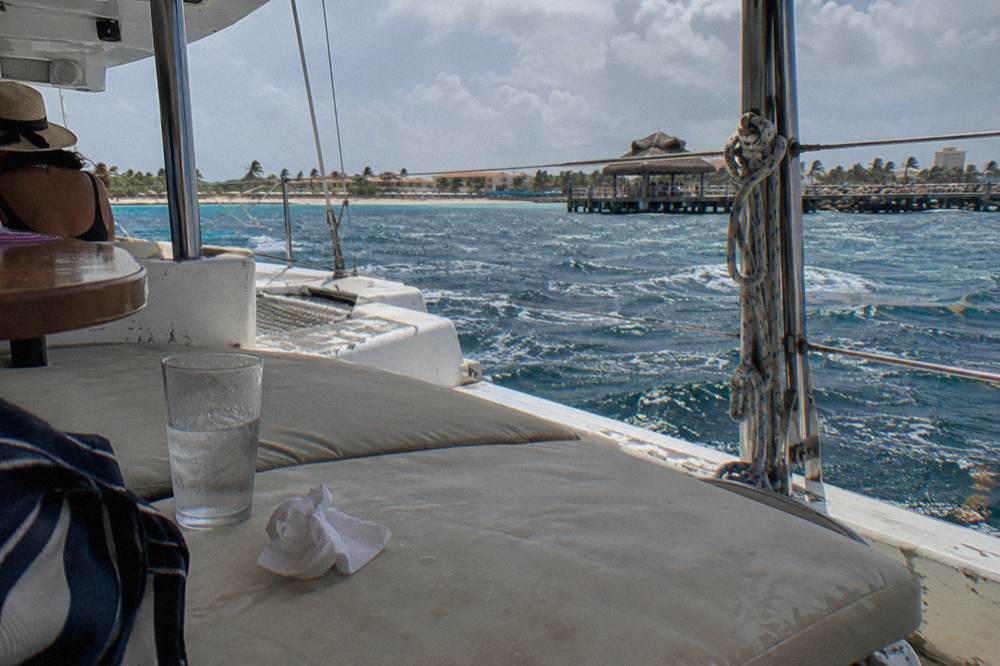
What About Safety On A Sunset Sail Specifically?
Sunset sails are among the gentlest trips on the water: they run about 2 hours, stay along the coast rather than heading to snorkel sites, and include drinks rather than swimming. The Sunset Catamaran Sail with Appetizers and Open Bar, from $92 per person, is rated 4.5 across 2,407 reviews and departs Piet's Pier Bar along the Palm Beach coast, with free cancellation. Evening sails still meet the steady trade winds.
The reassurance here is structural. A sunset trip is a coastal cruise, not an open-water passage: the boat rides the leeward shoreline while the light changes, and the trade winds that built through the afternoon typically ease toward evening. For travelers whose safety question is really a comfort question, a sunset sail answers it. It is also the format most tolerant of a nervous first-timer, since there is no getting in the water at all unless a specific listing names a swim stop, and several do not.
Pricing across shared sunset sails runs from $50 to $114 per person on this site's options, from the Banana Adventure Tropical Sunset Sail at the low end to the 2-Hour Sunset Sailing Excursion at the top, with the differences coming down to boat, pier, inclusions such as appetizers, and review pool. The comparison of Aruba sunset cruises on a catamaran breaks the field down by budget and style. Whatever the choice, departure times shift seasonally with the light, so the sailing time on any given date comes from the booking page.
What Should US Travelers Actually Do Differently In Aruba?
Almost nothing beyond the ordinary: complete the ED Card online within the week before the flight, bring mineral sunscreen instead of a oxybenzone bottle, and treat the sun and the sea-state timing as the two real variables. The rest is standard Caribbean traveler behavior, normal care with valuables, sensible alcohol pacing on boat trips, and listening to the crew at snorkel stops. Aruba rewards preparation with an unusually easy trip.
A short pre-departure list, drawn from everything above:
- Complete the ED Card at the official portal within 7 days before arrival; the $20 sustainability fee applies to travelers aged 8 and older, paid once, digitally accepted.
- Pack mineral sunscreen with zinc oxide or titanium dioxide; oxybenzone products cannot be sold or brought in.
- Book a morning catamaran departure if flat water matters to you; afternoons carry more chop.
- Bring a towel and more water than you think you need; towels are rarely provided on board.
- Check the booking page for each trip's departure time, check-in lead time and any age policies, since these are set individually per listing.
| Concern | What The Facts Support | Where To Verify Details |
|---|---|---|
| Storms and season | Hurricane season ends 30 November; Aruba south of the main belt; September to November described as the calmest seas | Operator booking page for weather policies |
| Entry for US citizens | No visa for stays up to 90 days; ED Card and $20 fee for air arrivals aged 8+ | Official ED Card portal and airline check-in |
| Sun exposure | Trade winds mask strong tropical UV; oxybenzone sunscreen is banned in Aruba | Aruba's visitor tips and code of conduct |
| On-the-water behavior | No touching coral or marine life, no feeding fish or turtles, no anchoring on reef | Crew briefing at each stop |
| Trip-level rules | Check-in times, age limits and inclusions vary by individual trip | The booking page for each tour |
The deeper point is that Aruba Catamaran Tours as a subject is unusually friendly to cautious travelers: the boats sail a sheltered coast, the stops are shallow and established, the crews repeat the same routes daily, and the island's rules, on sunscreen, on the marine park, on entry, are all published and simple to follow. Travelers who want more context on the wider island picture can start with the guide to the best time to visit Aruba or the overview of things to do in Aruba.
Travelers who are ready to commit to a date will find that the same three sails recommended for a safety-conscious first visit also rank among the island's most reviewed catamaran trips, and a review record that deep is a quiet reassurance in itself.
Common Questions About Aruba Safety For US Citizens
Is It Safe For US Citizens To Go To Aruba Right Now?
Aruba's tourism authorities describe standard tourist conditions for US visitors with routine precautions advised, and no widespread entry or safety restrictions are in effect. The island lies south of the main hurricane belt, and its leeward west coast, where catamaran tours sail, is the sheltered side. The practical precautions are the ordinary ones: sun protection, sensible pacing with alcohol on the water, and normal care with belongings.
Do US Citizens Need A Visa For Aruba?
No. US citizens do not need a visa for tourist stays of up to 90 days. They must present a passport valid for the entire stay, a return or onward ticket, and the completed ED Card confirmation. The digital QR code is officially accepted at check-in and immigration; printing is only a backup.
What Is The ED Card And The $20 Sustainability Fee?
The ED Card is a free online form every air traveler, including US citizens, must complete individually at the official portal within 7 days before arrival. Travelers aged 8 and older pay a $20 sustainability fee as part of the process; children under 8, residents, and qualifying repeat visitors within the prior year are exempt. Third-party services charging extra are not official. Most cruise passengers do not need an ED Card.
Is October Or November A Risky Time Because Of Hurricanes?
Aruba's Atlantic hurricane season runs 1 June to 30 November, but the island lies south of the main belt and direct impacts are rare. Local sampling actually describes September to November as the calmest seas of the year for catamaran tours. The most reliable dry conditions fall in December to April.
Is Snorkeling From A Catamaran In Aruba Safe For Beginners?
The standard stops are shallow, sheltered sites the fleet visits daily, and the trips that include snorkeling also include gear and crew supervision. The Antilla shipwreck's shallowest parts sit around 15 feet below the surface, so snorkelers stay at the top of the water with the wreck rising beneath them. Conditions vary day to day and crews make the final call on stops.
What Sunscreen Can I Bring To Aruba?
Only reef-safe mineral formulas. Aruba law, in force since 1 July 2020, prohibits the import, sale and distribution of sunscreens containing oxybenzone, with fines up to Afl. 10,000 per violation. The law names oxybenzone specifically, and mineral products with zinc oxide or titanium dioxide are the recommended choice for snorkel and catamaran days.