Which Is Nicer, Aruba Or Curacao?
A practical comparison of Aruba and Curacao for travelers who want beaches, sailing and snorkeling, with real Aruba catamaran tour prices and a clear verdict framework.
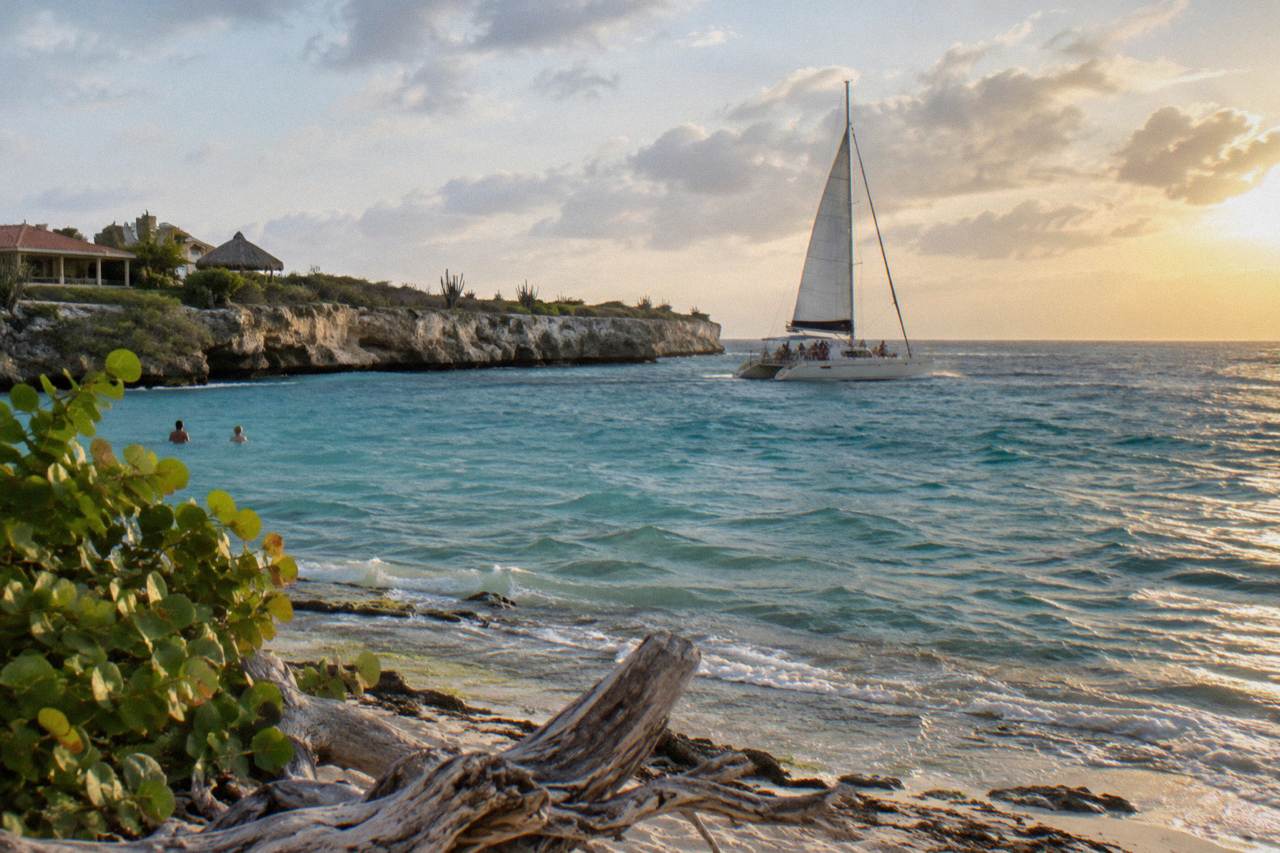
There is no single answer, and anyone who gives you one is guessing. Aruba is the easier, breezier, more developed island: 20-plus free public beaches, a sheltered leeward coast built for catamaran trips, and a compact resort strip where most tours board within walking distance of the hotels. Curacao rewards travelers who want a slower pace and are willing to drive to its coves. That same split shows up underwater, and our guide to whether Aruba or Curacao has better snorkeling compares the wrecks, reefs, and boat trips on both islands.
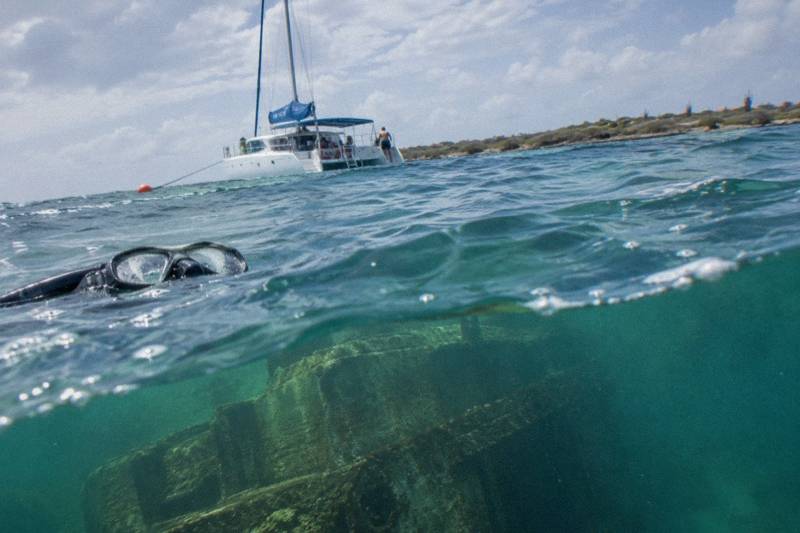
The honest framing is that the two islands sell different versions of the same Caribbean day. Aruba's west coast faces away from the trade winds, which is why its sailing industry is so dense: catamarans leave from Palm Beach piers daily, and the snorkel stops are close together, the Antilla shipwreck and Boca Catalina being the two names that appear again and again on trip descriptions. Curacao's beaches are smaller, pocket-sized bays rather than long strands, and its underwater appeal leans toward shore diving and drift sites that suit confident swimmers.
If your mental picture of the trip involves a catamaran, an open bar and an easy hour in the water over a shallow wreck, Aruba delivers that with less friction. If your picture involves exploring a Dutch colonial waterfront town, Curacao's Willemstad has the more distinctive architecture, and Aruba's Oranjestad is more of a familiar shopping-and-cruise streetscape.
For the boat-day traveler, everything below prices and compares Aruba's catamaran options in detail, from $50 sunset sails to $2,500 private charters. Curacao gets a fair characterization, but the concrete figures you will find here are Aruba's.
What Kind Of Water Day Do You Want?
Decide the boat day first and the island choice gets easier. Aruba's shared catamaran scene is built around short, all-inclusive trips: two to four and a half hours, drinks included, gear included on the snorkel runs, from $50 to $199 per person. Curacao's equivalent market isn't part of this comparison, which draws only on Aruba catamaran listings, so the casual floating-with-a-drink experience is less of a default there.
That difference matters more than people expect. On Aruba, the catamaran trip is practically a rite of passage: the Dolphin Catamaran Snorkel and Sail with Open Bar runs about 3 hours, is rated 4.8 across 2,894 reviews, and costs from $69 per person, with the Antilla shipwreck and Boca Catalina named as its stops. That is the archetype of the Aruba water day: board near your hotel, snorkel a shallow wreck, sail back with music and a rum punch.
Curacao can match much of that underwater, and its more famous sites are reached differently. The island's best-known snorkeling and diving sits along its sheltered southwestern coast, where bays open directly onto reef. Travelers who want to float over coral without a boat at all often prefer Curacao's model, while travelers who want the boat itself to be the experience, the open deck, the bar, the sail, lean Aruba.
It is also worth being honest about the water conditions. Aruba's trade winds are steady, stronger roughly February to July, and sea temperatures run about 79 to 83 F year round. The leeward west coast where the catamarans sail stays sheltered, which is why operators run daily. For a deeper look at how weather shapes the season, the site's Aruba sea conditions and hurricane season guide breaks down the months in detail.
| Water day you want | Where it lands easier | What it looks like |
|---|---|---|
| Shared catamaran with open bar | Aruba | 2 to 4.5 hour trips from Palm Beach piers, drinks included |
| Snorkeling a shipwreck from a boat | Aruba | The Antilla, a 398-foot wreck scuttled in 1940, is the standard stop |
| Shore snorkeling at your own pace | Both, differently | Aruba's Boca Catalina and Arashi are free with your own gear; Curacao's bays are the classic model |
| Long beach days on wide sand | Aruba | More than 20 public beaches, all free and open to everyone |
| Slow exploration, cove to cove | Curacao | Smaller pocket beaches spread along a driving coast |
One planning note that surprises first-time Aruba visitors: shore snorkeling at Boca Catalina and Arashi Beach is free with your own gear, no boat required. The catamaran adds the sailing, the bar and the guidance, not access to the water itself. Curacao works the same way at its bays, so neither island gatekeeps its snorkeling behind paid tours.
Beaches Or Bays: Which Coast Suits You?
Aruba wins on quantity and convenience: more than 20 public beaches, all free and open to everyone, with Eagle Beach named the number one Best of the Best Caribbean Beach and number four Best Beach in the World in the 2026 Travelers' Choice Awards, and Palm Beach at number six in the Caribbean. Curacao answers with dozens of small, intimate coves that feel discovered rather than built.
The character difference is real. Palm Beach is the engine of Aruba's resort strip, a walkable stretch where the high-rise hotels, the piers and the catamaran departures all sit within minutes of each other; most tours board at piers a five-minute walk from the major resorts. Eagle Beach, a short hop south, is the wider, quieter, postcard version. Both are public, both are free, and both rank among the most decorated beaches in the region, per the island's official beach listing.
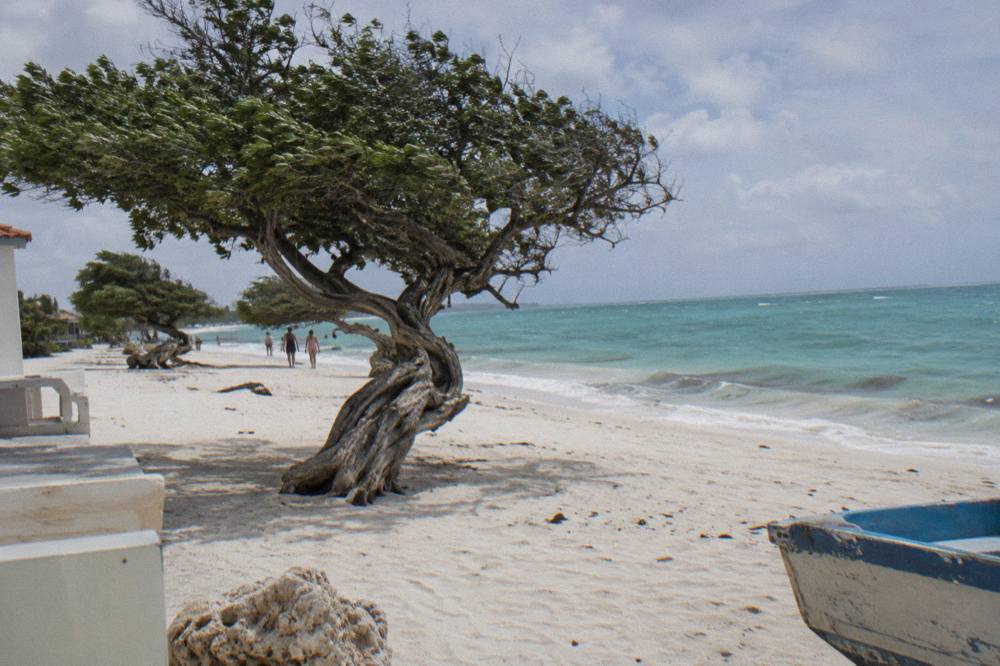
Curacao's coastline is the opposite shape: rather than two or three long strands, it offers a string of named coves, many small enough to fill with one family group. That intimacy is the island's beach argument, and for travelers who dislike crowds it can outweigh Aruba's sheer scale. The trade-off is logistics. On Aruba you can stay on Palm Beach and walk to your boat, your beach and your dinner. On Curacao the good coves are spread out and generally reached by car.
For a fuller breakdown of the Aruba side of that comparison, the site's Eagle Beach guide covers the island's most decorated stretch, and the best beaches in Aruba guide maps the full set. If you have already picked Aruba, the beach question mostly resolves to which part of the coast to sleep on, and Aruba Catamaran Tours treats the departure piers as the practical anchor of that decision: the boat leaves from the beach you are probably already on.
There is also a fairness point in Curacao's favor that beach rankings hide. Aruba's laurels come from its marquee strands. Curacao never enters those contests with a single famous beach, but its cumulative shoreline, cove after cove, gives a week's worth of variety. Travelers who measure a destination by how many different swimming spots they can collect often come home from Curacao with the longer list.
Weather, Winds And When To Sail
Both islands sit south of the main Atlantic hurricane belt, and direct hits are rare on either, but Aruba is the drier, windier, more reliably sunny of the two, with steady northeasterly trade winds that strengthen roughly February to July. The calmest Aruba seas of the year arrive September to November, while December to April brings the peak combination of dry weather and lighter, steadier winds.
That wind profile explains a lot about Aruba's character, and not just the sailing. The constant breeze is why the island feels cooler than its latitude suggests, why the resorts line the sheltered west coast, and why the catamaran fleet anchors where it does. The leeward side is protected water; the windward coast takes the trades head on and stays rough. Every Aruba boat trip you can book here launches from the sheltered side.
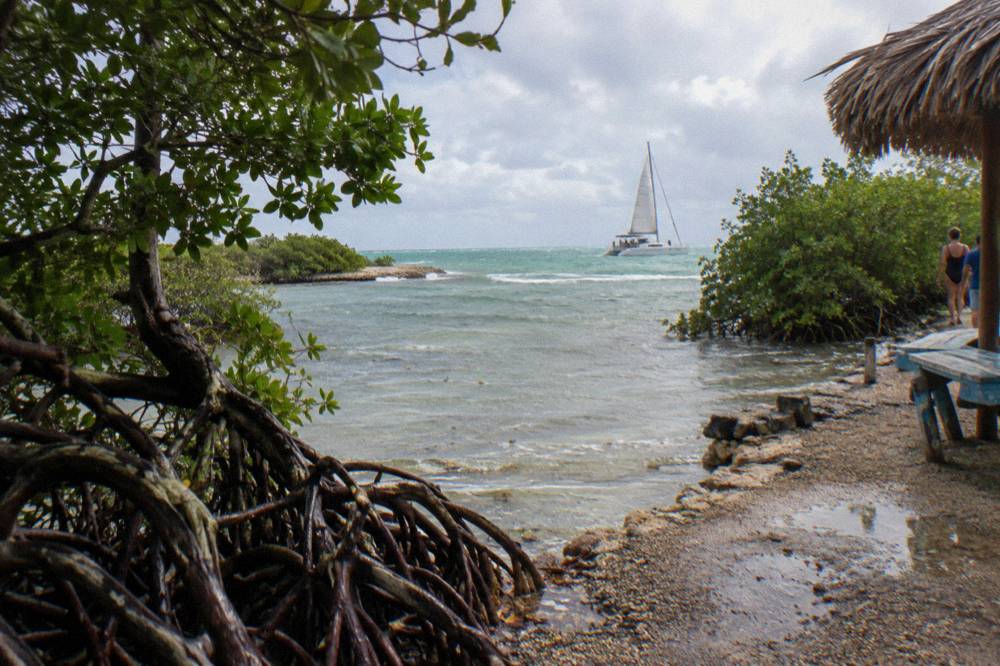
Curacao shares the general pattern, being only about 40 nautical miles from Aruba, but the islands are not identical: Aruba is the flatter, drier, more barren island, while Curacao is hillier and slightly greener. Hurricane season runs June 1 to November 30 across the region, and both islands lie at its southern edge. This comparison stays in the Dutch Caribbean, and by late October the season is nearly over on both.
For the snorkeler specifically, timing within the day matters on Aruba: morning departures tend to have the flattest, clearest water, while afternoon slots carry more chop as the trade winds build. That is a scheduling insight, not a promise, and sea state always varies. Travelers weighing the whole calendar can dig into the site's best time to visit Aruba guide, and for context on the wind pattern the island's seasonal breakdowns track the same December-to-April peak logic.
One Aruba rule belongs in every beach bag regardless of month: the island prohibits sunscreens containing oxybenzone, with the ban in force since July 1, 2020, and mineral formulas with zinc oxide or titanium dioxide are the recommended choice. Fines can reach significant sums, so buy reef-safe before you fly. Curacao has its own reef-protection norms, but the oxybenzone ban is an Aruba legal fact, and it is enforced at the import and sale stage, which means the wrong bottle can be a problem before you ever reach the water.
What The Trip Costs On Each Island
Concrete price comparison is only honest where figures can be verified, so here are Aruba's: shared catamaran trips run from $50 per person for a two-hour sunset sail to $199 per person for a champagne and lobster sail, with the mainstream snorkel options clustered between $63 and $124. Curacao's equivalent market is smaller and priced more variably, so treat any single Curacao figure you read with more caution.
On the Aruba side, the ladder of prices is unusually transparent because the trips are so standardized. The table below shows the genuine spread across the shared tours, using the verified figures for each named trip.
| Aruba catamaran trip | Duration | Price (from) | Rating |
|---|---|---|---|
| Banana Adventure Catamaran Tropical Sunset Sail | ~2 hours | $50 per person | 5 across 141 reviews |
| Arusun Catamaran Sail with Snorkeling | ~2.5 hours | $63 per person | 4.8 across 2,683 reviews |
| Dolphin Catamaran Snorkel and Sail with Open Bar | ~3 hours | $69 per person | 4.8 across 2,894 reviews |
| Aruba Sunset Catamaran Sail with Appetizers and Open Bar | ~2 hours | $92 per person | 4.5 across 2,407 reviews |
| Half-Day Snorkel Sail Tour with Caribbean Lunch | ~4 hours | $107 per person | 4.8 across 860 reviews |
| Sunset Champagne and Lobster Sail on Shamwari | ~4.5 hours | $199 per person | 5 reviews, too few for a rating claim |
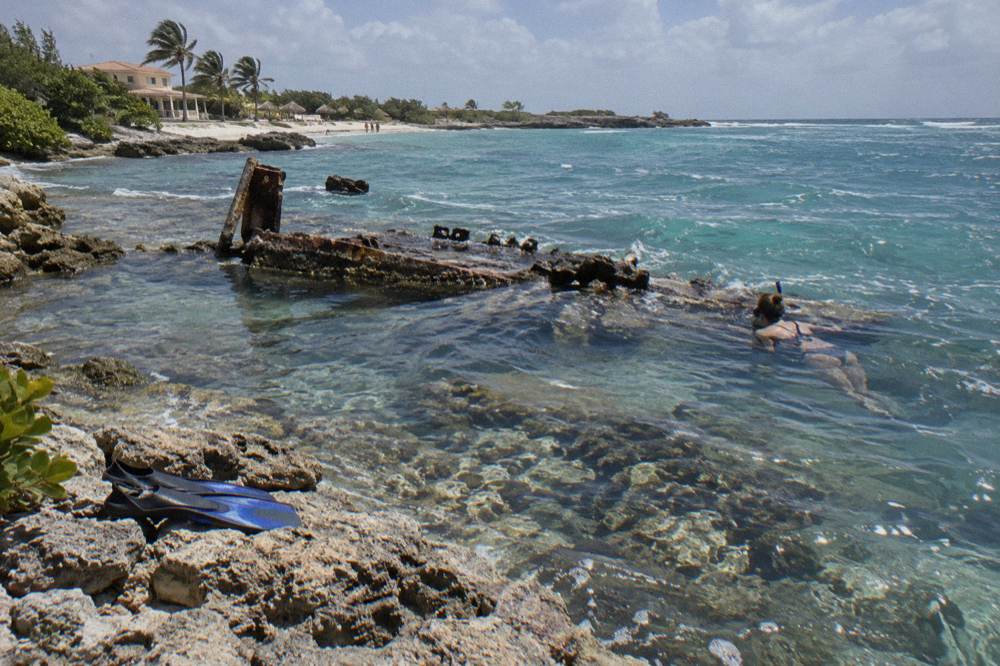
The pattern worth noticing: on Aruba you are mostly paying for duration and food, not for quality of water. The $63 Arusun trip stops at the Antilla and Boca Catalina; the $199 lobster sail lists Mangel Halto and the Kappel wreck. If your Curacao comparison is purely about the boat day, Aruba lets you buy in cheap and upgrade deliberately.
Entry costs are a separate line. Aruba requires air travelers to complete an online ED Card, free to file at the official portal, with a $20 sustainability fee for most air travelers aged 8 and up; most cruise passengers are exempt. That fee applies once and is not a tour surcharge. Curacao has its own departure and entry charges for international visitors; check the official source for your nationality before flying, as those figures are outside what this site verifies.
For travelers doing the arithmetic on the Aruba boat day specifically, the site's cost guide walks the full budget, and the how much does an Aruba catamaran tour cost breakdown shows where the money goes. The short version: drinks and gear are included on nearly all the mainstream trips, meals appear on the longer ones, and private charters jump to per-group pricing, from $1,399 per group for up to 8 guests to $2,500 per group for up to 15.
The Practical Differences That Tip It
Beyond beaches and boats, three practical factors decide most Aruba-versus-Curacao debates: trip length, since Aruba fits a slower week while Curacao suits explorers with a car; layout, since Aruba concentrates everything on one walkable coast while Curacao spreads out; and vibe, since Aruba is the more Americanized, resort-ready option and Curacao retains a more European, unhurried feel.
None of those is a ranking, they are fit questions. A family that wants to park at one resort, walk to the pier and not think about logistics for a week is describing Aruba. A couple that likes renting a car, finding a different cove each day and eating in town is describing Curacao, or at least the Curacao that its repeat visitors describe. Both islands are part of the Dutch Caribbean, both use comfortable infrastructure, and flights from North America reach both.
The water-sports intensity differs too. Aruba's leeward coast is a machine for it: catamarans, the snorkel fleet, plus parasailing and jet ski operations all working the same stretch, which the site's water sports in Aruba guide covers. If variety of on-water activity in one place is the priority, Aruba's density is hard to beat. Curacao's water culture is deeper in one sense, its freediving and shore-diving reputation, and lighter in the party-sail sense.
For travelers whose Curacao curiosity is specifically about the underwater comparison, the site has a dedicated snorkeling comparison, Aruba or Curacao, and for the geographically curious there is even a piece on how long the boat ride from Aruba to Curacao would take, which is longer than most people assume and not a scheduled service.
A reasonable closing heuristic: choose Aruba if the catamaran day, the wide beach and the zero-logistics week are the point. Choose Curacao if the point is wandering, coves and a town worth an afternoon. And if the answer is Aruba, the boat day is the easiest big decision on the island, because the options are standardized, transparently priced and, on the mainstream trips, generously reviewed by thousands of past guests.
That Arusun trip is the volume pick for a reason: 2.5 hours, the Antilla and Boca Catalina as named stops, gear and drinks included, from $63 per person, rated 4.8 across 2,683 reviews. At $63, it is the cheapest snorkel sail listed here, and it is the trip to beat when you compare Curacao's alternatives.
For a longer morning, the champagne brunch option stretches the same formula to four hours with a meal and three named stops, the Antilla, Boca Catalina and Malmok:
Whichever island wins your booking, book the boat day early in the stay rather than the last day: it gives you a weather buffer to rebook if the wind turns, and on Aruba most trips carry free cancellation, so the flexible reservation costs nothing extra.
Common Questions About Aruba Or Curacao
Which Is Nicer, Aruba Or Curacao?
Neither is objectively nicer. Aruba is the better fit for travelers who want wide free public beaches, a dense catamaran and snorkel scene with trips from $50 to $199 per person, and a walkable resort coast. Curacao suits travelers who prefer intimate coves, a slower pace and exploring by car. Decide based on the trip style you want, not a ranking.
Is Snorkeling Better In Aruba Or Curacao?
Both are strong, differently. Aruba's signature is boat-based snorkeling over the Antilla shipwreck and Boca Catalina, with catamaran trips from about $63 per person including gear. Curacao is known for shore-accessible reef snorkeling from its bays. Confident swimmers who like independence often prefer Curacao; travelers who want the boat, the bar and the guidance lean Aruba.
Are Aruba And Curacao Close Enough To Visit Both?
They are neighboring islands, though the open sea between them means getting from one to the other takes some planning. Visiting both in one trip usually means a short inter-island flight. How long to budget per island depends on what you want beyond a drive-by of each.
Which Island Has Better Weather?
Both sit south of the main hurricane belt, and direct hits are rare on either. Aruba is the drier and windier island, with steady trade winds that strengthen roughly February to July, sea temperatures of about 79 to 83 F, and its calmest seas September to November. December to April is the peak reliable season on Aruba.
Is Aruba More Expensive Than Curacao?
On the water-day side, Aruba's catamaran market is transparently priced, from $50 per person for a two-hour sunset sail to $199 per person for a champagne and lobster sail, with most snorkel trips between $63 and $124. Curacao's smaller tour market is priced more variably. Flights, hotels and dining swing the total more than tours do on either island.
Do I Need A Visa Or Special Card For Aruba Or Curacao?
For Aruba, US citizens do not need a visa for tourist stays up to 90 days, but all air travelers must complete a free online ED Card, and most travelers aged 8 and older pay a $20 sustainability fee; most cruise passengers are exempt. Curacao has its own entry process; check the official requirements for your nationality before booking flights.